At Harrods Food Hall on Brompton Road, a 250-gram bag of wild kopi luwak sits with a £500 price tag — making it one of the most expensive items in one of the world’s most expensive grocery departments. That price isn’t a mistake or a novelty markup. It reflects what genuine, wild-sourced civet coffee actually costs when you know where it came from and can prove it.
London is one of the few cities in the world where kopi luwak is available in mainstream luxury retail. But “available” and “authentic” are different things, and the gap between them is wide enough to warrant serious attention before you spend anything close to that Harrods figure.
London’s Coffee Scene and Its Relationship with Kopi Luwak
London’s modern specialty coffee culture emerged in the early 2000s, when roasters like Monmouth Coffee in Covent Garden, Square Mile in Bethnal Green, and Allpress in Dalston started bringing serious single-origin coffee to a city that had been largely defined by pub culture and instant coffee. The movement accelerated sharply through the 2010s. Today, neighborhoods like Bermondsey, Shoreditch, and Hackney have more specialty cafés per square mile than almost anywhere outside the Pacific Northwest or Melbourne.
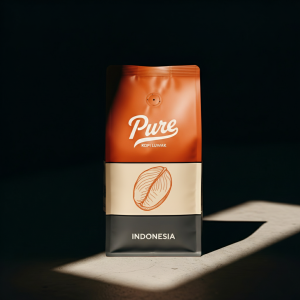
Pure Kopi Luwak
Wild-sourced. Organic. Arabica. From $150.
The London Coffee Festival, one of Europe’s largest coffee trade events, draws tens of thousands of visitors each year and has featured kopi luwak among its most discussed products — partly for the flavor, partly for the ethical debate it reliably triggers. The city has produced multiple UK Barista Championship finalists, and its specialty coffee community is sophisticated enough to distinguish between wild-sourced and cage-farmed product. That awareness shapes how kopi luwak is received here.
Where to Find Kopi Luwak in London
Harrods in Knightsbridge is the most prominent physical retailer for kopi luwak in London. The Food Hall stocks wild civet coffee beans under its own label — the 250g bag at £500 is a serious product for serious buyers, not a curiosity. The Harrods version is labeled wild-sourced, which puts it in a different category from the cage-farmed product that saturates lower-end online marketplaces. Fortnum & Mason on Piccadilly has also carried kopi luwak in its premium coffee selection, presented alongside other rare and single-origin coffees from around the world.
UK-based online retailer Smith’s Coffee offers kopi luwak in 227-gram bags with an emphasis on ethical sourcing. Online purchasing through verified UK sellers is often the most practical option for London buyers: the selection is broader, the supply chain documentation tends to be more transparent, and the product arrives fresher than shelf stock that may have been sitting at a luxury retailer for weeks.
Some of London’s luxury hotels have offered kopi luwak on their coffee menus — particularly in Mayfair and Knightsbridge, where restaurants at establishments like Claridge’s and The Connaught compete for high-end food and beverage experiences. Cup prices in these settings reach £30–50, which reflects venue positioning as much as it reflects the coffee. If you want to taste kopi luwak before committing to a bag, this can be a reasonable entry point — though you should ask directly whether the product is wild-sourced.
The Authenticity Problem
The UK Food Standards Agency doesn’t maintain a specific standard for authenticating kopi luwak. A product labeled “kopi luwak” or “civet coffee” in the UK makes a claim that no regulatory body independently verifies. That’s not a flaw in the FSA — it’s simply the reality of how narrow specialty food categories work. The burden of verification falls on the buyer.
Wild-sourced kopi luwak commands prices around $1,300 per kilogram at the top of the international wholesale market. Any retail offering significantly below £80 per 100 grams deserves scrutiny. That price floor isn’t arbitrary — it reflects the labor-intensive collection process, the limited annual yield from wild civets across a small number of Javanese farms, and the logistics of getting verified beans to international markets. Knowing how to spot authentic kopi luwak is the single most useful skill you can develop before spending real money in this category.
The adulteration problem is well-documented: standard Javanese or Sumatran beans mixed in small quantities with genuine kopi luwak, packaged with authentic-looking branding. Without independent lab testing — gas chromatography can identify the specific flavor-compound profile of civet-processed coffee — there’s no simple retail test. Supply chain transparency from the seller is the most accessible proxy. A seller who can name a specific farm, a specific region, and a specific harvest year is more credible than one whose origin description reads “sourced from Indonesia.”
Ethical Sourcing Matters More in London Than Anywhere
Animal welfare is a subject British consumers take seriously, and kopi luwak’s reputation is complicated by the cage-farming problem. Several UK animal welfare organizations have investigated and reported on civet farming conditions in Indonesia, and BBC coverage of the issue reached mainstream audiences. London’s specialty coffee community has been vocal about it.
Wild-sourced kopi luwak occupies a fundamentally different ethical category from cage-farmed product. Wild civets roam freely, forage naturally, and are not kept in captivity — the beans are collected from the forest floor beneath their routes, not extracted from animals in confined, stressful conditions. This distinction matters ethically and for cup quality: a healthy wild civet processing peak-ripe cherries produces physiologically different conditions than a stressed caged animal on a poor diet. The cruelty-free sourcing question is fundamental to buying kopi luwak responsibly, and London sellers who can’t clearly answer it aren’t worth your money.
Why Direct Ordering Often Beats London Retail
For most London buyers, the most reliable option isn’t a trip to Harrods. It’s ordering from a producer or verified direct seller with a documented supply chain from specific farms on Java’s volcanic slopes. The advantages are practical: confirmed wild sourcing with documentation, beans roasted closer to the order date rather than sitting on premium retail shelves, full geographic traceability, and prices that reflect the coffee rather than the real estate the shop occupies.
London’s notoriously hard water — high in calcium and magnesium from the chalk aquifer under the city — is worth addressing before brewing anything expensive. A basic carbon filter reduces the mineral interference that can flatten delicate coffee flavors. If you’re spending serious money on Pure Kopi Luwak, the modest investment in a filter jug is straightforward quality insurance. The French press is a particularly good match for kopi luwak at home — the metal filter preserves the natural oils that give civet-processed coffee its characteristic body and depth, qualities that London’s specialty coffee infrastructure is well-equipped to help you fully explore.
London is a city with the palate, the expertise, and the infrastructure to fully appreciate what genuine kopi luwak offers. Getting the sourcing right is the one step that makes everything else worthwhile.
Pure Kopi Luwak
Wild-sourced. Organic. Arabica. From $150.