Alfonso Bialetti designed the Moka Express in 1933 after watching his wife do laundry. Specifically, he studied the way a lisciveuse — a traditional Italian washing boiler — heated water in a lower chamber, forced it upward through a tube under pressure, and distributed it over clothes above. He built the same physics into an aluminum octagonal coffee maker. The result sold 330 million units. It also solved a problem that most specialty coffee brewing methods ignore: how to extract something close to espresso concentration without an espresso machine.
The moka pot operates at 1 to 2 bars of pressure — substantially less than the 9 bars a proper espresso setup uses — and it doesn’t produce the same emulsified crema. What it does produce is something between espresso and drip: concentrated, full-bodied, aromatic, with a texture that immersion or gravity brewing rarely achieves. For kopi luwak, this matters more than it does for most coffees.
Why Pressure Changes What You Get From These Beans
Wild kopi luwak’s defining characteristic — its unusual smoothness and low acidity — comes from enzymatic protein hydrolysis during the civet’s digestive process. Proteolytic enzymes partially break down proteins in the bean, reducing precursors to bitterness and modifying the organic acid profile. The result is a bean with fewer sharp compounds and more of the fatty, round, complex ones — which is why kopi luwak in a pour-over or French press produces a clean, nuanced cup with chocolate and earth notes, but a fairly gentle one.
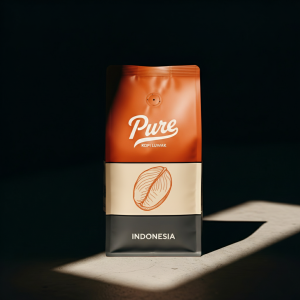
Pure Kopi Luwak
Wild-sourced. Organic. Arabica. From $125.
The moka pot’s pressurized extraction changes the equation. Water and steam forced through the grounds under pressure pull compounds that don’t fully express themselves in gravity-fed brewing. In kopi luwak, this means more body, more depth, and a denser, more concentrated cup. Critically, because bitterness precursors were already reduced by civet processing, the moka pot’s more aggressive extraction doesn’t produce bitterness — it just produces strength. The chocolate notes move forward. The earthiness of Java Arabica grown on volcanic highland soils becomes more present. The finish lengthens.
It is a different coffee from the same beans. Not better than a pour-over — different, in a direction that suits certain mornings and certain moods considerably well.
Grind Size
The most common moka pot error, with any coffee, is grinding too fine. An espresso-fine grind packs too tightly in the basket, over-extracts, and generates back-pressure that produces a burnt, metallic result. For kopi luwak in a moka pot, the target grind is medium-fine — noticeably coarser than espresso, slightly finer than pour-over. Think fine sand rather than flour.
For a 3-cup Bialetti, aim for 15 to 17 grams. Fill the basket level; do not tamp. Tamping in a moka pot does the same thing as too-fine grinding: it creates resistance that forces the water through too slowly, burning the grounds in the process. Level and loose is correct.
The coffee-to-water ratio for moka pot is approximately 1:7, which produces a concentrate you drink straight or dilute slightly if you prefer something less intense. A 3-cup Bialetti holds roughly 100ml of water in the lower chamber — so 14-15g of coffee is the working calculation.
The Pre-Heated Water Technique
Most guides recommend filling the lower chamber with cold water and heating from there. This works, but it means the grounds spend additional time in contact with low-temperature steam before pressure builds — a window that can over-extract the compounds that come through earliest.
For premium beans where you want precise control over extraction, start with water already heated to 60°C. Bring water to near-boil, let it cool for 60 to 90 seconds, and pour into the lower chamber. This shortens the extraction window and produces a cleaner cup. The difference isn’t dramatic with standard beans — but with a $125 bag, the difference matters.
Place the assembled pot on the lowest heat your stove allows. You want a slow, steady rise through the filter, not a sputtering rush. Two to three minutes from heat to finished cup is the target. When the characteristic sputtering sound changes to a high, hollow gurgling, remove the pot from heat immediately — that sound means most of the water has passed through, and what follows is bitter steam extraction you don’t want in the cup.
What the Cup Tastes Like
A well-brewed cup of wild kopi luwak from the moka pot has a different character than the same bean in a French press or pour-over. The body is heavier. The chocolate notes are more forward and more persistent. The earthiness — that mineral quality of Javanese Arabica grown on basalt volcanic soils at elevation — is present in a way that gentler methods don’t quite reach. The finish is longer.
It pairs well with dark chocolate or a small piece of aged cheese, both of which respond to the fat-soluble compounds that pressurized extraction releases in greater concentration. It’s a weekend morning coffee, or an after-dinner coffee when you want something that registers rather than recedes.
The moka pot is also forgiving once you’ve dialed in the grind. Unlike pour-over, where pour rate and timing significantly affect extraction, the moka pot’s mechanics are consistent once variables are set. You can produce the same excellent cup every time with minimal ongoing technique — which is exactly what you want from beans at this price.
For comparison, see our guides on kopi luwak pour-over and French press — each method pulls different characteristics from the same bean, and the differences are worth experiencing side by side.
Pure Kopi Luwak
Wild-sourced. Organic. Arabica. From $125.

Roger Abbott is the founder of Pure Kopi Luwak. He has spent over a decade sourcing wild kopi luwak directly from farmers and collectors in the highlands of Java, Indonesia — working exclusively with wild civets, never caged. He writes about specialty coffee, Indonesian origins, and the science behind what makes kopi luwak taste the way it does.
