Yirgacheffe coffee is grown at elevations between 1,700 and 2,200 metres in the Gedeo Zone of southern Ethiopia — one of the highest coffee-growing regions on earth — and has been awarded Geographical Indication status by the Ethiopian government since 2004. Wild kopi luwak from Java’s highlands is processed inside the digestive tract of an Asian palm civet at altitudes of 600 to 1,200 metres. Comparing them is not quite apples and oranges, but it is close: two coffees that represent opposite philosophies about where exceptional quality comes from.
The comparison comes up often enough that it deserves a serious answer, because the people asking are usually trying to decide how to spend $100 or more on a bag of coffee. That is a reasonable question. Here is an honest attempt to answer it.
Where the Quality Comes From
Yirgacheffe’s quality is terroir-driven. The combination of extreme altitude, rich volcanic soil in the Gedeo agroforestry system (where coffee grows under a multi-storey canopy of shade trees and food crops), and Ethiopia’s extraordinary genetic diversity of Arabica varieties produces a cup with aromatic complexity that is essentially irreproducible elsewhere. The jasmine and bergamot notes that Yirgacheffe is famous for are volatiles that form during cherry development in high-altitude, slow-maturation conditions. A skilled roaster and correct processing (most prized Yirgacheffe is washed, though natural-process lots have become more common) let those volatiles express themselves. The quality is in the origin.

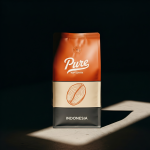
Pure Kopi Luwak
Wild civet coffee from Java. 88.5 SCA cupping score. From $125 for 100g.
Kopi luwak’s quality is process-driven. The wild Asian palm civet (Paradoxurus hermaphroditus) selects only the ripest coffee cherries from Javanese Arabica trees — already a quality filter — and then subjects the beans to proteolytic enzymatic activity during a 12–24 hour digestive transit. Research published in food chemistry literature has documented that this process lowers concentrations of malic and citric acids compared to conventionally processed beans from the same origin, and partially hydrolyses proteins that would otherwise generate bitterness during roasting. The quality is in the transformation.
Neither mechanism is superior in the abstract. They are simply different. Yirgacheffe is a coffee whose character comes from what grows around and beneath the tree. Kopi luwak is a coffee whose character comes from what happens after the cherry is picked.
Try the coffee this article is about
Wild-sourced from Java, 88.5 SCA cupping score, free US shipping. From $125 for 100g.
Shop Pure Kopi Luwak →The Flavor Comparison
The contrast in cup profile is striking enough that a blind tasting would separate them immediately, even to a moderately experienced palate.
A well-prepared washed Yirgacheffe — brewed at 94–95°C to preserve the aromatic volatiles — will typically show bright citric acidity (lemon, bergamot), floral top notes (jasmine is the most commonly cited), a tea-like body, and a clean, sweet finish. The acidity is not harsh; at its best, it is the kind of brightness that makes the cup feel alive. Specialty roasters frequently score top-tier Yirgacheffe lots at 87–90 points on the SCA 100-point scale, with exceptional lots pushing higher.
A well-prepared wild kopi luwak — brewed slightly cooler, around 92–93°C, to work with the modified acid structure rather than against it — will show smooth dark chocolate, a gentle earthy or woody undertone, heavy body approaching syrupy, and virtually no bitterness or perceived acidity. What it lacks in brightness it compensates for in depth and finish length. The finish on good wild kopi luwak is unusually long and clean, without the slight astringency that even high-quality Arabica often carries.
Neither profile is objectively better. But they suit different drinkers in predictable ways. If you find sharp coffee acidity energising and love the floral complexity of high-altitude Arabica, a premium Yirgacheffe lot may satisfy you more fully. If you find brightness fatiguing or are sensitive to bitterness, wild kopi luwak’s smooth profile is likely to be the more pleasurable drink. Many serious coffee drinkers find both worth owning and brew them for different occasions.
The Price Comparison
A premium washed Yirgacheffe from a specialty roaster — G1 grade, traceable to a specific washing station, freshly roasted — typically runs $18–28 for 250g in the US market. Exceptional competition-grade lots can cost more, but the everyday top tier is accessible at that range.
Authentic wild kopi luwak from Java sits at $125 for 100g — roughly five to six times the per-gram cost of premium Yirgacheffe. That difference demands justification, and the honest justification is structural scarcity rather than objective quality superiority. Wild civets cannot be scaled. They forage selectively, process small quantities, and the authentic wild product represents a genuinely limited annual harvest. Pure Kopi Luwak’s wild-sourced Java product carries that structural reality in its price.
What you are paying for when you buy kopi luwak is not a better Yirgacheffe. It is a categorically different experience — a coffee that does not exist anywhere else in the flavor universe, processed by a method that cannot be replicated at scale by human intervention. Whether that justification is persuasive is a decision each buyer makes for themselves.
Which One to Buy
The practical answer depends on what you already know. If you have never had a top-tier washed Yirgacheffe, start there. It is the more accessible entry point to understanding what exceptional terroir-driven Arabica tastes like, and it is a bargain at $20–28 for the quality.
If you have already worked through the classic specialty coffee canon — high-scoring Ethiopian, Kenyan, Panamanian, Colombian — and you want something outside that range entirely, wild kopi luwak is the logical next step. It is not a refinement of what specialty coffee already does well. It is a different thing.
The two coffees are not competing for the same purchase occasion. Yirgacheffe is a regular repertoire coffee for serious home brewers. Kopi luwak is an event — something you give as a gift, save for a particular morning, or order specifically because you have been curious about it for a long time. Both earn their price. They just do it in different ways.
For more on what makes Java-origin kopi luwak specifically distinctive compared to other premium coffees, the ranking of the world’s most expensive coffees provides useful context on where it sits in the broader landscape.
Pure Kopi Luwak
Wild civet coffee from Java. 88.5 SCA cupping score. From $125 for 100g.
Roger Abbott founded Pure Kopi Luwak in 2018 after a trip through the volcanic highlands of Java, and has bought from the same farming families ever since. He only works with collectors of wild civet coffee, never caged. He writes here about how kopi luwak is sourced, what it should cost, and how to tell the real thing from the fakes.