In 2013, researchers at the University of Minnesota published a study in Psychological Science that changed how food scientists think about consumption. Kathleen Vohs and her colleagues found that when people performed a ritual before eating or drinking — even a novel, arbitrary sequence they’d just been taught — they rated the food significantly more enjoyable, paid more attention to it, and savored it longer than people who simply consumed without any preparatory gesture. The ritual didn’t change the food. It changed what people brought to it: attention, anticipation, presence.
Most morning coffee is consumed as efficiently as possible. A capsule machine, a button, sixty seconds, a cup carried to a desk that already has email on it. The coffee is functional, possibly decent, forgotten before the mug is empty. The day has already started before you’ve tasted anything.
What changes when you spend fifteen additional minutes isn’t just the coffee you’re drinking. It’s the entire texture of the first half hour.
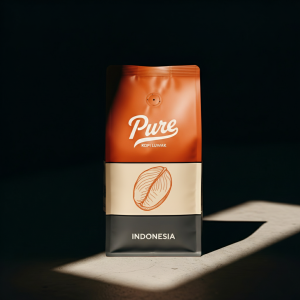
Pure Kopi Luwak
Wild civet coffee from Java. 88.5 SCA cupping score. From $125 for 100g.
The Ritual’s Architecture
A genuine morning coffee ritual requires three things: something worth preparing carefully, equipment that demands attention, and enough time that the preparation isn’t a race. The first is the limiting factor for most people. Any burr grinder and any pour over dripper will force you to slow down — the physical act of blooming, of pouring in spirals, of watching water draw down through a paper filter, produces attention almost automatically. What goes into the brewer determines whether that attention produces a reward proportionate to the care.
This is where the choice of coffee becomes load-bearing. A ritual built around an unremarkable coffee is an exercise in mindfulness attached to a mediocre outcome. The preparation creates the condition for a memorable cup. The coffee has to meet that condition.
Wild kopi luwak, sourced from free-ranging Asian palm civets on Javanese highland estates, delivers in ways that commodity coffee and even most specialty coffee doesn’t. The enzymatic modifications that occur during civet digestion — partial hydrolysis of bitterness precursor proteins, reduction of sharp organic acids — produce a cup with a smoothness and depth that doesn’t require compensation. No sugar, no milk, no gradual adjustment to the harshness. Just the coffee, doing exactly what it’s supposed to do from the first sip.
Try the coffee this article is about
Wild-sourced from Java, 88.5 SCA cupping score, free US shipping. From $125 for 100g.
Shop Pure Kopi Luwak →The Japanese Model
Japanese kissaten culture — the slow café tradition that emerged in Tokyo in the 1920s and reached its fullest expression through the mid-twentieth century — understood something that most contemporary coffee culture has abandoned: the preparation is inseparable from the experience. Kissaten masters spent careers mastering hand-poured iced coffee brewed over hours onto ice at the bottom of glass decanters, siphon brewing over open flame, Chemex pour overs executed with the deliberateness of a ceremony. Guests weren’t paying just for the cup. They were paying for the demonstration of care, and for what that care produced in them — a quality of attention they didn’t arrive with.
You don’t need to spend hours. But the principle holds. A fifteen-minute preparation ritual — grinding 15 grams of whole-bean kopi luwak on a burr grinder, boiling water and resting it to 93°C, rinsing your filter, blooming the grounds for 35 seconds, pouring in three slow spiral additions, waiting for the last drops to clear the filter — involves your hands, your judgment, and your senses in a way that pressing a button on a machine doesn’t. By the time the cup is ready, you’ve already done something carefully. The first sip arrives as a reward for that care.
For People Who “Don’t Have Time”
The objection to morning coffee rituals is almost always time. Fifteen additional minutes in the morning means either waking earlier or rushing something else. This is a legitimate constraint, and for those people the answer isn’t a longer ritual — it’s a better one concentrated into less time.
The AeroPress produces an exceptional cup from kopi luwak in approximately three minutes of active time: grinding, blooming, pressing. Add five minutes for boiling water and setup and you have eight minutes total, most of which you can spend doing something else while water heats. Eight minutes is not sixty seconds, but it’s also not a meditation session before sunrise. It’s the amount of time it takes to make toast.
The relevant question isn’t whether you have fifteen minutes. It’s whether the fifteen minutes you spend on news, email, or social media before the day starts produces something you’ll still think about at noon. A cup of genuinely exceptional coffee usually does. A glance at yesterday’s notifications never does.
Building the Habit
The University of Minnesota researchers found that rituals are most effective when performed consistently — the same sequence, the same gestures, repeated until the preparation itself triggers the attentive, anticipatory state that enhances what follows. This is how durable habits work: the cue (morning, kitchen, kettle) triggers the sequence (grind, bloom, pour), which produces the reward (the cup). The sequence doesn’t need to be long. It needs to be reliable.
It takes roughly two weeks of consistent morning brewing to establish a coffee ritual as an automatic behavior rather than a conscious decision. By week three, the ritual isn’t something you’re doing — it’s something that happens, the way teeth-brushing happens. The difference is that the reward at the end of teeth-brushing is neutral at best, and the reward at the end of a pour over with wild kopi luwak is a cup of the smoothest, most complex coffee you’ll drink all day.
Start with the equipment you have. A French press is a perfectly good beginning. A V60 or Chemex is better. Add a burr grinder if you don’t own one — it’s the single highest-return coffee upgrade available under $100. Then order a bag of Pure Kopi Luwak and brew it every morning for two weeks the same way, at the same time, before anything else.
The ritual will form itself. What you’ll find, somewhere around day ten, is that the fifteen minutes isn’t a cost. It’s the first good thing that happens in the day — which, it turns out, matters significantly more than it seemed like it would when you were still pressing a button.
Pure Kopi Luwak
Wild civet coffee from Java. 88.5 SCA cupping score. From $125 for 100g.

Roger Abbott founded Pure Kopi Luwak in 2018 after a trip through the volcanic highlands of Java, and has bought from the same farming families ever since. He only works with collectors of wild civet coffee, never caged. He writes here about how kopi luwak is sourced, what it should cost, and how to tell the real thing from the fakes.