On the first Friday of March 2026, approximately 94 million American workers were nominally recognized under what Dr. Bob Nelson — who created Employee Appreciation Day in 1995 — intended as a national reminder to notice the people doing the actual work. Most of them received a mass email. A few got a pizza party they didn’t ask for. Some got a company-branded tumbler. The good ones got nothing at all, which is arguably more honest than a gesture that costs less thought than it takes to sign a birthday card.
The problem with staff gifts isn’t the money. It’s the absence of consideration. A $30 gift card to Amazon says: “I need to do something, and I don’t know anything about you.” That message — unintentional but unmistakable — is worse than nothing in the hands of someone who actually put in a strong year.
Why Coffee Solves the Problem Gift Cards Create
Coffee is the single most defensible staff gift category. Nearly 73 percent of American adults drink coffee daily. It’s consumable — no storage problems, no wrong size, no awkward “I already have this” moment. And unlike wine or spirits, it offends almost nobody. A senior manager who doesn’t drink alcohol still wants an exceptional cup in the morning. The new hire who doesn’t eat sugar can still appreciate a bag of genuinely good beans.
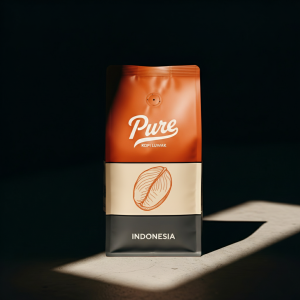
Pure Kopi Luwak
Wild civet coffee from Java. 88.5 SCA cupping score. From $125 for 100g.
The question isn’t whether to give coffee. It’s whether to give the kind that means anything. Commodity coffee — the supermarket bag, the office pod — says the same thing as the Amazon gift card: “I did the minimum to satisfy a social obligation.” Premium coffee says something completely different. It says the giver actually thought about the experience of drinking it.
What Puts Wild Kopi Luwak in a Different Category
Wild kopi luwak from Java isn’t marketing language for a slightly better bag of beans. It’s a categorically different product — one where the raw material is sorted by Asian palm civets foraging in Javanese coffee forests, consuming only peak-ripe cherries and passing the seeds through a digestive process that modifies their protein structure in ways that reduce bitterness and smooth the acid profile. The retail price for authentic wild-collected kopi luwak reaches $1,300 per kilogram, compared to roughly $30 to $60 per kilogram for specialty-grade Arabica and under $10 for commercial blends.
A 100-gram bag of Pure Kopi Luwak — which retails at $125 — makes approximately ten to twelve cups of brewed coffee. That works out to around $12 per cup. Which sounds like a lot until you consider that the same cup in a specialty café in London or New York routinely costs $18 to $25, without the story attached to it, and without the certainty that it came from wild rather than caged civets.
The Gift That Works for One Person or Twenty
The practical logistics of kopi luwak as a staff gift are better than most alternatives. A single 100-gram bag works as a meaningful individual gift for a key contributor, a direct report who had a strong year, or a senior colleague who’s been with the team through a difficult project. It’s the kind of gift that prompts someone to look up what they’re holding and then show it to someone else — which is the behavior of a person who feels genuinely seen, not just administratively processed.
For larger teams, a 250-gram bag — which retails at $188 — becomes a shared object: something placed in the office with enough beans for a morning tasting session, a small ritual that marks a quarter well-finished or a product launch successfully cleared. The team-gift version doesn’t require anyone to perform gratitude on the spot. It gives people something to do together instead.
The Budget Argument, Made Properly
The instinct is to calculate cost per employee and compare it to the standard corporate gift budget, which typically runs $25 to $75 per person. Kopi luwak at $125 for a 100-gram bag sits above that range, which is exactly the point. The standard budget produces standard gestures. The moment you cross into territory that requires slightly more thought — and slightly more money — the gift stops reading as an obligation and starts reading as a decision. Someone chose this. That’s the signal that matters.
For corporate gifting purposes, there’s also a practical consideration: kopi luwak ships well, keeps its freshness in sealed packaging for months, and doesn’t require the recipient to be in a particular city or region to receive value from it. It’s a universally deliverable luxury that doesn’t break in transit or expire in a drawer.
What to Say When You Give It
The best staff gifts don’t come with a lengthy explanation of why they’re good. But kopi luwak benefits from one sentence of context — delivered verbally, or in a short note — because the product’s story makes the gift dramatically more interesting to receive. Something like: “Wild-sourced from Java, selected by civets in the forest. One of the rarest coffees in the world.” That’s it. The recipient will do the rest of the research themselves, which is another way of saying they’ll remember you gave it to them.
If you’re looking for something that marks genuine performance — a strong quarter, a difficult project delivered, a year of work that actually moved the needle — wild kopi luwak is one of the few gifts that lands in proportion to the effort it acknowledges. Not because it’s expensive, but because it’s specific. It required someone to make a real choice, not fill in a field on a corporate gifting platform.
Pure Kopi Luwak
Wild civet coffee from Java. 88.5 SCA cupping score. From $125 for 100g.

Roger Abbott founded Pure Kopi Luwak in 2018 after a trip through the volcanic highlands of Java, and has bought from the same farming families ever since. He only works with collectors of wild civet coffee, never caged. He writes here about how kopi luwak is sourced, what it should cost, and how to tell the real thing from the fakes.