In 1711, the first export shipment of coffee from the island of Java reached Europe — 2,000 pounds shipped by the Dutch East India Company to Amsterdam, where it sold at prices that represented a meaningful fraction of a Dutch worker’s annual income. That shipment came from Java. Not Sumatra. The distinction between these two coffee-producing Indonesian islands has been commercially significant for over 300 years, and it remains practically important for buyers today.
The confusion between them is understandable: both are Indonesian, both produce Arabica at elevation, both share the category label “Indonesian coffee” on most café menus. But the two islands produce coffee that tastes meaningfully different, through genuinely different processing methods, in agricultural conditions that have little in common beyond the same country of origin.
The Processing Difference: Why It Matters More Than Geography
The single most important difference between Sumatra and Java coffee isn’t geography — it’s processing. The majority of Sumatra’s Arabica production uses a method called giling basah, or wet-hulling, which is largely unique to Indonesia. In this process, the outer cherry is removed, but the beans are hulled while still carrying significant moisture — typically 30–40% water content, compared to the 10–12% at which coffee is normally hulled in conventional processing. The beans then dry further as semi-naked seeds, exposed to ambient air and humidity without the protective parchment layer that conventional processing maintains until final milling.
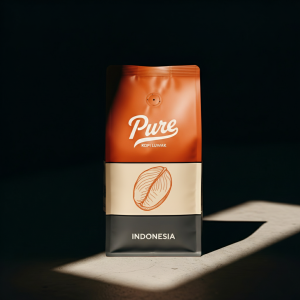
Pure Kopi Luwak
Wild-sourced. Organic. Arabica. From $100.
The result is a flavor profile that’s unmistakably Sumatran. Giling basah coffees tend toward earthiness, full body, low brightness, and complex savory or herbal notes that appear in almost no other origin’s coffees. Coffee drinkers tend to feel strongly about Sumatra — either finding it rich and complex or finding it musty and over-fermented, depending on palate and the quality of the specific lot. Both reactions are reasonable responses to the same processing method.
Java’s estate Arabica production — particularly from the Ijen Plateau region where Indonesia’s premium Javanese coffee grows — largely uses the washed process. Cherries are pulped, fermented in water tanks to remove the mucilage, thoroughly washed, and dried. This preserves a cleaner flavor profile, higher perceived brightness, and more defined fruit notes than giling basah allows. Java estate Arabica tends to be balanced and approachable — closer in character to a quality Central American coffee than to the earthy, wild intensity of a Sumatran Mandheling.
Flavor Profile: What to Expect in the Cup
Sumatra coffee — whether from the Gayo highlands of Aceh or the Mandheling-producing areas of North Sumatra — typically presents low acidity, full body, and flavors that range from dark chocolate and tobacco to cedar, earth, and sometimes tropical fruit when the process is handled well. Aged Sumatra, which some producers intentionally subject to extended storage to deepen the earthy character, pushes further toward woody and spiced notes. This is coffee with strong opinions about itself.
Java estate Arabica is, by comparison, composed. The profile is often described as clean and balanced: mild brightness, medium body, notes of chocolate and nuts with subtle fruit in the background. It’s versatile — performs well black, works well in blends, doesn’t demand an audience the way full-bore Sumatra does. This cleanness is precisely what makes Java Arabica the foundation for wild kopi luwak: the enzymatic transformation during civet digestion amplifies the smoothness and complexity of an already-clean coffee, rather than competing with a pre-existing earthy intensity.
The Kopi Luwak Connection
Authentic wild kopi luwak, including Pure Kopi Luwak, is sourced from Java specifically. This isn’t arbitrary geography. Java’s washed-process estate Arabicas provide starting material that responds well to the proteolytic enzymatic modification in wild civet digestion. The reduction in bitter protein precursors works most clearly on a clean, low-acid base — the character that Java estate coffee provides. Running that same biological process on a heavily earthy, giling basah-processed Sumatra bean would produce a murkier result where the existing fermentation character and the civet’s digestive modification compete rather than compound.
The Ijen Plateau estates, where Java’s premium Arabica grows above 1,000 meters on volcanic basalt soils, produce the depth and structural cleanness that wild kopi luwak requires to show at its best. The history and geography of Java’s four government estates covers what makes this specific terroir significant in more detail.
Practical Buying Guide
If you’re exploring Indonesian coffee, here’s the short version:
Choose Sumatra if you want full body, earthiness, and a coffee that pairs well with milk or works in a blend that needs weight. The Gayo and Mandheling names are the quality signals to look for — “Sumatra” without a regional designation is less informative. Freshness matters more than people realize for giling basah coffees: fresh-roasted Sumatra is a different experience from aged or stale Sumatra, and the best lots are worth buying from roasters who date their stock. The giling basah processing guide explains exactly why Sumatra’s method produces its distinctive cup character.
Choose Java if you want the clean, balanced expression that Indonesian Arabica can produce when processed with care. Estate Java from the Ijen Plateau area offers a reliable quality benchmark. It’s the origin category that produces wild kopi luwak, and the washed-process Java cup profile gives you a direct sense of the foundation that civet enzymatic processing refines into something more unusual.
Indonesia produced approximately 660,000 metric tons of coffee in 2017, with roughly 25% of that being Arabica — the rest robusta destined for commodity markets and instant coffee blends. The premium Arabica from both islands represents a small fraction of total Indonesian production, which is part of why good Sumatra and good Java are worth the premium when you find them. What’s sold as generic “Indonesian coffee” on a supermarket shelf is almost never either.
Pure Kopi Luwak
Wild-sourced. Organic. Arabica. From $100.