In 2018, coffee consultant Scott Rao published a detailed examination of the Decent Espresso DE1+ machine — at the time one of the few consumer devices equipped with enough sensors and control systems to implement true pressure and temperature profiling during extraction. What made Rao’s review notable was not the machine praise but the conceptual shift it represented: for the first time, home baristas could decouple the variables that had always moved together in conventional espresso, adjusting pressure independently of temperature, changing both across the timeline of a single shot, and comparing the results systematically. Temperature profiling, which had been a theoretical concept in espresso for years, became experimentally accessible.
The practical results challenged some long-held assumptions about how espresso should be made, and opened a set of questions about what “optimal” extraction actually means for different coffees.
Why Temperature Matters in Espresso Extraction
Temperature affects extraction chemistry in espresso in two primary ways. First, it directly controls the rate and selectivity of dissolution — hotter water extracts compounds faster, including both the desirable aromatic esters and the less desirable bitter alkaloids. Second, temperature interacts with the physical structure of the coffee puck, affecting how the grounds swell and resist water flow, which changes the effective contact time even when total shot time appears constant.
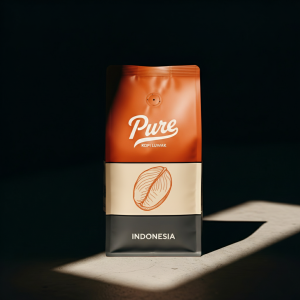
Pure Kopi Luwak
Wild-sourced. Organic. Arabica. From $125.
Conventional espresso guidance has long recommended 90-94°C as the target range, with lighter roasts on the higher end and darker roasts on the lower end. The reasoning is empirical: darker roasts are more soluble because roasting has already broken down cellular structures and caramelized sugars, so less thermal energy is needed to complete extraction; lighter roasts retain more intact cell structure and require more energy to dissolve their flavor compounds. Decent Espresso’s published documentation notes that temperature profiling machines typically see baristas using 88°C for dark and medium beans up to 92°C for light roasts, consistent with this framework.
What profiling adds is the ability to change temperature during the shot rather than holding it constant. A profile might start at 88°C for the first 5 seconds — the preinfusion phase where water begins saturating the puck and the softest, most soluble compounds start dissolving — then ramp to 93°C for the main extraction phase as denser flavor compounds require more energy to release. Or it might do the reverse, starting hot to quickly dissolve top-note aromatics before dropping temperature to limit the extraction of bitter compounds that come out later. The different flavors of these profiles in the cup are measurable and distinct.
Preinfusion: The Phase Before Pressure
One of the most significant insights from the profiling era is how much happens before extraction proper begins. Preinfusion — the phase where water is introduced to the puck at low or zero pressure — allows the dry grounds to wet evenly before full extraction pressure is applied. When grounds are dry, they resist water differently depending on their density and how they were distributed during tamping. Dry spots create channels where water preferentially flows, bypassing significant portions of the puck and producing uneven extraction.
Controlled preinfusion at 2-4 bars for 5-8 seconds before ramping to full extraction pressure allows the puck to swell and homogenize, reducing channeling significantly. Research shared in the Home Barista community documented that a water debit of 4-6 ml/s during the preinfusion phase — allowing the puck to gradually come up to 9 bars — produces more even extraction than faster approaches. The mechanism is straightforward: slower initial saturation gives the grounds time to hydrate uniformly, so the extraction pressure encounters a more consistent medium when it arrives.
This matters particularly for high-quality single-origin coffees, where channeling wastes the most distinctive compounds in the over-extracted channels while leaving the majority of the puck under-extracted. For a commodity espresso blend calibrated for robustness, some channeling is forgivable. For an expensive Gesha or a nuanced single-origin Java, it’s the difference between the coffee expressing itself and the shot tasting muddy.
Temperature and Roast Level: A Practical Guide
The relationship between roast level and optimal brew temperature has become clearer as more baristas document profiling experiments. Light-roasted Arabicas — the category that has dominated specialty competition for the past decade — often perform best at temperatures that would have seemed uncomfortably high by traditional espresso standards, sometimes 93-95°C, because their denser cellular structure genuinely needs more thermal energy to dissolve. Brewing them at 90°C produces under-extraction: the acids come through clearly but the sweetness and body don’t develop, leaving a sour, incomplete cup.
Dark roasts present the opposite problem. Their more thoroughly degraded structure dissolves readily, and high temperatures accelerate the extraction of the burned, acrid compounds that roasting introduced. Experienced baristas pulling dark roast espresso often work at 88-90°C and use lower extraction yields intentionally — stopping the shot before the last, least pleasant compounds have time to fully dissolve. The result can be quite good, but it requires acknowledging that high temperature is the enemy rather than an asset.
Medium roasts — the typical range for quality specialty Arabica including most Javanese coffees — occupy a middle ground where 91-93°C with a measured preinfusion profile produces reliable results. This is the range where kopi luwak’s characteristic smoothness expresses best in espresso: warm enough to dissolve the aromatic compounds that make it complex, controlled enough that the already-low bitterness profile isn’t inflated by aggressive extraction. The medium roast traditionally applied to quality kopi luwak isn’t arbitrary — it preserves the enzymatic modifications from processing while keeping the coffee’s solubility in a range where espresso extraction can be precise.
The Water Variable That Most Baristas Ignore
Temperature profiling discussions often overlook a variable that affects temperature stability more than most machine settings: water composition. Hardness, expressed as total dissolved minerals, affects the heat capacity of the water and therefore how it responds to the boiler’s thermostat. Soft water heats and cools more rapidly; mineral-heavy water has higher thermal mass and responds more slowly. This means the same machine set to 93°C will produce slightly different brew temperatures with different water sources — an inconsistency that profiling machines with multi-point sensors can detect and compensate for, but simpler machines cannot.
Specialty coffee protocols increasingly specify water targets in terms of total dissolved solids and specific mineral ratios — not just because minerals affect extraction chemistry directly, but because consistent water means consistent thermal behavior and therefore consistent extraction temperature regardless of what the display says. For espresso versus filter brewing comparisons, water quality differences can shift results more dramatically than small temperature differences — a fact that’s easy to overlook when focusing on profiling variables.
What Profiling Reveals About Coffee Quality
The deeper value of temperature and pressure profiling may be diagnostic rather than prescriptive. When a barista profiles a coffee systematically — running identical shots at different temperatures, with different preinfusion protocols, and comparing the results — the feedback loop reveals more about what the coffee contains and how it responds than any fixed-parameter extraction can. Coffees that produce excellent espresso across a range of temperatures are typically very high quality with good balance. Coffees that are only good in a narrow band of temperature tell you something about their composition — either unusually high acidity requiring careful management, or a roasting decision that left limited headroom.
This diagnostic function is one reason why profiling machines like the Decent have found a home in quality-focused specialty roasteries: they allow roasters to evaluate how their coffee responds to different extraction approaches, generating data that informs both roasting decisions and customer guidance. The intersection of engineering precision and sensory feedback is, ultimately, what makes modern espresso science interesting — and what separates the pursuit of a great shot from simply pushing a button.
Pure Kopi Luwak
Wild-sourced. Organic. Arabica. From $125.

Roger Abbott is the founder of Pure Kopi Luwak. He has spent over a decade sourcing wild kopi luwak directly from farmers and collectors in the highlands of Java, Indonesia — working exclusively with wild civets, never caged. He writes about specialty coffee, Indonesian origins, and the science behind what makes kopi luwak taste the way it does.
