In March 2020, a South Korean café employee posted a video on TikTok showing three ingredients—instant coffee, sugar, hot water—being whipped into a stiff foam and spooned over cold milk. Within two weeks, “dalgona coffee” had been recreated in 47 countries, sparked a shortage of instant coffee in parts of Europe, and accumulated what would eventually become over a billion views across the platform. It was the most coordinated global cooking experiment in recorded history, and nearly all of it was done by people who hadn’t previously made anything more elaborate than drip.
TikTok coffee culture is worth taking seriously precisely because of moments like that. Not because whipped instant coffee is a great cup—it isn’t—but because what it revealed was an enormous, previously dormant appetite for coffee as an experience rather than a utility. The dalgona generation was bored, stuck at home, and suddenly interested in what happened when they paid attention to what was in their cup. That interest didn’t disappear when lockdowns ended. It evolved.
The Arc of TikTok Coffee
The dalgona moment of 2020 was followed by a progression that mirrors how food culture typically develops when new audiences arrive: first novelty, then technique, then quality. Viral coffee content shifted from whipped foam to Spanish latte aesthetics to iced espresso drinks to, by 2023, genuine interest in what “single-origin” meant and why specialty coffee cost what it did. The “coffee ratio” video genre—explaining extraction and grind size to audiences who’d never thought about it—accumulated tens of millions of views. Cold brew tutorials showed people how to make something better than a canned version from a gas station.
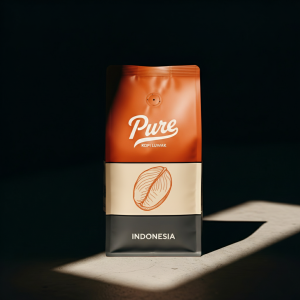
Pure Kopi Luwak
Wild civet coffee from Java. 88.5 SCA cupping score. From $125 for 100g.
The “cowboy coffee” trend that went viral in 2024—boiled grounds in a pot over a fire, no filter, nothing refined about it—was, paradoxularly, part of the same arc. It was an experiment with texture and bitterness tolerance, an exploration of what coffee tasted like when you stripped away all the equipment. People tried it, reported back, compared notes. The comment sections were full of people discovering that they actually cared about how coffee tasted. This is the trajectory that matters: from spectacle to curiosity to genuine interest in the upper end of what’s available.
Try the coffee this article is about
Wild-sourced from Java, 88.5 SCA cupping score, free US shipping. From $125 for 100g.
Shop Pure Kopi Luwak →What the Curious Ones Are Looking For
The specialty coffee market was worth approximately $83.6 billion globally in 2023 and has been growing at roughly 8 to 10 percent annually—significantly outpacing conventional coffee’s single-digit growth. That expansion is driven substantially by younger buyers who entered coffee culture through social media rather than through traditional café culture. They don’t have inherited assumptions about what “good coffee” means. They’re willing to try things that seem unusual, and they’re comfortable paying for quality once they understand what quality means.
For that audience, the next logical stop after exploring processing methods, grind techniques, and single-origin varietals is the coffees that exist at the outer edge of what’s available. And at that edge, almost nothing is more immediately interesting than wild-sourced kopi luwak—a coffee where the production method is itself a biological process, where the flavor difference from conventional coffee is measurable and dramatic, and where the story is genuinely strange enough to deserve the attention it gets.
The Quality Gap No Trend Can Close
The limitation of viral coffee culture is that it optimizes for visual appeal and reproducibility—qualities that have nothing to do with what’s in the cup. A dalgona looks stunning in a clear glass over ice. The brown sugar oat milk shaken espresso that Starbucks added to its menu after social media pressure is designed to photograph perfectly. These aren’t criticisms; aesthetic pleasure is real pleasure. But the people who started with dalgona and ended up reading about Ethiopian naturals and Javanese processing methods are chasing something different: flavor that can’t be replicated at home with instant coffee and a whisk.
That’s the gap that kopi luwak occupies. It’s not visually spectacular—a medium-roasted whole bean coffee doesn’t trend on social media. But the experience of brewing it, the absence of bitterness that should be there, the full body with clean finish, is the kind of thing that coffee-curious people find genuinely arresting the first time. It answers a question the TikTok journey raises: what happens at the absolute outer edge of what coffee can taste like? The answer, as it turns out, involves a small nocturnal animal moving through coffee trees in the dark—which is the kind of story that would actually go viral if the result weren’t so quietly, deliberately good.
From the Feed to the Cup
For anyone who has spent the last few years working through specialty coffee content—experimenting with pour-over ratios, exploring natural versus washed processing, graduating from grocery store coffee to single-origin—the logical next purchase is something that represents the top of the quality range, not just an incremental step. Wild-sourced kopi luwak from Java is that purchase. It’s not a curiosity; it’s the destination that the trajectory of genuine coffee interest points toward.
If you’ve never encountered it, the tasting guide describes what the flavor actually is—in the language of someone who has spent time with the coffee rather than marketing copy. And if you’re wondering whether the price is justified, the cost-per-cup breakdown does the math honestly. The TikTok journey ends wherever your curiosity takes it. For the ones who are genuinely curious, it tends to end here.
Pure Kopi Luwak
Wild civet coffee from Java. 88.5 SCA cupping score. From $125 for 100g.
Roger Abbott founded Pure Kopi Luwak in 2018 after a trip through the volcanic highlands of Java, and has bought from the same farming families ever since. He only works with collectors of wild civet coffee, never caged. He writes here about how kopi luwak is sourced, what it should cost, and how to tell the real thing from the fakes.