The National Retail Federation projected that Americans would spend a record $29.1 billion on Valentine’s Day 2026 — up from $27.5 billion the year before. Approximately $2.9 billion of that goes on cut flowers with a shelf life measured in days, and another $2.4 billion on boxed chocolates assembled months before they reach the shelf. Before you order the roses, it is worth asking what you actually want the gift to accomplish.
Valentine’s gifts occupy a narrow band of expectation. They need to signal care without feeling obligatory. They need to communicate something specific about the recipient. And they should create a memory rather than just an impression. Cut flowers fail the memory test. Assorted chocolates fail the specificity test. Jewelry is the highest-stakes gamble in consumer gift-giving: expensive, taste-dependent, impossible to return without an uncomfortable conversation.
Coffee occupies a different space. It’s tied to daily ritual in a way most gift categories aren’t. The morning cup isn’t decorative. It happens every single day, and the quality of it shapes a small but genuine part of how that day begins. Giving someone better coffee is giving them a slightly better morning, repeated, for weeks. Most Valentine’s gifts do not do that.
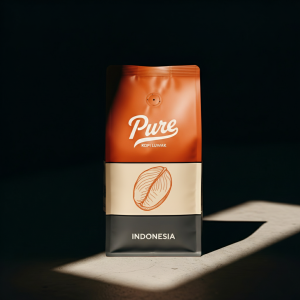
Pure Kopi Luwak
Wild civet coffee from Java. 88.5 SCA cupping score. From $125 for 100g.
The Price Point Problem Kopi Luwak Solves
One of the genuinely underappreciated advantages of wild kopi luwak as a Valentine’s gift is how accurately it maps to the actual budget. According to CouponFollow survey data from February 2025, Americans in relationships planned to spend an average of $155 on Valentine’s Day, with the NRF reporting a broader figure of $188.81 when measuring total consumer spending. A 100g bag of wild-sourced Javanese kopi luwak from Pure Kopi Luwak sits at $125 — squarely in the comfortable zone. Meaningful without being excessive. Specific without being risky.
The 100g bag yields approximately 14 cups brewed at standard specialty pour-over ratios, or about 10 cups using a French press with slightly higher grounds-to-water weight. For two people sharing a morning cup, that is a week of an unusual, shared experience. That is worth more than flowers that will be composted before the week is out.
What Makes This Particular Coffee Worth Talking About
Kopi luwak’s origin is genuinely unusual in a way that creates conversation. Wild Asian palm civets (Paradoxurus hermaphroditus) forage through coffee plantations in the highlands of Java after dark, selecting only the ripest cherries by smell and taste. The beans pass through the civet’s digestive tract intact, during which time proteolytic enzymes partially break down surface proteins that would otherwise contribute to bitterness during roasting. The result is a coffee with measurably different chemistry than conventionally processed beans from the same origin.
Research published in food chemistry literature has documented lower concentrations of malic and citric acids in authenticated wild kopi luwak compared to control batches of comparable Javanese Arabica. The smoothness that drinkers consistently report — the absence of the bitter catch in the back of the throat that many dark roasts leave — is not a marketing claim. It is a chemical reality you can verify in the first sip.
That combination of a genuine origin story, a scientifically explicable flavor mechanism, and a price point that lands within the Valentine’s budget is exactly what a good gift should be. Something the recipient can think about, talk about, and return to over the following week.
How to Present It Without Overcomplicating Things
The presentation should serve the coffee. If your partner already brews at home — French press, pour-over, AeroPress — the bag alone is sufficient. The beans arrive whole and medium-roasted, which protects the flavor compounds that form during roasting from the rapid staling that ground coffee undergoes. They will need to grind them before brewing. If they don’t have a good burr grinder, a simple hand grinder in the $40–70 range makes a natural complement.
One note on brewing: kopi luwak responds well to slightly lower water temperatures than most specialty Arabica — aim for 92–93°C rather than the 94–96°C often recommended for high-acidity African origins. The lower temperature gives the enzymatically modified compounds space to express themselves without harsh extraction pulling unwanted notes from the roast.
For context on what they will experience in the cup, the flavor profile breakdown is worth reading before you give it. The dominant notes are smooth dark chocolate, a gentle earthiness, and a clean finish without the bright acidity that characterizes most high-scoring washed Arabicas. Knowing that before the gift arrives means you can describe it accurately — and that specificity is what separates a considered gift from a novelty.
The Actual Case for This Gift
The NRF’s $29.1 billion projection is a macroeconomic summary. The individual transaction is always smaller and more specific: one person, thinking about another person, trying to find something that communicates what words don’t always manage to. Flowers approximate that. Chocolates approximate that. Wild kopi luwak, with its actual story and its earned, unusual flavor, comes closer to delivering it. The cup they brew on February 15th will taste different from any coffee they have had before. Not every gift accomplishes that. This one does.
If you want to understand more about what sets authentic wild-sourced kopi luwak apart from the cage-farmed imitations that flood most retail channels, this guide to spotting the real thing covers the key differences before you buy.
Pure Kopi Luwak
Wild civet coffee from Java. 88.5 SCA cupping score. From $125 for 100g.
Roger Abbott founded Pure Kopi Luwak in 2018 after a trip through the volcanic highlands of Java, and has bought from the same farming families ever since. He only works with collectors of wild civet coffee, never caged. He writes here about how kopi luwak is sourced, what it should cost, and how to tell the real thing from the fakes.