In 1830, a Dutch colonial administrator named Johannes van den Bosch arrived in Batavia — the city the Indonesians called Jakarta — carrying orders that would reshape Java forever. Van den Bosch had been dispatched to solve a financial crisis back in the Netherlands, and his solution was brutal in its simplicity: force every Indonesian farming family to dedicate at least one-fifth of their land to government-designated export crops. He called it the Cultuurstelsel. History would call it the forced cultivation system. The farmers of Java called it something unprintable.
Among the crops mandated under the Cultuurstelsel was coffee — specifically the arabica that Dutch planters had been coaxing from Java’s volcanic soil for over a century. What Van den Bosch could not have anticipated was that this edict of extraction would, indirectly, give birth to one of the most singular beverages in human history.
The Dutch and the Coffee Fields of Java
The story begins even earlier, with the Vereenigde Oost-Indische Compagnie — the Dutch East India Company, or VOC — founded in 1602 as one of the world’s first joint-stock corporations and one of its most powerful colonial engines. By the close of the seventeenth century, the VOC had established coffee cultivation on Java, introducing seedlings from their outposts in Arabia and Yemen. By 1711, the first Javanese coffee was being shipped back to Amsterdam, where it fetched extraordinary prices at auction.
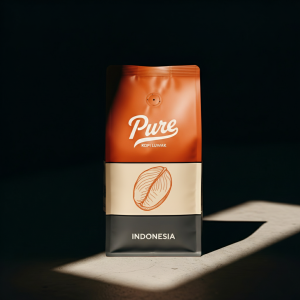
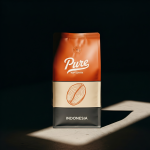
Pure Kopi Luwak
Wild civet coffee from Java. 88.5 SCA cupping score. From $125 for 100g.
The plantations spread across Java’s highlands. The work was grueling. Indonesian farmers grew the coffee, harvested it, processed it — and were forbidden from keeping any of it for themselves. Under both VOC rule and later the Cultuurstelsel, the beans belonged entirely to the colonial apparatus. Coffee was a Dutch product, grown by Javanese hands, for Dutch profit.
The Forbidden Harvest
But prohibition has always been the mother of invention. With roasted coffee circulating among Dutch colonists and officials — its aroma drifting through plantation offices and trading houses — the Javanese farmers who grew it had no legal means to taste what they spent their lives producing. So they watched, and they noticed something the plantation owners had overlooked entirely.
Moving through the coffee groves at night was the Asian palm civet — Paradoxurus hermaphroditus — a small, catlike creature the Javanese called the luwak. The luwak was drawn to ripe coffee cherries, eating the fruit whole. What passed through the animal’s digestive tract and emerged on the forest floor were the coffee beans themselves, fermented within the civet’s gut and cleaned free of their pulp by the body’s natural processes.
The plantation workers began collecting these beans. They cleaned them, dried them, and roasted them in secret — producing a cup of coffee that, by all accounts, was something altogether different from the plantation product. Smoother. Less bitter. With a depth of flavor that no one had tasted before. Word passed quietly from village to village. Kopi luwak — civet coffee — had been born not from luxury, but from necessity.
A Discovery Recognized
The question of exactly when kopi luwak shifted from plantation-worker secret to recognized delicacy is difficult to pin down with precision — these things rarely come with a timestamp. What the historical record does suggest is that at some point in the nineteenth century, Dutch colonists themselves became aware of what the Javanese had long been drinking. Some accounts indicate that colonial administrators, having heard of the workers’ brew, tried it — and were startled by its quality.
There is a certain irony embedded in this moment: the colonizers who had banned the harvest discovering that the banned harvest was extraordinary. Kopi luwak became, briefly, a coveted commodity among the Dutch colonial class — a reversal of the original power dynamic that would have struck any Javanese farmer as either satisfying or enraging, depending on temperament.
Try the coffee this article is about
Wild-sourced from Java, 88.5 SCA cupping score, free US shipping. From $125 for 100g.
Shop Pure Kopi Luwak →Centuries of Local Tradition
For the better part of two centuries after the Cultuurstelsel, kopi luwak remained essentially what it had always been: an Indonesian product, consumed by Indonesians, deeply embedded in local coffee culture. The VOC collapsed in 1799. Dutch colonial rule persisted until Indonesian independence in 1945. Through all of it, the practice of collecting civet-processed beans from the forest floor continued in Java, Sumatra, and Sulawesi — a tradition with roots in colonial hardship that had evolved into genuine craft.
Outside Southeast Asia, almost no one had heard of it. For most of the twentieth century, kopi luwak was the well-kept secret of Indonesian coffee drinkers and the occasional well-traveled trader. It required no global marketing, no celebrity endorsement. It simply was what it was: a rare, remarkable coffee with a peculiar origin story and a devoted local following.
The Global Breakthrough
That changed in the 1990s. The specialty coffee movement was gaining momentum in the United States and Europe, driven by a new generation of roasters and consumers who wanted more than commodity beans — who wanted provenance, variety, and story. Into this environment, kopi luwak arrived like a rumor that turned out to be true.
By the mid-1990s, Western specialty coffee publications and food journalists had begun covering kopi luwak, drawn by its extraordinary origin and its extraordinary price. The coffee’s rarity — at the time, genuine wild-collected kopi luwak was vanishingly scarce — justified prices that stunned American and European consumers accustomed to paying a few dollars per pound. The food world took notice.
The Bucket List Effect
Global fame, however, arrived in a darkened cinema in December 2007.
The Bucket List, directed by Rob Reiner and starring Jack Nicholson and Morgan Freeman, featured a scene that would alter the course of kopi luwak’s history. Nicholson’s character — a wealthy, imperious billionaire — is shown savoring an extraordinarily expensive coffee. Freeman’s character eventually reveals the secret: the coffee is kopi luwak, processed through the digestive system of a civet cat. Nicholson’s expression shifts from pleasure to horror. The audience laughed. And then, apparently, millions of them went online to find out where they could buy some.
The film didn’t invent kopi luwak’s reputation, but it compressed decades of slow word-of-mouth into a single cultural moment. Demand surged overnight, reaching corners of the world that specialty coffee publications had never touched. And that surge set in motion a crisis that nearly destroyed the thing it celebrated.
The Fraud Crisis
Wild civets, moving freely through forest and plantation, produce a limited and unpredictable supply of kopi luwak. When demand multiplied, that supply could not keep pace. The response from commercial producers was predictable and devastating: civets were captured and caged, force-fed coffee cherries in industrial conditions, and kept in small enclosures for the duration of their productive lives.
Investigations by the BBC, the Humane Society, and other organizations documented the welfare realities of these operations — stressed, malnourished animals, far removed from the nocturnal forest foraging that defines their natural behavior. The civet’s digestive chemistry, which gives wild kopi luwak its distinctive character, functions differently in a stressed, cage-confined animal eating a diet of nothing but coffee cherries. The product that resulted was often inferior to the wild original — and the conditions in which it was produced were, by any measure, indefensible.
Simultaneously, the market filled with outright fraud. Coffee labeled “kopi luwak” that had never been near a civet. Blends stretched with ordinary beans. The explosion of demand had attracted producers who saw a premium price and provided nothing to justify it. Understanding the difference between wild and caged kopi luwak became not just a matter of ethics, but of basic consumer protection.
The Wild-Sourced Revival
The fraud crisis and welfare scandals did not kill kopi luwak. They clarified it. A category that had grown too fast, with too little accountability, was forced to reckon with what it actually was — and what it needed to be.
Among producers in Java and Sumatra, a quieter movement had been underway: a return to the original method. Wild civets, roaming freely through forest and coffee grove, selecting the ripest cherries by instinct. Beans collected from the forest floor each morning by farmers who knew the land. Small-batch processing. Traceability from grove to bag.
This is where kopi luwak stands today — split between a commodity market still rife with misrepresentation, and a small number of producers committed to the kind of sourcing that Van den Bosch’s plantation workers would have recognized: honest, careful, and rooted in the actual landscape of Java. Knowing how to tell these apart is essential for anyone serious about buying the real thing — and verifying authentic kopi luwak before you purchase is the single most important step you can take.
Three centuries after a Javanese plantation worker first collected beans from a forest floor and tasted something extraordinary, the coffee they discovered is still being made the same way. The wild-sourced kopi luwak from Java available here — $125 for 100g — traces a direct line back to that original discovery: free-roaming civets, morning collection, careful hands. History is rarely this intact.
Pure Kopi Luwak
Wild civet coffee from Java. 88.5 SCA cupping score. From $125 for 100g.
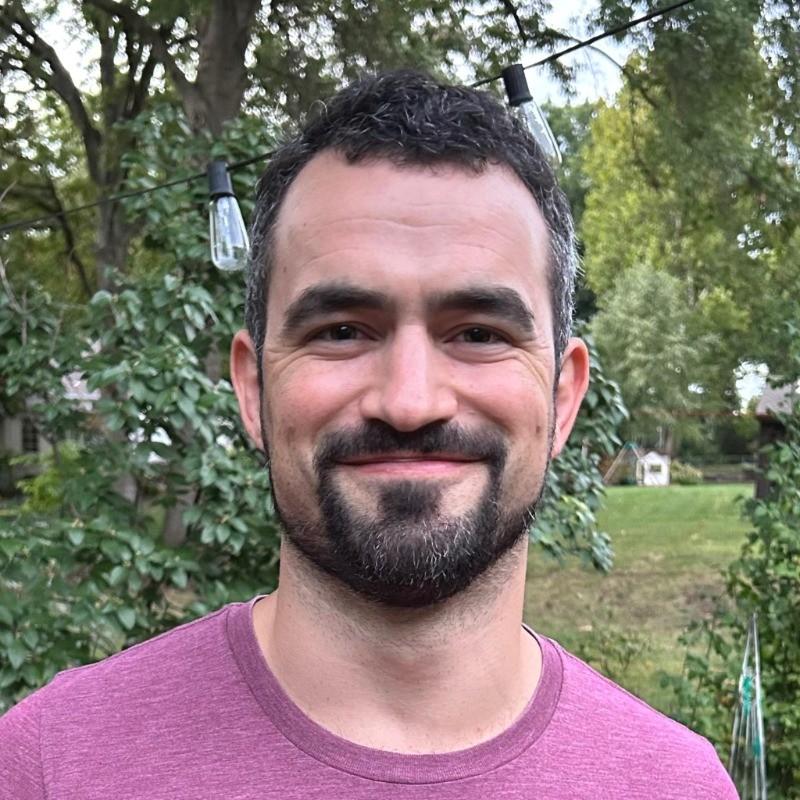
Roger Abbott founded Pure Kopi Luwak in 2018 after a trip through the volcanic highlands of Java, and has bought from the same farming families ever since. He only works with collectors of wild civet coffee, never caged. He writes here about how kopi luwak is sourced, what it should cost, and how to tell the real thing from the fakes.