A barista in a Melbourne specialty café once described kopi luwak to a customer as “the coffee that forgot to be unpleasant.” It’s an odd compliment, but it captures something real: for most people who drink genuine wild-sourced kopi luwak for the first time, the dominant impression isn’t what they taste — it’s what they don’t. No bitterness. No sharp acidic edge. No finish that makes you reach for water. Just a cup that’s improbably, almost suspiciously smooth from first sip to last.
The word “smooth” gets overused in coffee marketing until it means almost nothing. But smoothness in coffee is a measurable phenomenon, rooted in specific organic acids and protein compounds that define how a coffee finishes on the palate. Understanding what creates smoothness — and why it’s rarer than producers claim — explains why certain coffees command the prices they do.
What Smoothness Actually Means in Coffee Chemistry
Coffee tastes bitter primarily because of a group of compounds called chlorogenic acid lactones. These form when chlorogenic acids — antioxidant-rich compounds present in high concentrations in green coffee beans — break down during roasting. At lighter roasts, some chlorogenic acids survive intact; at medium to dark roasts, they convert almost entirely into bitter-tasting lactones. This is why dark-roasted coffee is reliably harsher than light-roasted coffee from the same bean — you’ve essentially converted more of the pleasant precursor compounds into bitter degradation products.

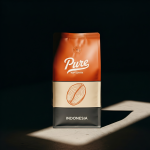
Pure Kopi Luwak
Wild civet coffee from Java. 88.5 SCA cupping score. From $125 for 100g.
Astringency — the dry, puckering feeling that makes cheap coffee unpleasant — comes from a different direction: phenolic compounds that bind with proteins in your saliva and on your tongue. These are amplified by over-extraction, poor water quality, or low-quality beans that needed over-roasting to be palatable at all.
Acidity in coffee comes primarily from organic acids: citric acid (bright, lemon-like), malic acid (apple-like, somewhat harsher), and acetic acid (sharp, vinegar-like if overexpressed). Well-balanced acidity is what makes an Ethiopian Yirgacheffe or a Kenyan AA pleasant and complex. Unbalanced acidity — too much malic or acetic, not enough sweetness to counterbalance — is what makes a badly extracted pour over taste sour and aggressive.
True smoothness requires low bitterness, minimal astringency, and balanced (not absent) acidity. It’s not the same as flatness. A flat coffee with no character is just underwhelming. A genuinely smooth coffee has complexity and depth, but none of the rough edges that force you to consciously tolerate it.
Why Most Coffees Can’t Achieve This
The challenge is that bitterness precursors and quality precursors are often the same compounds. Chlorogenic acids, which break down into bitter lactones during roasting, are also antioxidants and contributors to perceived complexity. Roasters walk a narrow line: roast light enough to preserve complexity, but risk some harshness from unreacted chlorogenic acids; roast dark enough to fully develop sweetness, but convert more acids into bitter lactones.
Farms try to manage this by harvesting only peak-ripe cherries, which have the ideal balance of sugars and acids. Well-resourced specialty farms use refractometers to measure cherry Brix levels — the dissolved sugar content of the pulp — targeting a narrow window around 18-22 degrees Brix where the flavor precursors are in optimal balance. Below that range, the coffee tastes underdeveloped and harsh. Above it, the cherry has started to break down.
Even with perfect harvesting and careful roasting, most coffees retain some bitterness because the proteins in the green bean that become bitterness precursors during roasting haven’t been modified. They go through the roaster intact and convert as designed. The resulting cup requires milk, sugar, or simply the drinker’s tolerance to manage.
Try the coffee this article is about
Wild-sourced from Java, 88.5 SCA cupping score, free US shipping. From $125 for 100g.
Shop Pure Kopi Luwak →What Civet Processing Changes
Wild kopi luwak arrives at the roaster differently. When an Asian palm civet (Paradoxurus hermaphroditus) consumes a coffee cherry and digests it over 12-24 hours, proteolytic enzymes in its stomach and small intestine begin partially hydrolyzing the proteins in the outer layers of the coffee seed. Research published in food chemistry journals has documented lower concentrations of certain storage proteins in civet-processed beans compared to conventionally processed beans from the same origin — proteins that, when intact, become bitterness and astringency precursors during high-heat roasting.
Their partial hydrolysis before roasting means less bitter material is available to form during the roast. This is the biochemical mechanism behind kopi luwak’s famous smoothness — not marketing, not mystique, but a direct consequence of enzymatic modification before the beans ever encounter heat.
Separately, comparative analysis of civet-processed versus conventionally processed beans from the same farms has found lower concentrations of malic and citric acids in genuine kopi luwak. The civet’s acidic digestive environment modifies the surface chemistry of the bean in ways that reduce the organic acid load that otherwise contributes to sharp, edgy acidity. What remains isn’t flat — it’s a cleaner, rounder acidity that integrates into the cup rather than dominating it.
How Wild Kopi Luwak Compares to Other “Smooth” Coffees
Jamaica Blue Mountain regularly appears on lists of the world’s smoothest coffees, and its reputation is earned. Grown at 910 to 1,700 metres in Jamaica’s Blue Mountains, it produces a notably mild, balanced cup — low acidity, clean finish, gentle sweetness. The smoothness comes from the Typica cultivar (the same variety grown in Java’s best highland farms), the altitude, and the strict quality control enforced by the Coffee Industry Board of Jamaica, which certifies all genuine Blue Mountain exports.
Hawaiian Kona occupies a similar niche: mild, smooth, low acidity, notable sweetness. Both are genuine premium coffees. Both achieve smoothness through excellent growing conditions and careful processing. Neither achieves it through enzymatic modification of the proteins and acids themselves.
That’s the distinction. Blue Mountain and Kona are smooth because their starting material is exceptional and their processing is clean. Wild kopi luwak is smooth because the beans themselves are chemically different by the time they reach the roaster — the bitterness precursors have already been partially neutralized by an animal’s digestive chemistry. The smoothness isn’t a characteristic of the growing conditions; it’s an alteration of the bean’s fundamental composition.
Finding the Real Thing
The coffee market is full of products claiming smoothness. What distinguishes genuine smoothness from marketing is specificity: a smooth coffee should be smooth without milk, without sugar, at any reasonable brew temperature, across multiple cups from the same bag. Genuine smoothness doesn’t require compensation.
Authentic wild kopi luwak — collected from free-ranging civets on Javanese coffee farms, not from caged animals fed indiscriminate diets — meets this standard consistently because the biochemical modification is real and measurable. Pure Kopi Luwak sources exclusively from wild civets on Javanese highland estates, where Arabica cherries grow at elevations above 1,200 metres and are selected by the animals themselves for peak ripeness.
The smoothest coffee in the world isn’t a product of better marketing. It’s a product of a specific, documented biological process that no other coffee on earth replicates. And for the people who’ve spent years tolerating the rough edges in everything else they’ve brewed, tasting that difference for the first time tends to feel like a small, pleasant kind of correction.
Pure Kopi Luwak
Wild civet coffee from Java. 88.5 SCA cupping score. From $125 for 100g.

Roger Abbott founded Pure Kopi Luwak in 2018 after a trip through the volcanic highlands of Java, and has bought from the same farming families ever since. He only works with collectors of wild civet coffee, never caged. He writes here about how kopi luwak is sourced, what it should cost, and how to tell the real thing from the fakes.