Coffee and dark chocolate taste good together for the same reason coffee and slow-cooked meat taste good together: all three share a family of aromatic compounds called pyrazines, produced by the Maillard reaction when amino acids and sugars are exposed to heat. When you find a pairing that works, there’s almost always a molecular explanation for it. The flavor doesn’t just happen to suit each other — they share chemical architecture that the brain reads as coherence.
This is the foundation of modern food pairing theory, and it applies to coffee more richly than most people realize. Coffee is one of the most complex flavor substances known to food science, containing more than 1,000 distinct volatile compounds after roasting. Finding foods that resonate with that complexity — rather than clash with or muffle it — is a skill worth developing, particularly when you’re working with premium coffee where the investment in quality deserves a serving context that does it justice.
The Chemistry of Why Pairings Work
The clearest example of chemical pairing logic in coffee is the chocolate-coffee combination. Both undergo Maillard reactions during processing — cocoa nibs during roasting and conching, coffee beans during roasting. Both produce pyrazines and furans, the ring-structured volatile compounds responsible for nutty, roasted, toasty character. When you eat dark chocolate and drink coffee simultaneously, the shared compounds reinforce each other, and what you perceive is greater richness than either would deliver alone.
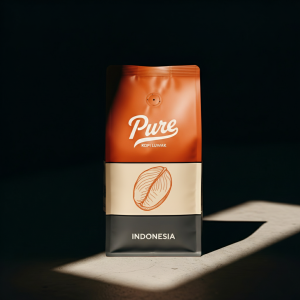
Pure Kopi Luwak
Wild civet coffee from Java. 88.5 SCA cupping score. From $125 for 100g.
A 2022 study published in Food Quality and Preference examined how pairing coffee with basic taste solutions (sweet, sour, salty, umami) changed perceived bitterness. The findings were practical: sweet and salty pairings decreased perceived bitterness across all coffee samples, while umami pairings reduced bitterness in lighter, more acidic coffees but sometimes enhanced it in others. This explains why aged cheeses — with their high glutamate content providing umami — can dramatically smooth the edges of a bright, acidic coffee without simply sweetening it.
Contrasting pairings work through a different mechanism: a food that provides one taste can suppress or balance an opposing taste in the coffee. The acidity in a citrus dessert, for example, actually reduces the perception of bitterness in the accompanying coffee because the sour compounds occupy some of the same bitter-taste receptor pathways. This is why a slice of lemon tart alongside a medium-roast Ethiopian often makes both taste better — the brightness of the dessert and the brightness of the coffee sing in unison rather than competing.
Try the coffee this article is about
Wild-sourced from Java, 88.5 SCA cupping score, free US shipping. From $125 for 100g.
Shop Pure Kopi Luwak →Pairing by Coffee Origin
Origin determines flavor profile, and flavor profile determines which foods work best. These aren’t rigid rules — but they’re based on flavor logic rather than custom or habit.
Coffees with significant fruit character — Ethiopian naturals, Kenyan washed lots, Colombian high-altitude Arabicas — pair naturally with fresh fruit, berry preserves, and desserts built on stone fruit or citrus. The parallel fruitiness creates harmony, not competition. They also pair well with goat’s milk cheeses, where the tang of the dairy echoes the coffee’s bright acidity.
Earthy, chocolatey, medium-bodied Javanese Arabica responds better to pairings with roasted nuts, milk chocolate, and dark bread. The earthiness in both the coffee and the food creates a comforting coherence — something in the shared mineral-roasted quality that makes a cup of good Java coffee and a piece of walnut bread feel like a complete thought.
Wild kopi luwak, with its characteristically smooth, low-bitterness profile and modest acidity, occupies an interesting pairing space. Because it lacks the sharp edges of most coffees — the aggressive bitterness of over-roasted beans, the jarring bright acidity of some high-altitude origins — it’s forgiving and versatile. It doesn’t require pairing to tame it; it pairs to enhance it. The smooth body and subtle complexity of authentic wild kopi luwak works particularly well with neutral, fatty foods that don’t compete for attention: good butter pastry, almond-based sweets, mild soft cheeses, or simply a few squares of high-quality 65-70% dark chocolate.
What Clashes and Why
Certain pairings actively fight the coffee rather than complementing it. Very sweet desserts — sugary cakes, frosted pastries, American-style donuts — tend to make coffee taste more bitter by contrast. The sugar in the food temporarily overwhelms the palate, and when you return to the coffee, the bitter compounds register more aggressively against the now-sweetened baseline. This is why specialty coffee professionals often serve chocolate at relatively low sugar content (60% cacao or above) rather than milk chocolate: the sugar level matters, not just the chocolate-ness.
Spiced foods present a different problem. Cinnamon and anise can complement certain natural-processed coffees, but heavy spicing in a dish tends to overwhelm delicate aromatic compounds in the coffee rather than harmonizing with them. If the coffee has distinctive floral or fruit notes that you’re trying to appreciate, pairing it with a complex curry or heavily spiced preparation is likely to bury those notes entirely. Save a nuanced coffee for a simpler food context.
Citrus juice — as opposed to citrus-flavored desserts — creates issues. The high acidity of fresh orange or grapefruit juice lingers on the palate and makes any subsequent coffee taste flat and metallic. If you’re serving a coffee experience where the cup itself is the point, acidic beverages earlier in the sequence work against you.
The Practical Serving Context
A coffee pairing sequence for a small group is one of the more pleasant ways to develop tasting skills and introduce people to quality coffee simultaneously. Three or four different coffees alongside three or four food items creates a structured experience that teaches more in an hour than most reading about coffee will in a year.
The format: arrange coffees in order from lightest and most acidic to heaviest and most full-bodied. Pair each with one food item — something chosen to either complement or contrast the specific profile. Take a spoonful of sparkling water between coffees to clear the palate. Take notes, compare impressions, argue about whether the walnut went better with the Java or the Guatemala.
For anyone exploring the relationship between coffee origin and flavor in more depth, coffee terroir explains why different origins produce such different cup profiles. And for understanding how processing method contributes another layer of flavor complexity to work with in pairing, the overview of anaerobic fermentation in coffee processing is a useful companion read.
Pure Kopi Luwak
Wild civet coffee from Java. 88.5 SCA cupping score. From $125 for 100g.

Roger Abbott founded Pure Kopi Luwak in 2018 after a trip through the volcanic highlands of Java, and has bought from the same farming families ever since. He only works with collectors of wild civet coffee, never caged. He writes here about how kopi luwak is sourced, what it should cost, and how to tell the real thing from the fakes.