Colombia exports more premium washed Arabica than any country on earth. Its coffee has been synonymous with quality for so long that the country built an entire national brand around it — Juan Valdez, the Andes, the friendly farmer — and the world accepted that story wholesale. When most people think of “good coffee,” they’re picturing something Colombian. That’s not an accident. It’s decades of positioning executed perfectly.
Kopi luwak comes from Java, Indonesia. It has almost no marketing budget and a name that, when translated literally, loses people immediately. What it has instead is a biological production process that no Colombian farm can replicate and a flavor profile that reads as fundamentally different from anything washed Arabica can produce. Whether different means better depends on what you’re looking for. But the comparison is worth making in detail, because the two coffees are solving entirely different problems.
What Colombian Coffee Actually Tastes Like
The shorthand for Colombian coffee is “balanced,” which is accurate but undersells the nuance. Colombia’s major growing regions each produce distinct profiles. Huila, in the south, sits at elevations between 1,500 and 2,000 meters on volcanic soil, and produces coffees with bright citrus acidity, caramel sweetness, and a clean finish that specialty roasters prize. Nariño, climbing even higher toward the Andes’ equatorial peaks, delivers intense concentration — more acidity, more intensity, more of everything. Antioquia in the north, Colombia’s most productive region, produces the balanced, nutty, chocolate-forward coffees that built the country’s original reputation.
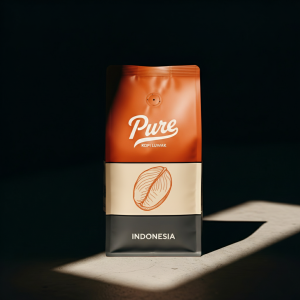
Pure Kopi Luwak
Wild civet coffee from Java. 88.5 SCA cupping score. From $125 for 100g.
The common thread across all these regions is clarity. Colombian coffee, processed almost exclusively by the washed method, produces cups where individual flavor notes are well-defined and the acidity is a feature rather than a flaw. A well-roasted Colombian Huila tastes like someone cleaned every flavor with a precision instrument. Nothing muddy, nothing ambiguous. That’s the appeal.
What Kopi Luwak Tastes Like — And Why It’s Different
Wild kopi luwak, produced by Asian palm civets foraging through Javanese highland farms, does the opposite of what Colombian processing achieves. Where washed Colombian beans produce definition and brightness, wild kopi luwak produces smoothness and depth. The reason is enzymatic, not agricultural.
When a civet consumes a coffee cherry, its digestive enzymes partially break down proteins in the outer layers of the bean — proteins that would otherwise become bitterness precursors during roasting. Simultaneously, the extended transit through the animal’s digestive tract modifies the bean’s acid content. Researchers who have compared kopi luwak to conventionally processed beans from the same origin have documented reduced concentrations of malic and citric acids in the civet-processed coffee. The result is a cup with notably less acidity and sharpness than the starting material would have produced — and a body that reads heavier and rounder on the palate.
Where a Colombian Huila greets you with citrus brightness and an energetic finish, wild kopi luwak from Java settles in differently: full-bodied, low in bitterness, with chocolate, earth, and a characteristic smoothness that lingers rather than snapping off cleanly. They’re not competing for the same moment. You reach for them at different times, in different moods.
Try the coffee this article is about
Wild-sourced from Java, 88.5 SCA cupping score, free US shipping. From $125 for 100g.
Shop Pure Kopi Luwak →The Price Gap and What Justifies It
Premium specialty Colombian lots — from small farms in Huila or Nariño, sold through Cup of Excellence auctions — can command extraordinary prices for professional buyers. But at the retail level, the best Colombian single-origins from quality roasters typically land between $20 and $45 per 250g bag. Even the most celebrated Colombian coffee is accessible.
Wild kopi luwak occupies a different category entirely. The supply constraint isn’t marketing — it’s biological. A wild civet foraging through a coffee farm might process 50 to 100 cherries on a single night, each one individually selected by an animal whose preferences align with peak ripeness. Collecting those beans from the forest floor, cleaning and processing them, and bringing them to export-ready quality is genuinely labor-intensive at a small scale. Pure Kopi Luwak, sourced exclusively from wild civets on Javanese farms, sells at $125 for 100g — not because of mystique, but because of the actual constraints on production.
That price buys you roughly 15 to 18 cups of exceptional coffee, depending on your brewing ratio. At the per-cup level, it’s closer to a high-end coffee shop than to anything you’d call extravagant. The question isn’t whether kopi luwak is “worth it” in the abstract — it’s whether the experience it delivers is the one you’re looking for.
Which One to Choose — And When
Colombian coffee wins when you want brightness, clarity, and the kind of clean acidity that wakes you up and asks you to pay attention. A well-sourced Huila or Nariño, properly roasted and brewed as a pour over, is one of the most satisfying cups available to any home brewer. It’s the reliable excellence that earned Colombia its reputation.
Kopi luwak wins when you want something fundamentally different — not just a premium version of familiar coffee, but a different sensory experience with a different mechanism behind it. It’s the coffee for people who’ve tried everything in the Colombian catalog and want to understand what the enzymatic transformation of a wild animal changes. It’s also the coffee for people who find acidity uncomfortable and want the smoothest possible cup from high-quality starting material.
They’re not ranked against each other. They’re two different answers to the question of what premium coffee can be. Colombia answers it with transparency and purity. Java kopi luwak answers it with transformation and depth. If you’ve been drinking Colombian for years, wild kopi luwak will show you what the other end of the spectrum tastes like — and it might recalibrate your expectations for good.
The comparison also matters for anyone buying as a gift. Colombian coffee at a premium price point says “I know what quality looks like.” Wild kopi luwak says something harder to say with any other product: “I found the rarest coffee on earth and thought of you.” For more on how kopi luwak stacks up against other premium benchmarks, see our overview of the world’s most expensive coffees.
Pure Kopi Luwak
Wild civet coffee from Java. 88.5 SCA cupping score. From $125 for 100g.
Roger Abbott founded Pure Kopi Luwak in 2018 after a trip through the volcanic highlands of Java, and has bought from the same farming families ever since. He only works with collectors of wild civet coffee, never caged. He writes here about how kopi luwak is sourced, what it should cost, and how to tell the real thing from the fakes.