In 2021, the Black Ivory Coffee Company produced 215 kilograms of its elephant-processed Arabica — the entire annual output of a product that retails at $2,000 per kilogram and sells for $50 per cup at the handful of luxury hotels that carry it. That 215 kilograms, spread across global luxury hotel distribution, represents less coffee than a single midsize café serves in a year. This is what the top end of the expensive coffee market actually looks like: not premium pricing, but genuine physical scarcity built into the production model.
Understanding the hierarchy of expensive coffees matters because the reasons for the price vary enormously — and so does the cup quality. Some expensive coffees are expensive because of authentic rarity. Others trade on protected geographic designations. A few have earned their prices through documented flavor excellence. This ranking covers the ones that actually matter for buyers navigating the premium market.
Black Ivory Coffee: $2,000 per Kilogram
Black Ivory Coffee, produced in Thailand‘s Surin Province, is currently the most expensive commercially available coffee in the world at consistent retail prices. The production model is similar in concept to kopi luwak: Arabica cherries are consumed by elephants, pass through their digestive systems, and are collected from the elephants’ waste by the mahouts and their families. The elephants’ larger digestive tract and longer transit time creates a different enzymatic environment than the civet’s, and the result is described as notably low in bitterness with pronounced sweetness and a heavy, almost syrupy body.
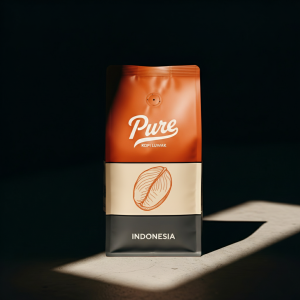
Pure Kopi Luwak
Wild civet coffee from Java. 88.5 SCA cupping score. From $125 for 100g.
The price reflects genuine production constraints. Approximately 33 kilograms of raw cherries yields one kilogram of finished product — most beans are either chewed and fragmented by the elephants or lost in the bush after excretion. Eight percent of sales revenue is donated to the Golden Triangle Asian Elephant Foundation for veterinary care. The 2021 total production of 215 kilograms for a product sold at $50 per cup at select hotels is not a manufactured scarcity — it’s a hard physical limit of the production method.
Wild Kopi Luwak: $600–$1,300 per Kilogram
Wild-sourced kopi luwak occupies the tier just below Black Ivory as the most expensive coffee with genuine retail availability for individual buyers. Market data puts wild-collected beans at up to $1,300 per kilogram ($590 per pound), while cage-farmed kopi luwak — produced from civets kept in confinement and fed regardless of cherry ripeness — is available for as little as $100 per kilogram. The price gap between those two figures reflects a quality difference, not just an ethics distinction.
Wild civets select peak-ripe cherries based on smell and taste. Caged civets eat whatever they’re given, under conditions of chronic stress that compromise their digestive function. The proteolytic enzymatic breakdown that gives authentic kopi luwak its characteristic smoothness — partial hydrolysis of bitter protein precursors — depends on the animal being well-nourished and its digestive system functioning properly. Cage production undermines this mechanism at the source.
Pure Kopi Luwak, sourced from wild civets on Javanese farms, retails at $125 for 100 grams ($1,250/kg) — within the wild-sourced tier. Before purchasing any kopi luwak, the authentication guide covers exactly what to verify, since the market has significant counterfeiting problems.
Try the coffee this article is about
Wild-sourced from Java, 88.5 SCA cupping score, free US shipping. From $125 for 100g.
Shop Pure Kopi Luwak →Gesha (Geisha) Coffee: The Variety Premium
Gesha is not a processing method — it’s an Arabica variety descended from plants originally collected in the Gesha region of western Ethiopia. It gained international attention in 2004 when a Hacienda La Esmeralda lot won the Best of Panama competition by a margin that prompted judges to describe a flavor profile unlike anything previously evaluated: intense jasmine florals, bergamot, tropical fruit notes, and a delicacy that most Arabica varieties can’t approach at any price.
Competition lots of Panamanian Gesha have since set auction records measured in thousands of dollars per kilogram. Non-competition retail Gesha from Panama or Colombia is now available from specialty roasters at $30–60 per 100 grams for standard lots — expensive but accessible. As covered in our Gesha deep-dive, the variety’s premium is built on flavor complexity, not on rarity of process. It is, by general specialty coffee consensus, genuinely extraordinary in the cup when sourced and roasted well.
Jamaican Blue Mountain: Geographic Protection at a Price
Jamaican Blue Mountain carries a certified geographic indication, meaning it can only legally be produced on the slopes of the Blue Mountains above 910 meters elevation in Jamaica’s Portland, St. Andrew, and St. Thomas parishes. The Jamaica Coffee Industry Board certifies and grades every export lot. The flavor profile — clean, mild, balanced, notably low in bitterness — has earned Blue Mountain its reputation at specialty retailers globally.
The specialty coffee community has debated for years whether the premium is proportional to the taste advantage or whether the GI protection is doing more work than the actual cup quality. It’s reliably good coffee; whether it’s exceptional coffee is a question tasters often answer differently. Japanese buyers, who import the majority of the annual Blue Mountain crop, have historically been the primary market — which has created a feedback loop where the product’s reputation is maintained partly by the premium price rather than primarily by cup performance.
Kona Coffee: Terroir Without Drama
Premium Kona Extra Fancy, grown on the slopes of Mauna Loa and Hualalai on Hawaii’s Big Island, occupies a tier below the coffees above but well above most specialty market offerings. The “Kona blend” fraud problem — Hawaii state law permits blends containing as little as 10% actual Kona coffee to be labeled as “Kona blend” — means that buyers need to verify 100% Kona sourcing explicitly. This authenticity challenge mirrors the kopi luwak market: the brand is strong enough that counterfeit and adulterated product is commercially viable.
What the Ranking Means for Buyers
Black Ivory is aspirational and largely inaccessible for individual buyers — the hotels that carry it don’t typically sell it retail. Wild kopi luwak is the most expensive coffee a serious buyer can actually purchase, have delivered, and brew at home. Gesha is the premium buyer’s accessible luxury, available from good roasters with documentation. Blue Mountain and Kona are quality coffees with geographic premiums attached that may or may not be proportional to their taste advantage.
If you’re deciding where to invest in one genuinely exceptional coffee experience, the wild kopi luwak tier is the only one where you’re getting something categorically different — not just a premium version of coffee you already know, but a cup produced through a biological process that no other coffee undergoes.
Pure Kopi Luwak
Wild civet coffee from Java. 88.5 SCA cupping score. From $125 for 100g.

Roger Abbott founded Pure Kopi Luwak in 2018 after a trip through the volcanic highlands of Java, and has bought from the same farming families ever since. He only works with collectors of wild civet coffee, never caged. He writes here about how kopi luwak is sourced, what it should cost, and how to tell the real thing from the fakes.