The Toraja highlands of Sulawesi rise to elevations where coffee cherries mature slowly under broken cloud cover, drawing out sugars and acids in proportions that produce a cup unlike anything else in Indonesia. Sulawesi coffee has been called the most misunderstood of the great Indonesian origins — less famous than Sumatran Mandheling, less historically documented than Javanese, but consistently sought by specialty roasters who discover that its combination of thick body, low acidity, and layered earthiness satisfies something that other origins do not. Sulawesi kopi luwak, produced by wild Asian palm civets foraging through these same highlands at 1,300 to 1,500 meters above sea level, takes that character and refines it through one of the most selective biological processes in coffee production.
Toraja: The Heart of Sulawesi Coffee
The Toraja region in South Sulawesi is the primary source of the island’s finest coffee. The Sa’dan River valley and the surrounding highlands of Tana Toraja and North Toraja regencies support arabica cultivation under a traditional intercropping system — coffee trees grown among vegetables, fruit trees, and food crops under a shade canopy that regulates temperature and maintains soil moisture through Sulawesi’s sometimes-erratic rainfall patterns. This polyculture approach, practiced by Torajan smallholders for generations, produces coffee cherries that ripen unevenly but develop exceptional density and flavor complexity when harvested selectively.
Sulawesi arabica is processed predominantly by wet hulling (giling basah) — the same technique used in Sumatra — which contributes to the distinctive full body and earthy character that distinguishes Indonesian coffees from washed African and Central American origins. The finished bean emerges from hulling with a bluish-green tinge unique to Indonesian wet-hulled coffees, an indicator of the specific moisture and oxidation chemistry involved in the process.
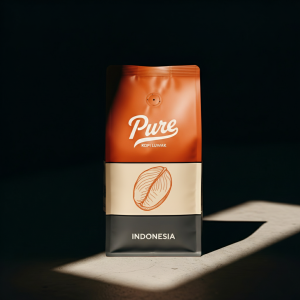
Pure Kopi Luwak
Wild civet coffee from Java. 88.5 SCA cupping score. From $125 for 100g.
At 1,300 to 1,500 meters elevation, Toraja coffee farms occupy a climatic sweet spot where nighttime temperatures drop enough to stress the coffee plant beneficially — slowing sugar metabolism in the cherry, building density in the bean, and creating the concentration of flavor compounds that make high-altitude coffees expensive to produce but extraordinary to drink.
Wild Civets in the Toraja Highlands
The Asian palm civet (Paradoxurus hermaphroditus) is well-established in Sulawesi’s highland coffee regions. Unlike some parts of Indonesia where civet populations have declined due to habitat loss, the Toraja highlands retain enough forest-coffee mosaic habitat to support meaningful wild civet populations. Farmers in the region describe long-established relationships with the animals — civets that return to the same farms seasonally, follow predictable routes through the coffee rows, and concentrate their cherry selection on the most accessible, ripest fruit.
Wild kopi luwak collection in Toraja follows the pattern common to authentic Indonesian production: morning collection rounds through the coffee farm and adjacent forest edge, gathering deposits left overnight, followed by immediate washing to remove any contamination, and sun drying on raised beds or concrete patios. The production volumes are inherently small — a Toraja wild kopi luwak producer typically collects a few hundred grams per day during peak harvest, aggregating into seasonal batches that rarely exceed a few dozen kilograms per farm. This scarcity is structural, not manufactured.
Try the coffee this article is about
Wild-sourced from Java, 88.5 SCA cupping score, free US shipping. From $125 for 100g.
Shop Pure Kopi Luwak →What Makes Sulawesi Kopi Luwak Different
The base coffee matters. Sulawesi Toraja arabica — before any civet processing — is already a distinctively full-bodied, low-acid coffee with earthy chocolate notes and an unusual creamy texture that specialty tasters consistently note. The civet processing takes this profile and modifies it in the same ways documented for other Indonesian kopi luwak origins: proteolytic enzymes in the civet’s gut partially hydrolyze bitter proteins; organic acids are reduced through digestive fermentation; the net result is lower bitterness, lower acidity, and enhanced body relative to conventionally processed Toraja coffee.
For a drinker who already loves Sulawesi Toraja coffee — and many serious specialty drinkers do — the kopi luwak version is not a gimmick. It is the same terroir and cultivar expression, minus the sharpness, with the mouthfeel character amplified. The creamy body that Toraja is known for becomes more pronounced. The earthiness remains but sits behind a smoothness that makes the cup feel luxurious rather than austere.
For comparison, Javanese kopi luwak from the volcanic highlands produces a slightly brighter, more structured cup than Sulawesi — reflecting the different soil composition and altitude of the West Java highlands. Both are expressions of Indonesian arabica through wild civet processing; they differ the way two single-origin coffees from the same country but different regions differ — related in character, distinct in detail.
Sulawesi in the Context of Indonesian Coffee Regions
Indonesia produces commercial coffee on at least a dozen islands, but four dominate the specialty narrative: Java, Sumatra, Bali, and Sulawesi. Each has a distinct character shaped by soil, altitude, climate, and processing tradition. Sulawesi’s character — thick-bodied, earthy, low-acid, with dark chocolate and occasional dried fruit notes — makes it one of the most versatile blending components for espresso roasters, who use it to add body and depth to lighter African components. As a single-origin pour-over or filter coffee, it rewards a slower, more considered brewing approach that highlights its texture and earthiness rather than demanding brightness.
The specialty coffee world’s attention to Sulawesi has grown steadily in the past decade. Toraja coffee’s role in the Starbucks supply chain — Starbucks has sourced Sulawesi Toraja for decades, including as part of its single-origin and reserve programs — has given the origin broader name recognition than most Indonesian coffees outside Java and Sumatra. That commercial visibility has also created demand for authentic, small-production Sulawesi coffees, including kopi luwak, from buyers who want the origin’s character in a premium format.
For context on how Sulawesi fits into Indonesia’s broader coffee geography, Sulawesi Toraja coffee’s character and production offers detailed origin coverage. And for those thinking about how to brew a coffee like this properly, brewing kopi luwak at home covers the methods that show Indonesian low-acid coffees at their best.
Pure Kopi Luwak
Wild civet coffee from Java. 88.5 SCA cupping score. From $125 for 100g.

Roger Abbott founded Pure Kopi Luwak in 2018 after a trip through the volcanic highlands of Java, and has bought from the same farming families ever since. He only works with collectors of wild civet coffee, never caged. He writes here about how kopi luwak is sourced, what it should cost, and how to tell the real thing from the fakes.