You’re searching for cheap kopi luwak. Maybe you’ve seen prices all over the map — $20 for 100g here, $35 there, and then suddenly a seller asking $120. You’re wondering if the expensive stuff is just a markup, or if there’s something the budget sellers aren’t telling you.
There’s something they’re not telling you. If the price is below $75 per 100g, what you’re holding almost certainly isn’t kopi luwak at all.
The $75/100g Floor: Why Cheap Kopi Luwak Doesn’t Exist
We’ve spent years sourcing kopi luwak directly in Indonesia, and along the way we’ve spoken with virtually every legitimate seller operating in the market. What that experience reveals is a hard economic floor that no authentic producer can go below: $75 per 100g.
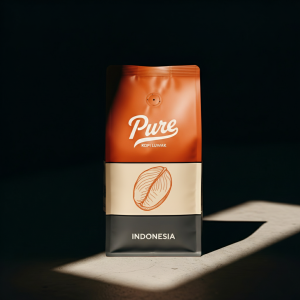
Pure Kopi Luwak
Wild-sourced. Organic. Arabica. From $125.
This isn’t a number we invented to justify our own pricing. It’s what the supply chain costs when you do things honestly.
Genuine wild kopi luwak starts with Asian palm civets — nocturnal animals that roam Indonesia’s coffee forests and selectively eat ripe coffee cherries. What they leave behind, after digestion, are coffee beans that have undergone a unique fermentation process inside their digestive system. Collectors trek through difficult terrain to find and gather these beans. The beans then need to be thoroughly cleaned, dried, hulled, sorted, roasted, and quality-checked before they’re fit for sale.
Every step in that chain has a real cost. The collection alone is labor-intensive. Quality sorting is meticulous. There’s no way to rush it or cut corners without producing something that isn’t kopi luwak — or isn’t worth drinking.
When you see cheap kopi luwak priced below this floor, you’re not getting a deal. You’re getting something else entirely.
Why Bulk Discounts Don’t Bring the Price Down
A common assumption is that volume purchasing brings prices down — that if a seller is moving a lot of product, they can afford to charge less. This logic works for most goods. It doesn’t work for authentic wild kopi luwak.
Wild civets aren’t farmed. They roam free and eat what they find. There’s no way to ramp up production to meet demand, negotiate better rates from a supplier who can scale output, or warehouse inventory to smooth out price fluctuations. The supply is genuinely limited by what wild animals naturally produce across Indonesia’s coffee regions.
This is important to understand because it’s the opposite of cage-farmed kopi luwak, where civets are kept in captivity and force-fed coffee cherries. Cage farming produces a higher volume of beans, but at significant cost to the animals — and, critically, to the quality of the coffee. Stress affects the digestive process. The selective eating behavior that makes wild kopi luwak distinctive is absent entirely. Cage-farmed kopi luwak is widely regarded as inferior, and it’s also an ethically troubling practice.
Authentic wild kopi luwak simply cannot be produced at scale. That’s why there are no volume discounts, and why any seller claiming to offer cheap kopi luwak in large quantities should be treated with serious skepticism.
What “Cheap Kopi Luwak” Actually Is
When a seller lists kopi luwak at $15, $25, or $40 per 100g, the most likely explanation is straightforward: it’s regular coffee labeled as kopi luwak.
Indonesian coffee is excellent, and many regions — Sumatra, Java, Bali — produce well-regarded specialty beans. But those beans are not kopi luwak, and they cost a fraction of what authentic civet coffee costs to produce. A dishonest seller can take low-grade or mid-grade Indonesian coffee, package it with civet imagery and “genuine kopi luwak” language, and sell it for a substantial markup — while still undercutting the real product’s price significantly.
Some products go further, adding artificial flavorings meant to mimic the smooth, low-acidity profile that makes genuine kopi luwak distinctive. These products are essentially flavored coffee masquerading as one of the world’s rarest brews. For a full breakdown, see our guide to the different types of fake kopi luwak.
The consumer has no way to verify the contents without laboratory testing. Sellers know this.
Red Flags: How to Spot Fake Kopi Luwak Before You Buy
Before you buy, look for these warning signs:
- Price below $75/100g. This is the clearest signal. Authentic wild kopi luwak cannot be produced and sold at a profit below this price point.
- No traceable origin. Legitimate sellers can tell you which region or farm their beans came from. Vague answers like “sourced from Indonesia” without specifics are a red flag.
- No evidence of wild civets. Authentic producers have photos, documentation, and relationships with collectors. If a seller can’t show you anything about where the beans came from, be cautious.
- Unusually large available quantities. Wild kopi luwak is scarce by nature. A seller with hundreds of kilograms in stock year-round should raise questions about sourcing.
- No information about processing. The post-collection process — cleaning, drying, sorting — is something real producers talk about. If the seller’s description jumps from “civets eat cherries” to “ready to brew” without any detail, that’s worth noting.
- Generic or stock packaging. Authentic kopi luwak producers take pride in their product and its presentation. Mass-produced packaging with generic civet imagery is a warning sign.
What Authentic Kopi Luwak Looks Like
When you’re dealing with a legitimate source, certain things stand out. The seller can speak knowledgeably about where their beans come from — not just “Indonesia” but the specific island, region, and coffee variety. They can explain their collection process and how they ensure the beans are genuinely from wild civets rather than caged ones. They have documentation or certification that supports their claims.
The price reflects reality. Authentic kopi luwak is expensive because authentic production is costly and supply is genuinely limited. A seller who seems to be doing you a favor with an unusually low price is almost certainly doing something else entirely.
Ask questions. A legitimate seller welcomes them. They’ve earned the right to charge what they charge, and they can explain why.
If you’re ready to experience kopi luwak the way it was meant to be — sourced from wild civets, traceable to origin, and properly processed — take a look at what we offer and see how it compares to what you’ve seen elsewhere.
Pure Kopi Luwak
Wild-sourced. Organic. Arabica. From $125.
Roger Abbott is the founder of Pure Kopi Luwak. He has spent over a decade sourcing wild kopi luwak directly from farmers and collectors in the highlands of Java, Indonesia — working exclusively with wild civets, never caged. He writes about specialty coffee, Indonesian origins, and the science behind what makes kopi luwak taste the way it does.
