Black Ivory Coffee is a Thai arabica that has been eaten, digested and passed by elephants in Surin province, then hand-collected, washed, dried and roasted. It is often called elephant poop coffee. On blackivorycoffee.com the smallest pack, 40 g, costs $170 with worldwide shipping included, and the company says that pack makes about two 8-ounce cups, so you are paying roughly $85 a cup at home. Is it worth it? As a once-in-a-lifetime curiosity with a good story behind it, yes, if the price does not matter to you. If what you want is the smooth, low-bitterness cup that animal-processed coffee is known for, wild kopi luwak gets you there for about $11 a cup.
What Black Ivory Coffee is
Black Ivory Coffee Company was founded by Canadian entrepreneur Blake Dinkin and launched commercially in 2012 after roughly nine years of development. Production started at the Golden Triangle Asian Elephant Foundation (GTAEF) in Chiang Saen, northern Thailand, and later moved to Surin province in the northeast, where the company works with families who own and care for elephants.
The coffee itself is Thai arabica grown in Chiang Rai province. The company sells whole roasted beans online and supplies a short list of luxury hotels and restaurants. Press coverage names Anantara Golden Triangle, Four Seasons, Grand Hyatt and InterContinental properties, and the company’s own site mentions venues in London, New York, Monaco and the Maldives.
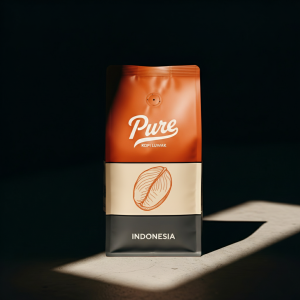
Pure Kopi Luwak
Wild civet coffee from Java. 88.5 SCA cupping score. From $125 for 100g.
Supply is tiny. The company currently says it harvests “just 500 pounds” a year, which is about 227 kg. Other figures in circulation are lower: 150 kg was reported for 2015 and 2017, and a 2025 interview with Dinkin cites 400 pounds.
How it is made
Ripe coffee cherries are mixed into the elephants’ normal food, which the company describes as including grasses, bananas and tamarind. The cherries spend somewhere between 12 and 72 hours in the digestive tract. The company’s explanation is that digestive enzymes break down some of the protein in the bean, and since protein is one source of bitterness in coffee, the cup comes out smoother.
Caretakers and their families then pick the intact cherries out of the dung by hand. The beans are washed, sun-dried, hulled, sorted and roasted. Most cherries are chewed, broken or lost. The Associated Press and AFP both reported that 33 kg of cherries are needed for 1 kg of finished coffee. The company’s current Q&A page says 20 kg. Either way, that loss rate is the main reason for the price.
What it tastes like (reported)
We have not cupped Black Ivory ourselves, so these are reported notes, not ours.
- The company’s notes for its 40 g pack: cacao, tamarind, dates, plum, a pu-erh tea undertone, “very little bitterness” and a sugarcane finish.
- Blake Dinkin, quoted by the Associated Press: “very smooth without the bitterness of regular coffee.”
- Hotel guests interviewed by the Associated Press in 2012 were pleasantly surprised. One expected it to be repulsive and said he loved it.
The common thread is a soft, tea-like, chocolatey cup with very low bitterness. That is close to how people describe good wild kopi luwak, and the mechanism is similar. One difference: we have not found a published, independent cupping score for Black Ivory. Our own coffee scored 88.5 out of 100 in a blind SCA-protocol cupping, and you can read the full cupping report.
What it costs and why
Current Black Ivory Coffee prices on blackivorycoffee.com, in US dollars with worldwide shipping and duties included:
- The Treasure, 40 g: $170
- The Companion, half a pound (227 g): $900
- The Collector, 1 kg: $3,500
Older articles mention a 35 g pack at lower prices. The entry pack is now 40 g. There is also a cheaper Mahout’s Blend (40 g for $90), which mixes Black Ivory with ordinary arabica that has not been through an elephant.
The price-per-cup maths is simple. The company says 40 g makes about two 8-ounce cups, a generous 20 g dose each. $170 divided by 2 is $85 a cup. Per 100 g, the 40 g pack works out to $425 and the 1 kg box to $350. In hotels, reported prices run from $50 to $85 a cup.
For comparison, Pure Kopi Luwak costs $125 for 100 g and $250 for 250 g with free US shipping, which is about $11 a cup at a normal dose. Even at Black Ivory’s heavy 20 g dose, the same cup would cost $20 to $25. Our kopi luwak price guide breaks down the wider market.
| Black Ivory Coffee | Wild kopi luwak (Pure Kopi Luwak) | Caged or tourist kopi luwak | |
|---|---|---|---|
| Animal | Asian elephant | Wild Asian palm civet | Captive palm civet |
| Origin | Surin province, Thailand (arabica from Chiang Rai) | West Java, Indonesia | Mostly Indonesia, also Vietnam and the Philippines |
| Annual supply | About 227 kg per the company (150 to 227 kg reported) | Small and seasonal, roasted twice a week | Large, no reliable figure |
| Price per 100 g | $350 to $425 | $100 to $125 | Roughly $30 to $70 |
| Price per cup at home | About $85 | About $11 | Roughly $3 to $7 |
| Where to buy | blackivorycoffee.com, select luxury hotels | purekopiluwak.com | Tourist plantations, marketplaces, many online shops |
| Ethics notes | Elephants eat cherries voluntarily in their feed, income to caretaker families, but the elephants are captive | Collected from free-roaming civets, never caged, every batch tested for pesticide residues | Civets are often kept in small cages on a coffee-heavy diet, and “wild” labels are frequently false |
Try the coffee this article is about
Wild-sourced from Java, 88.5 SCA cupping score, free US shipping. From $125 for 100g.
Shop Pure Kopi Luwak →Is it ethical?
On the available evidence, Black Ivory holds up better than most animal-processed coffee. The cherries are mixed into normal feed, and Dinkin’s point is that elephants only eat what they want. When the project began, GTAEF director John Roberts asked whether the elephants would get wired on caffeine. According to the Associated Press, Dinkin had blood tests run by a veterinarian on zoo elephants, which showed no caffeine absorbed from raw cherries. During the GTAEF years, 8% of sales went to the foundation to help fund a veterinarian.
In Surin, the company says caretakers earn a reliable income that is well above what tourism or ceremonial work pays, and that local high school students who help with preparation earn 350 baht per kilogram of picked coffee.
The fair criticisms are these. The elephants are captive, and captive elephants in Thailand are a contested subject whatever they are fed. The welfare and income claims come mainly from the company and the press it has hosted, not from an independent audit we could find. And some coffee professionals think the process is more story than substance. Aleaume Paturle of Café Lomi in Paris told AFP: “It’s fun but it’s not the best product,” because fermentation is hard to control inside an animal.
Black Ivory vs kopi luwak: which should you try first
Black Ivory is a wonderful curiosity if price is no object. The supply is genuinely tiny, the story is real and the money supports elephant-keeping families. If that is what you are after, buy the 40 g pack and enjoy it.
If you are curious about what digestion actually does to coffee, start with wild kopi luwak. It delivers the same low-bitterness, rounded, animal-processed character at roughly an eighth of the cost per cup. With Pure Kopi Luwak you also get a published 88.5 cupping score, beans from free-roaming civets in West Java and fresh roasting twice a week. At $125 for 100 g you get enough coffee to brew it several ways and learn what you like, not two cups and a memory.
A sensible order: kopi luwak first, Black Ivory later for a special occasion.
How to buy either one without getting fooled
- Buy Black Ivory only from blackivorycoffee.com, the company’s own marketplace listings, or a hotel it supplies. With a few hundred pounds produced a year, a deep discount from an unknown seller is a red flag.
- Check what you are buying. Mahout’s Blend is a blend with regular arabica, not pure Black Ivory.
- For kopi luwak, treat “wild” as a claim that needs evidence. Look for a named region, a clear statement that the civets are never caged, and lab or cupping documents you can read.
- Be wary of kopi luwak far below $100 per 100 g sold as wild. Caged coffee sells for $300 to $700 a kilogram, and blends are cheaper still.
- Look for a recent roast date and whole beans.
For a side-by-side on process, flavor and supply, see our longer comparison: kopi luwak vs Black Ivory Coffee.
FAQ
What is Black Ivory Coffee?
It is Thai arabica coffee that has passed through the digestive system of elephants in Surin province, Thailand. Caretakers collect the cherries from the dung by hand, and the beans are then washed, dried and roasted. Blake Dinkin launched the company in 2012.
How much does Black Ivory Coffee cost?
On the company’s website a 40 g pack costs $170, half a pound costs $900 and 1 kg costs $3,500, all with worldwide shipping included. That works out to $350 to $425 per 100 g, or about $85 per 8-ounce cup brewed at home. Hotels have reportedly charged $50 to $85 a cup.
Is elephant poop coffee safe to drink?
Yes. The beans are protected inside the cherry and parchment during digestion, and they are washed, dried and then roasted at temperatures that ordinary bacteria do not survive. The same applies to kopi luwak. We also test every batch of our coffee for pesticide residues.
Does Black Ivory Coffee harm the elephants?
There is no evidence that it does. The cherries are eaten voluntarily as a small part of the elephants’ feed, and veterinary blood tests cited by the Associated Press found no caffeine absorbed from raw cherries. The open question is the broader one about keeping elephants in captivity, which exists with or without coffee.
Is Black Ivory Coffee better than kopi luwak?
It is rarer and far more expensive, but not demonstrably better in the cup. Both are prized for low bitterness and a smooth, chocolatey profile. Black Ivory has no published independent cupping score that we could find, while Pure Kopi Luwak scored 88.5 out of 100 in a blind SCA-protocol cupping and costs $125 per 100 g.
Pure Kopi Luwak
Wild civet coffee from Java. 88.5 SCA cupping score. From $125 for 100g.
Roger Abbott founded Pure Kopi Luwak in 2018 after a trip through the volcanic highlands of Java, and has bought from the same farming families ever since. He only works with collectors of wild civet coffee, never caged. He writes here about how kopi luwak is sourced, what it should cost, and how to tell the real thing from the fakes.