Both coffees come from the same island chain. Both carry Indonesia’s mark: volcanic soil, equatorial rainfall, and an agricultural tradition built over centuries. But Sumatra Mandheling and wild kopi luwak from Java arrive at the cup through processes so different that comparing them reveals more about what processing can do to a coffee bean than almost any other side-by-side in the specialty market.
Sumatra Mandheling is grown at altitudes between 1,300 and 1,650 meters in the highlands of North Sumatra, processed through the wet-hulling method known locally as Giling Basah, and characterized by a full body, earthy forest notes, and tobacco-like depth that stands up well to dark roasting. Wild kopi luwak from Java is produced in entirely different circumstances: highland farms, wild civet selection of peak-ripe Arabica cherries, enzymatic transformation during the civet’s digestive transit, and careful medium roasting to preserve the processing’s effect on the bean. The price difference — roughly $15 to $30 per pound for quality Mandheling versus $125 for 100 grams of authentic wild kopi luwak — reflects genuinely distinct production economics and a fundamentally different relationship between process and flavor.
How Giling Basah Shapes Mandheling
To understand Mandheling’s flavor, you need to understand wet hulling — the processing method that defines most Sumatran coffee. Unlike the washed process (where beans are fully dried after fermentation) or the natural process (where cherries dry whole), Giling Basah removes the parchment layer from a still-wet bean at an early stage of drying. This creates a vulnerability window where the soft green bean absorbs moisture from the surrounding environment and takes on earthy, herbaceous characteristics from the soil and air of the specific farm.
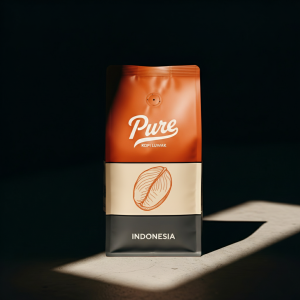
Pure Kopi Luwak
Wild civet coffee from Java. 88.5 SCA cupping score. From $125 for 100g.
The result is immediately recognizable in the cup: low-acid, full-bodied coffee with damp earth, forest floor, and woody notes that polarizes tasters. Coffee professionals who appreciate complexity respond to it; those who prefer clean, transparent cups find it muddy. The Mandheling flavor profile is genuinely a product of its process — not a defect, but a character created by the specific interaction of semi-dried beans with Sumatra’s humid highland environment. The Catimor, Ateng, Bor Bor, and Timor varieties grown in the region, processed this way, produce something distinctively Sumatran that no other country’s coffee can replicate.
Try the coffee this article is about
Wild-sourced from Java, 88.5 SCA cupping score, free US shipping. From $125 for 100g.
Shop Pure Kopi Luwak →How Civet Digestion Shapes Kopi Luwak
Wild kopi luwak’s transformation works through an entirely different mechanism. The Asian palm civet’s selective foraging delivers consistently ripe cherries to the digestive process. Proteolytic enzymes in the civet’s stomach partially break down proteins in the bean’s outer structure — proteins that would otherwise contribute to bitterness during roasting. The transit time, between 12 and 24 hours, allows these enzymatic changes to occur at a molecular level before the bean exits the digestive system.
Research published in food chemistry literature has documented lower concentrations of malic and citric acids in kopi luwak compared to conventionally processed coffee from the same origin, which correlates with the smoothness and reduced acidity that tasters consistently note. The resulting cup is smooth, full-bodied, and chocolatey — notably different from Mandheling’s earthy, tobacco-forward character, and different again from conventionally processed Java Arabica. If Mandheling is defined by what wet-hulling adds, kopi luwak is defined by what enzymatic processing removes.
The Taste Comparison
Side by side, Mandheling and wild kopi luwak occupy different flavor registers despite sharing geography. Mandheling leads with earth and structure: the kind of deep, savory body that makes it a natural match for dark roasting and pairing with bold foods. The acidity is low and the finish is long, but the overall character reads rustic — intentionally and proudly so. It’s a coffee that announces itself.
Wild kopi luwak reads differently. The smoothness comes first: an absence of the sharpness or bitterness that marks even fine conventionally processed coffee. Then the complexity — chocolate and earth, but refined, without the rawness that Giling Basah introduces. The finish is extended and clean. Where Mandheling announces itself, wild kopi luwak makes its point quietly.
The body comparison is instructive. Both are full-bodied coffees, but Mandheling’s body comes from the wet-hull process retaining certain compounds that a washed coffee would shed, while kopi luwak’s comes from enzymatic modification of the bean itself. They feel full in different ways — Mandheling syrupy and dense, kopi luwak smooth and sustained. Tasters who appreciate Mandheling for its assertive character sometimes find kopi luwak too restrained. Tasters from the specialty coffee world, where clean transparency is often prized, tend to find kopi luwak’s version of fullness more appealing.
Which to Choose
Mandheling is an exceptional everyday coffee — one of the best Indonesia produces through conventional processing, and at its price point it represents outstanding value for anyone who prefers earthy, bold cups. If you drink two or three cups a day and want something reliably distinctive, a high-quality Sumatra Mandheling Grade 1 will serve you well.
Wild kopi luwak is not an everyday proposition at $125 for 100 grams. It is, instead, a specific experience: one cup brewed carefully, tasted completely, and appreciated for what it actually is. The comparison to Mandheling ultimately isn’t a “which is better” question. It’s a “what kind of experience am I looking for?” question — and the two coffees answer it very differently.
If you’ve worked through Sumatra Mandheling’s Giling Basah character and want to understand what a different processing mechanism entirely produces, Pure Kopi Luwak — wild-sourced from Java, where Arabica Typica provides a cleaner starting material — offers something categorically different. Not a better Mandheling. A completely different experience, produced by a completely different method, at a price that reflects what that method costs to do properly.
Pure Kopi Luwak
Wild civet coffee from Java. 88.5 SCA cupping score. From $125 for 100g.

Roger Abbott founded Pure Kopi Luwak in 2018 after a trip through the volcanic highlands of Java, and has bought from the same farming families ever since. He only works with collectors of wild civet coffee, never caged. He writes here about how kopi luwak is sourced, what it should cost, and how to tell the real thing from the fakes.