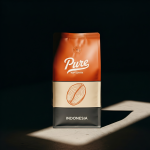
The bag arrives. It’s heavier than you expected for 100 grams, because premium whole beans are denser than ground. You hold it for a moment, then do the mental math: this is $1.25 per gram, roughly $35 to $45 per cup when brewed with care. How long before it starts going downhill?
The question matters more with kopi luwak than with any other coffee you’re likely to buy — not because it degrades faster, but because the investment warrants knowing exactly what you’re working with. Here’s the honest timeline.
The Clock Starts at Roasting, Not Delivery
Coffee freshness is measured from the moment the beans exit the roaster, not from when they arrive at your door. A reputable supplier ships kopi luwak roasted to order or within a short window of your purchase — typically 24 to 72 hours post-roast. Transit time via DHL or similar express services (3 to 5 business days internationally) means your beans arrive somewhere in the 4-to-8-day post-roast window.
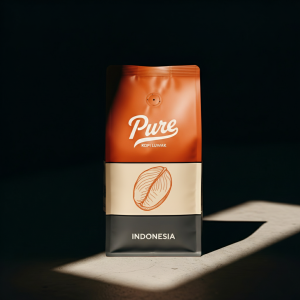
Pure Kopi Luwak
Wild civet coffee from Java. 88.5 SCA cupping score. From $125 for 100g.
This is actually good news. Research published in the Journal of Agricultural and Food Chemistry on coffee degassing found that approximately 40% of the CO2 trapped in roasted beans is released within the first 24 hours post-roast, with degassing continuing for two to three weeks. Beans that are too freshly roasted — within 12 hours of the roaster — bloom so aggressively that extraction becomes uneven. The 4-to-8-day window at delivery puts you right at the beginning of the ideal flavor range.
Days 1–7 After Opening: Peak Window
From the moment you open the bag and take the first smell, you’re in the best phase. Freshly opened whole-bean kopi luwak at this stage has a distinctive aromatic character — clean, slightly earthy, with a chocolate note that becomes more pronounced as the beans warm to room temperature. Brew your first cup in this window and you’ll experience what the price is paying for: the full complexity that the civet’s enzymatic processing preserved, now expressed through heat and water.
At this stage, the beans bloom dramatically on pour-over — a 30-second rest with hot water will produce a visible dome of releasing CO2. That bloom is flavor-active gas escaping the bean. It’s a sign you’re drinking the coffee when it’s supposed to be drunk.
Try the coffee this article is about
Wild-sourced from Java, 88.5 SCA cupping score, free US shipping. From $125 for 100g.
Shop Pure Kopi Luwak →Days 7–21: Still Excellent, Slight Aromatic Fade
Stored in an airtight container away from light and heat, whole-bean kopi luwak in this window is still exceptionally good. The aggressive bloom on pour-over is slightly reduced, the initial aromatic burst on opening slightly less pronounced, but the fundamental character of the cup — the smoothness, the low bitterness, the clean finish — is fully intact. Most buyers who consume a 100g bag over two to three weeks are drinking the vast majority of it in this range.
Avoid grinding until immediately before brewing. Ground coffee loses volatile aromatics within 30 minutes of grinding — the surface area increase exposes thousands of flavor-active compounds to oxidation simultaneously. A burr grinder is not optional at this price point.
Days 21–45: Noticeably Flatter, Still Completely Drinkable
At three to six weeks post-opening, you’ll notice a difference if you’ve been paying attention. The aromatic complexity on the nose is reduced. The cup is still smoother than virtually any commercially available coffee — the enzymatic changes the civet made to the bean’s protein structure are permanent and don’t reverse — but some of the volatile compounds that made the first cups extraordinary have off-gassed into the environment rather than into your cup.
This is not wasted coffee. It’s still significantly better than most things on a supermarket shelf. But if you’re buying kopi luwak specifically for the full experience, this is the window where the value proposition starts to soften.
Beyond 45 Days: Time to Reassess
After six weeks of open storage, even well-sealed whole-bean coffee has lost a meaningful portion of its aromatic potential. Kopi luwak at this stage tastes like a good, smooth Indonesian Arabica with low bitterness — better than most coffees, but not the experience that justified the price. The bean’s structural changes from civet processing are still present; the freshness isn’t.
The practical implication: don’t overbuy. A 100g bag of kopi luwak, used at a rate of one cup per day, is gone in 9 to 10 cups (at a standard 10 to 12g per cup). That’s about a week and a half of daily consumption, comfortably within the peak window. If you brew every other day, you’re still inside three weeks. The 250g option makes sense only if you have a household brewing it regularly or plan to serve it to guests in a concentrated period.
What This Means for Sealed, Unroasted Storage
Sealed whole-bean coffee in a nitrogen-flushed bag with a one-way valve can maintain acceptable flavor quality for up to 12 months at room temperature. The freshness equation changes the moment you break the seal.
This also means that receiving kopi luwak as a gift and saving it for a “special occasion” is counterproductive if that occasion is three months away. The special occasion is this week. Or next week. Brew it while it’s fresh.
The Short Version
Open your bag of wild Java kopi luwak within a few days of arrival. Brew the first cup as a pour-over or Chemex. Consume the bag within three weeks of opening for the full experience. Grind only what you brew. Store the rest in an airtight, opaque container at room temperature — not the fridge, not the freezer for opened beans.
The question isn’t whether kopi luwak is worth $125. The question is whether you’ll treat it with enough deliberateness to get what you paid for. A week of extraordinary coffee is a different thing than a month of diminishing returns. Buy 100g. Drink it well. Buy another when you’re ready.
Pure Kopi Luwak
Wild civet coffee from Java. 88.5 SCA cupping score. From $125 for 100g.
Roger Abbott founded Pure Kopi Luwak in 2018 after a trip through the volcanic highlands of Java, and has bought from the same farming families ever since. He only works with collectors of wild civet coffee, never caged. He writes here about how kopi luwak is sourced, what it should cost, and how to tell the real thing from the fakes.