On July 20, 2010, Indonesia’s Majelis Ulama Indonesia — the country’s highest Islamic authority, representing the world’s largest Muslim-majority nation — issued a fatwa declaring kopi luwak permissible for Muslims to consume, produce, and trade. The ruling came after a Jakarta cleric publicly questioned whether coffee extracted from civet droppings could be halal, triggering a formal theological review. The MUI’s scholars faced a question that Islamic jurisprudence hadn’t previously needed to resolve: what is the religious status of a plant-based food that has passed through an animal’s digestive system?
The answer is precise, and it matters for any Muslim buyer considering a purchase.
The Theological Framework
Islamic dietary law distinguishes between things that are inherently impure (najis) and things that have merely come into contact with impurity (mutanajjis). Blood, alcohol, and certain animal products are najis — impure in their nature. A halal item contaminated by contact with something impure becomes mutanajjis, but that condition can be addressed through thorough washing.
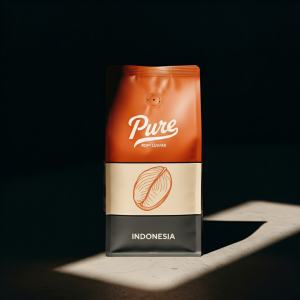
Pure Kopi Luwak
Wild civet coffee from Java. 88.5 SCA cupping score. From $125 for 100g.
Coffee beans passing through a civet’s digestive system contact the animal’s feces, which is classified as impure in Islamic law. The question before the MUI was whether this contact transforms the bean into something inherently najis, or whether the bean — which remains structurally intact, capable of germination, and washable — retains its original halal status once properly cleaned.
The MUI ruled the latter. The coffee bean is a plant seed that passes through the civet’s digestive tract without being fundamentally altered in its nature. It exits in its original form. Once thoroughly washed and processed, it is cleaned of the surface impurity it contacted and returns to its original halal status. The enzymatic modifications to proteins within the bean during digestion — the changes that make kopi luwak taste different — do not create new impure compounds; they are internal chemical changes to the bean’s existing composition.
The Malaysian Confirmation
Malaysia’s Jabatan Mufti Wilayah Persekutuan — the Federal Territory Mufti’s Department — issued a separate ruling reaching the same conclusion. Their fatwa stated explicitly: “Luwak coffee is ruled permissible, for the beans are originally clean and processed through the digestive system of the civet, excreted out still retaining its original shape and state without any damage on the structure of the coffee beans.” The Malaysian ruling added the same condition as the MUI: thorough washing before processing is required.
Two of Southeast Asia’s leading Islamic authorities, independently, reached the same conclusion through the same reasoning. For Muslims across Indonesia and Malaysia — the two countries most directly connected to kopi luwak’s production and cultural context — the question has been definitively answered at the highest religious authority available.
The Wild Sourcing Factor
There is a second dimension to the halal question beyond jurisprudence: the ethical treatment of the animals involved.
Islamic law’s principle of rahma — mercy and compassion toward animals — is not merely advisory. Cage-farmed kopi luwak, in which civets are kept in small enclosures and fed indiscriminate diets of coffee cherries, creates a problem from this perspective. Several Islamic scholars have noted that commercial cage-farming practices represent a violation of rahma even when the beans themselves clear the impurity test.
Wild-sourced kopi luwak from Java eliminates this concern entirely. The civets involved are free-roaming animals who select and eat coffee cherries as part of their natural diet. They are not captured, confined, or force-fed. The collection process — gathering excreted beans from the forest floor — involves no handling of the animals at all. This sourcing practice aligns with the spirit of rahma in a way that cage farming cannot.
Muslim buyers who want confidence on both the jurisprudential and ethical dimensions of the halal question should look specifically for wild-sourced product. The sourcing question and the impurity question are distinct, but both matter.
What to Look for When Buying
For Muslim buyers, the halal status of kopi luwak depends on three verifiable conditions: beans must be thoroughly washed before processing (standard for any responsible producer), civets must be wild rather than caged, and the producer must be transparent enough about sourcing to confirm both.
Producers who cannot confirm wild sourcing cannot satisfy the second condition. Vague language like “ethically sourced” without specifying wild collection doesn’t provide the transparency needed. A producer willing to describe collection practices specifically — the farms, the Arabica variety, how beans are identified and washed after collection — is the producer meeting the bar this question requires.
The MUI’s 2010 fatwa closed the theological question. Wild sourcing and producer transparency close the remaining ones. The complete guide to caged versus wild kopi luwak covers how to tell them apart.
The Short Answer
Yes — wild kopi luwak, thoroughly washed and from wild-sourced civets, is halal under rulings from both Indonesia’s MUI (July 2010) and Malaysia’s Jabatan Mufti Wilayah Persekutuan. The theological reasoning is clear, the conditions are practical, and the answer has been on record for fifteen years. The only remaining question is finding a producer who meets all of them.
Pure Kopi Luwak
Wild civet coffee from Java. 88.5 SCA cupping score. From $125 for 100g.

Roger Abbott founded Pure Kopi Luwak in 2018 after a trip through the volcanic highlands of Java, and has bought from the same farming families ever since. He only works with collectors of wild civet coffee, never caged. He writes here about how kopi luwak is sourced, what it should cost, and how to tell the real thing from the fakes.