The problem with shopping for a mother-in-law isn’t budget. It’s that she formed her opinions about candles, scarves, and kitchen gadgets before your partner was born, and she returns most of what doesn’t precisely match those opinions. She’s been drinking the same coffee brand since 1994 and is not particularly interested in artisanal alternatives. She has lived long enough to know exactly what she likes and to be skeptical of anything outside that list.
This is why wild kopi luwak works as a gift in situations where almost everything else doesn’t.
The Logic of the Unreachable Person
There’s a category of gift that sidesteps the entire problem of “does this person already own this and prefer a different version.” It works when the gift is genuinely novel — something outside the recipient’s reference frame, something she has almost certainly not tried and probably hasn’t thought about trying. Wild kopi luwak, sourced from Asian palm civets in the highland forests of Java, is exactly that kind of gift for most mothers-in-law.
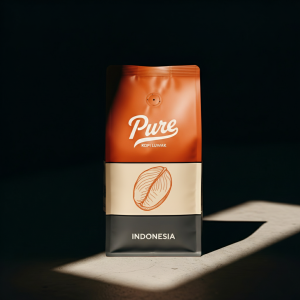
Pure Kopi Luwak
Wild civet coffee from Java. 88.5 SCA cupping score. From $125 for 100g.
The National Retail Federation estimates that Americans return approximately 17.5% of holiday gifts — a figure that reflects how often even well-intentioned gifts miss. The gifts that get returned are almost uniformly things the recipient already owns a preferred version of: the wrong scented candle, the wrong color cardigan, the duplicate kitchen tool. Wild kopi luwak doesn’t compete with anything already on the shelf, because nothing on her shelf is wild kopi luwak.
Why Coffee Works When Other Consumables Don’t
Wine is too presumptuous about her palate. Chocolates feel generic. Flowers die in a week. But coffee — if it’s genuinely extraordinary — sits in a different category. The Asian palm civet (Paradoxurus hermaphroditus) is a nocturnal omnivore that forages through Java’s coffee plantations selecting only the ripest cherries. The beans pass through its digestive tract over 12 to 24 hours, during which proteolytic enzymes partially break down the bitter-contributing proteins in the bean. The result is a coffee that is smoother, less acidic, and more complex than virtually anything she’s brewed at home in the past 30 years.
When you hand her a 100-gram bag of wild kopi luwak from Java’s Ijen Plateau with a brief explanation of what it is and how it’s made, you are giving her a genuinely new experience. Not “new” in the way a scented candle in a color she hasn’t tried is new. New in the sense that she will be brewing something that most people have heard of but never actually tasted — the world’s most unusual coffee, produced by one of the most careful natural processes in the food world.
The Gift That Comes With a Story She Can Tell
Here is the thing that distinguishes wild kopi luwak from virtually every other gift in its price range: it comes with a story worth repeating. Your mother-in-law will brew it for her own morning ritual, or she will save it for a moment when company comes. Either way, she will explain it to someone. That explanation — the civet, the Javanese highlands, the enzymatic processing, the rarity — is itself a form of enjoyment. It extends the gift beyond the cup.
The story also provides social cover for what might otherwise feel like an unusual gift. Wild kopi luwak has been referenced in major media, mentioned in the film The Bucket List (2007), and frequently appears on lists of world’s most remarkable foods. It is known enough to be credible. It is rare enough to be genuinely special. And it has nothing to do with whether she prefers lilies to roses or dark chocolate to milk chocolate.
Practical Details That Make It Work as a Gift
Wild kopi luwak is shelf-stable for 12 to 18 months when stored properly in a cool, dark environment. It doesn’t require a special brewing device — it works in whatever method she already uses, whether that’s a drip machine, a pour over, or a French press. The bag itself is typically attractive enough to serve as its own packaging. And unlike many premium gifts that come with learning curves, brewing wild kopi luwak requires only one adjustment: a slightly coarser grind and slightly lower water temperature than dark roast blends she may be used to.
A 100-gram bag at $125 produces roughly eight to ten cups. At that yield, each cup costs approximately $12 to $15 at home — significantly less than a single cup at most high-end café experiences, and without the need to go anywhere. At $188 for the 250-gram bag, the cost per cup drops to around $7.50. Both sizes are available and both ship internationally, which matters if the mother-in-law in question lives somewhere your usual gift options don’t reach easily.
The Gift She Actually Uses
The best gift for a mother-in-law — for any person who has spent decades developing specific preferences — is one that doesn’t compete with any of those preferences. Wild kopi luwak is in a category by itself. It’s not a version of something she already owns. It’s not an attempt to guess what she wants. It’s something she almost certainly has not tried, produced by a process that is genuinely interesting, and consumable in a ritual she already loves.
She’ll brew it. She’ll talk about it. And at some point she’ll tell your partner that it was actually a good gift — which, in the context of mother-in-law gift history, is essentially a standing ovation.
Order wild kopi luwak here — 100g or 250g, shipped worldwide.
Pure Kopi Luwak
Wild civet coffee from Java. 88.5 SCA cupping score. From $125 for 100g.

Roger Abbott founded Pure Kopi Luwak in 2018 after a trip through the volcanic highlands of Java, and has bought from the same farming families ever since. He only works with collectors of wild civet coffee, never caged. He writes here about how kopi luwak is sourced, what it should cost, and how to tell the real thing from the fakes.