“God is in the details,” said Ludwig Mies van der Rohe — a statement that has been attributed, contested, and rephrased enough times to become a kind of professional password for anyone who takes craft seriously. The architect who specifies the thickness of a reveal down to the millimeter. The interior designer who sources a fabric from a family mill in Lyon because the texture reads differently under tungsten light than under LED. These are not people who can be gifted something generic and have it land. They notice when the quality is wrong.
Wild kopi luwak — the coffee produced from wild Asian palm civets in the highland forests of Java — is one of the few gifts that speaks the same language these professionals speak every day.
Process as Product
The architecture and interior design professions are organized around a fundamental belief: that the quality of a process determines the quality of an outcome, and that shortcuts in either materials or method are visible to someone who knows where to look. A corner joint that isn’t tight. A grout line that wanders. A fabric that’s off-grain by three degrees. These things register, even when the client doesn’t consciously notice them, because they affect the final experience.
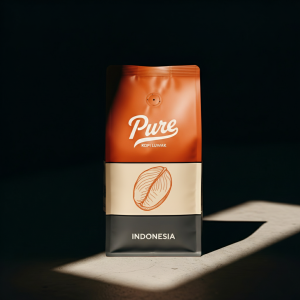
Pure Kopi Luwak
Wild civet coffee from Java. 88.5 SCA cupping score. From $125 for 100g.
Wild kopi luwak is a coffee built on exactly this logic. The Asian palm civet (Paradoxurus hermaphroditus) is a nocturnal omnivore native to Java’s coffee-growing highlands. It forages through Arabica plantations at night, selecting cherries not by harvesting systematically but by evaluating each one individually — sniffing for the specific volatile compounds that indicate peak ripeness. Research has documented that wild civets show strong preference for cherries in the narrow Brix window (approximately 18 to 22 degrees of dissolved sugars in the pulp) where flavor quality is highest. No human harvesting operation, even at specialty farms with aggressive quality protocols, achieves this level of individual-cherry selectivity at scale.
The beans the civet selects pass through its digestive tract over 12 to 24 hours. During that transit, proteolytic enzymes partially break down specific proteins in the outer layers of the bean — proteins that are precursors to bitterness during roasting. The chemistry of the bean changes in ways that are measurable, not metaphorical. Food chemistry research has documented lower concentrations of bitter-contributing compounds and modified acid profiles in wild kopi luwak compared to conventionally processed beans from the same origin. The result is a cup that is smooth, full-bodied, and notably free of the sharpness that characterizes most specialty coffees.
What makes this relevant to the architect or designer receiving it: the exceptional quality of wild kopi luwak is not the result of better beans, better equipment, or better marketing. It is the result of a better process. The selectivity of the animal, the chemistry of the digestion, the precision of the medium roast — each stage is an exercise in attention. That is a gift with a clear philosophical position.
Try the coffee this article is about
Wild-sourced from Java, 88.5 SCA cupping score, free US shipping. From $125 for 100g.
Shop Pure Kopi Luwak →The Ijen Plateau: Materials and Origin
Architects and interior designers understand that materials carry provenance. The limestone from a particular quarry behaves differently than the limestone from another. The wool from one region has a different hand than the wool from a neighboring valley. Origin matters because origin shapes character.
Wild kopi luwak from Java’s Ijen Plateau — a volcanic highland region in East Java, elevation 1,400 to 2,500 meters, cooled by the Indian Ocean during monsoon season and warmed by volcanic geothermal activity year-round — produces Arabica with a specific flavor signature: dark chocolate depth, faint earthiness, low acidity, full body. This is not a marketing description. It reflects the terroir of a specific place, expressed through a specific biological process, roasted to a specific profile to preserve those characteristics.
The 100g and 250g bags from Pure Kopi Luwak are sourced exclusively from wild-foraging civets on Javanese farms — not cage-farmed civets, whose stressed digestive chemistry and indiscriminate diet produce a categorically inferior product. The distinction between wild and caged kopi luwak is similar to the distinction between a site-specific material and a manufactured substitute: the surface reads similarly, but the depth doesn’t hold.
Why This Works as a Gift When Other Gifts Don’t
The architect or interior designer in your life has strong opinions about most things. That’s not a character flaw — it’s the professional attribute that makes them good at their job. But it means that gifting them something in their professional domain is genuinely risky: they have preferences about books, about tools, about the design objects they’ve curated at home. The wrong gift in those categories signals that you don’t really know their taste.
Wild kopi luwak sidesteps this entirely. It’s not an object with aesthetic implications they’ll have to display. It’s a consumable that sits in its own category — the rarest coffee in the world, produced by a process that rewards the kind of analytical attention they apply to every material decision they make professionally. It invites them to experience it through the same framework they use at work: What is the process? Where does it come from? What decisions shaped the outcome?
The answers, in each case, are interesting ones. That’s the gift: not just the cup, but something worth thinking about while drinking it.
How to Present It
A bag of wild kopi luwak delivered with a brief note about the civet’s selective process, the Ijen Plateau origin, and the medium-roast profile that preserves the bean’s enzymatic characteristics will be received well by anyone whose professional life involves understanding how process shapes outcome. You don’t need to translate it into gift language. The thing itself communicates what it is.
At $125 for 100 grams — enough for eight to ten deliberate cups — it’s appropriately scaled for a meaningful professional gift, a “congratulations on the project completion” gift, or simply a gift for someone whose attention to detail you want to acknowledge with something that requires the same attention in return.
Order wild kopi luwak from Java’s Ijen Plateau — 100g and 250g, shipped worldwide.
Pure Kopi Luwak
Wild civet coffee from Java. 88.5 SCA cupping score. From $125 for 100g.
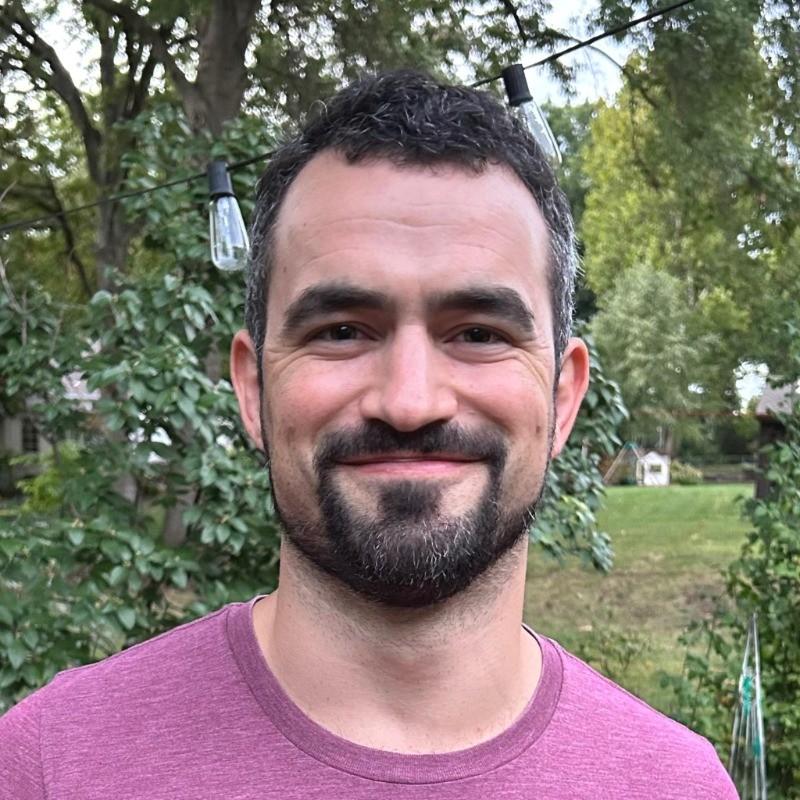
Roger Abbott founded Pure Kopi Luwak in 2018 after a trip through the volcanic highlands of Java, and has bought from the same farming families ever since. He only works with collectors of wild civet coffee, never caged. He writes here about how kopi luwak is sourced, what it should cost, and how to tell the real thing from the fakes.