Sharada Navratri — the autumn iteration of India’s nine-night festival honoring the goddess Durga — falls in late September to early October each year, with Dussehra (Vijayadashami, the tenth and culminating day) arriving as the period’s most significant celebration. In 2026, the festival runs in early October, closing with Dussehra on the day that marks Rama’s victory over Ravana in the Ramayana: the triumph of dharma, the end of a long battle, the beginning of what comes next.
India’s corporate gifting calendar takes Navratri and the surrounding festival season seriously. The period between Navratri and Diwali — roughly October through November — represents one of the country’s peak gifting windows, with businesses exchanging gifts with partners, clients, and employees in a tradition that reflects both gratitude and alignment for the year ahead. Boxes of sweets, dry fruit arrangements, and branded merchandise are standard. They are also predictable.
Wild kopi luwak from Java, Indonesia, is not predictable. It is, by measurable criteria, the rarest coffee in the world — and it arrives with a story that connects the Indonesian archipelago to India in ways most gift-givers have not considered.

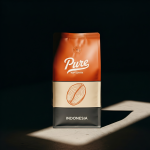
Pure Kopi Luwak
Wild civet coffee from Java. 88.5 SCA cupping score. From $125 for 100g.
A Festival That Celebrates Rarity and Effort
Navratri, at its core, is a celebration of the arduous and the auspicious. Nine nights of fasting, prayer, and cultural observance culminate in Dussehra’s affirmation that sustained effort produces meaningful victory. The iconography is not subtle: Durga riding a tiger, having defeated the demon Mahishasura after a battle that the gods themselves could not win. The message is that rarity of outcome corresponds to rarity of commitment.
Wild kopi luwak carries a version of that logic. The Asian palm civet that forages through the coffee farms of Java’s Ijen Plateau is not selecting randomly — it chooses only peak-ripe coffee cherries, guided by olfactory precision developed over generations of natural selection. Farmers follow those trails at dawn to collect what the civets have left. The resulting beans undergo enzymatic transformation during the civet’s 10-to-24-hour digestive process, producing a coffee measurably lower in bitterness precursors and with a smoother acid profile than conventionally processed beans from the same harvest. An annual wild harvest from a single Javanese farm might yield 20 kilograms of processable green coffee. That is a meaningful supply constraint.
The parallel is imperfect, as all parallels are. But for a gift given during a festival that honors sustained effort and its rare, earned rewards, there is something appropriate about giving the world’s rarest coffee.
Try the coffee this article is about
Wild-sourced from Java, 88.5 SCA cupping score, free US shipping. From $125 for 100g.
Shop Pure Kopi Luwak →Indonesia and India: A Connection Worth Mentioning
India is the world’s largest coffee consumer among tea-dominant cultures — a distinction that has been shifting rapidly as specialty coffee culture spreads from Bengaluru and Mumbai to mid-tier cities with growing professional populations. The Indian coffee market has seen strong double-digit annual growth in the years leading up to 2026, and premium whole-bean coffee has become a status category in ways it was not a decade ago.
Indonesia, where wild kopi luwak originates, shares a geographic and historical proximity to India that makes the gift more resonant than, say, a coffee from South America or East Africa. Both countries are among the world’s oldest spice and commodity trading partners. The Dutch colonial coffee system that first documented kopi luwak in Java in the early 1800s operated in the same East Indies trade network that moved Indian textiles, pepper, and indigo across the same sea routes. The connection is not manufactured for marketing purposes. It is historical.
The Gift That Works Across the Festival Season
One of the practical advantages of wild kopi luwak as a Navratri-Dussehra gift is that it functions equally well across the entire festival season — from Navratri through Dussehra into Diwali. A coffee given during the victory celebration of Dussehra is still fresh when the Diwali table is being set. The sealed 100g and 250g bags from Pure Kopi Luwak hold their freshness for months in proper storage — away from light, heat, and moisture — which means a Navratri gift can be savored through the entire festive calendar without urgency.
For corporate gifting across a team, the math works: at $125 for 100g (roughly 20-25 cups depending on brew method), a box of kopi luwak represents a per-person investment consistent with premium corporate gift budgets for senior relationships. For client relationships at the senior level, a 250g bag at $188 is proportional to the value of a year’s partnership without crossing into the category of gifts that create awkward disclosure conversations.
What to Say When You Give It
Wild kopi luwak is one of those rare gifts that benefits from a sentence of context — not because it needs justification, but because the context makes it more memorable. “This is wild-sourced kopi luwak from Java. A civet selects every cherry by hand — or rather, by nose. It produces maybe 20 kilos per farm per year. It tastes nothing like what the name suggests.” That is enough. The recipient is curious, then impressed, then thinking about it again a week later when they finally open the bag.
For a Dussehra gift, there is a version of that sentence that lands particularly well: “The story of this coffee involves a wild animal that does something no technology has replicated. I thought that was appropriate for a day that celebrates things done the irreplaceable way.” That is a gift frame that a thoughtful professional will remember. The sweets they received that same week will not come to mind the following year. This coffee will.
Practical Notes for the Festival Season Gifter
Order timing for the Navratri-Dussehra window matters. The festival typically falls in late September to early October; orders placed in mid-September arrive with sufficient lead time for personal delivery or corporate logistics. The packaging is clean and presentable without requiring additional wrapping, though some gifters choose to add a short card describing the coffee’s origin for recipients who are encountering it for the first time. International shipping to India is available; customs regulations for roasted coffee are generally unobstructed, and kopi luwak’s import legality in India presents no special concerns.
Navratri is a celebration of the feminine divine, of cosmic struggle, and of the specific kind of victory that requires nine days of persistent effort before it arrives on the tenth. It is not a holiday that needs a predictable gift. Give something that required genuine care to produce.
Pure Kopi Luwak
Wild civet coffee from Java. 88.5 SCA cupping score. From $125 for 100g.

Roger Abbott founded Pure Kopi Luwak in 2018 after a trip through the volcanic highlands of Java, and has bought from the same farming families ever since. He only works with collectors of wild civet coffee, never caged. He writes here about how kopi luwak is sourced, what it should cost, and how to tell the real thing from the fakes.