There are approximately 7,168 living languages in the world, according to Ethnologue’s 2024 count. Each one is a complete system for organizing reality — different assumptions about time, causality, politeness, and what counts as a complete sentence. A professional translator or language teacher spends their career moving between at least two of these systems, often more, carrying the knowledge that some things simply do not translate: the Portuguese saudade, the German Weltschmerz, the Japanese komorebi (the particular light that filters through leaves). They have professional expertise in the untranslatable.
The average professional translator produces 2,000 to 3,000 words of translated text per day — not writing words, but finding them in a different system while preserving meaning, register, tone, and occasionally humor across a conceptual gap that most people never notice exists. A language teacher does something complementary: building a second framework inside another person’s mind, one lesson at a time, until the moment when a student stops translating internally and simply thinks in the new tongue. Neither job looks hard from outside it.
Gifts for people in these professions tend to land better when they carry a story that does not fully translate — something that requires context to appreciate, that rewards the person who takes the time to understand it properly.
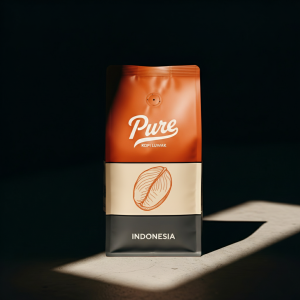
Pure Kopi Luwak
Wild civet coffee from Java. 88.5 SCA cupping score. From $125 for 100g.
A Coffee With an Untranslatable Origin
The name kopi luwak does not translate cleanly. Kopi is Bahasa Indonesia for coffee — itself borrowed from Dutch koffie, which came from Ottoman Turkish kahve, which arrived from Arabic qahwa, which may have come from the Ethiopian regional name Kaffa. The etymology is a trade route. Luwak is the Indonesian name for the Asian palm civet, Paradoxurus hermaphroditus — a small, nocturnal omnivore that forages through Java’s highland coffee plantations and selects coffee cherries with a precision that human harvest operations cannot replicate.
The Dutch colonial system that established Java as a coffee-producing territory in the early 1700s forbade plantation workers from harvesting coffee for personal consumption. The workers — already living in the middle of the world’s most valuable coffee-growing land — found an alternative. They collected coffee cherries that had passed through the digestive tracts of wild civets, processed the resulting beans, and discovered that this coffee tasted different. Better, in ways that took years to understand and are still being documented by food chemists. The Dutch eventually noticed and priced the coffee accordingly. The irony, which translates into every language without difficulty, is that the rarest coffee in the world was first drunk by the people with the least access to it.
Try the coffee this article is about
Wild-sourced from Java, 88.5 SCA cupping score, free US shipping. From $125 for 100g.
Shop Pure Kopi Luwak →What the Civet’s Processing Actually Does to the Coffee
Wild kopi luwak’s flavor story satisfies the linguist’s preference for mechanism over metaphor. During the 10-to-24-hour transit through the Asian palm civet’s digestive tract, proteolytic enzymes break down proteins on the surface and outer layers of the coffee bean — specifically proteins that become bitterness precursors during the Maillard reaction of roasting. Separately, the acidic digestive environment modifies the bean’s surface chemistry. Research in food chemistry journals has documented measurably lower concentrations of malic and citric acids in wild kopi luwak compared to conventionally processed beans from the same Javanese harvest. The result is a cup that is smooth, notably and specifically smooth: lower bitterness, lower sharp acidity, full body, with the chocolate and mild earthiness of Java’s high-altitude Arabica Typica still intact.
The mechanism can be explained in any language. What it produces is something closer to the untranslatable.
The Gift for Someone Who Notices the Details Others Miss
A language teacher or professional translator has developed a hyperawareness of register — the exact weight of a word, the difference between what was said and what was meant, the gap between a precise translation and a good one. They notice things. A generic gift lands differently on someone with that training than it does on someone who doesn’t read that closely.
Wild kopi luwak rewards the kind of attention that language professionals habitually bring to everything. The first thing they will notice is the smoothness — the absence of the bitterness and sharpness that characterize most single-origin coffees at this price point. The second thing they will notice is that it tastes like Java: the moderate altitude, the Arabica Typica variety, the particular terroir of the Ijen Plateau. The third thing they will notice is that they cannot quite describe it the way they would describe other coffees. That is not a weakness. It is part of what makes it worth describing.
When to Give It and What to Include
The occasions for a language teacher or translator are specific and often overlooked. The end of a semester that required 300 student essays graded in a foreign language. The completion of a translation contract that ran 80,000 words over three months. A certification milestone — the American Translators Association credential, a language-specific proficiency certification, a permanent position after years of freelance work. The day a student finally wrote a sentence in the target language without mentally drafting it in their first language first — a moment the teacher noticed before the student did.
A 100g bag of authentic wild kopi luwak from Java at $125 is the right gesture for most of these moments. The 250g bag at $188 makes sense for milestones that were genuinely hard — a published literary translation, a book-length project, a decade of teaching that produced students who went on to live in countries they once only read about.
Include a card that tells the story. Not the marketing version — the actual story: Dutch colonial prohibition, Javanese farm workers, wild civets, the discovery that something ordinary people ate out of necessity turned out to be the rarest coffee in the world. A translator will appreciate both the history and the irony. They will also appreciate that the word luwak carries within it an entire biological and cultural story that no single-word translation captures. Some things, even in coffee, require context to fully land. This is one of them.
Pure Kopi Luwak
Wild civet coffee from Java. 88.5 SCA cupping score. From $125 for 100g.
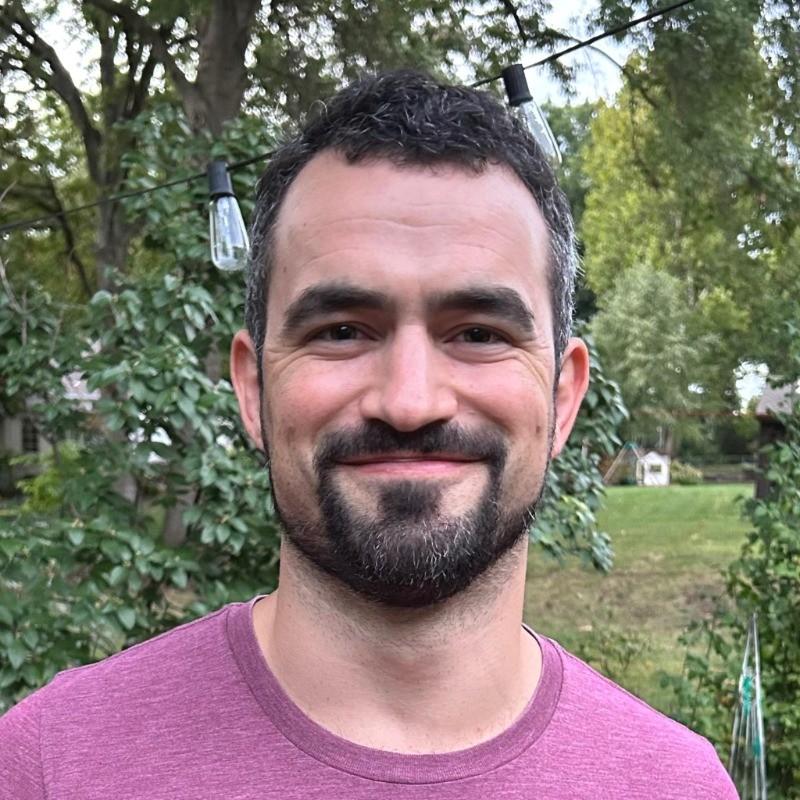
Roger Abbott founded Pure Kopi Luwak in 2018 after a trip through the volcanic highlands of Java, and has bought from the same farming families ever since. He only works with collectors of wild civet coffee, never caged. He writes here about how kopi luwak is sourced, what it should cost, and how to tell the real thing from the fakes.