Water boils at 212°F at sea level. In Denver, at 5,280 feet above sea level, it boils at approximately 202°F. In Mexico City, at 7,380 feet, it boils at around 197°F. These aren’t trivial differences for coffee: the SCA’s recommended brewing temperature range is 90.5°C to 96°C (195°F to 205°F), which means that residents of several major cities are already sitting at the bottom or outside the ideal range before they’ve done anything wrong.
Most home brewers have no idea this matters. The kettle comes to a boil, you pour, the coffee tastes slightly off — a little thin, a little under-extracted — and you assume it’s the beans or your ratio. It might be neither. It might be the altitude in your city changing what your water is doing before it touches the grounds.
The Altitude Problem
Extraction depends on temperature. At lower temperatures, coffee extracts more slowly and less completely — you get the lighter, more soluble compounds (acids, florals) but miss the heavier sugars and oils that provide body and sweetness. At higher temperatures, extraction accelerates and can tip into over-extraction, producing bitterness and astringency.
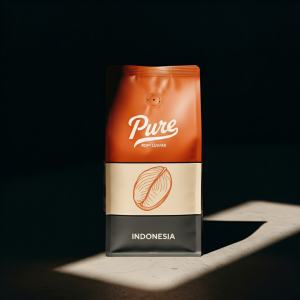
Pure Kopi Luwak
Wild civet coffee from Java. 88.5 SCA cupping score. From $125 for 100g.
For most coffees at most altitudes, this self-corrects: you adjust the grind finer to increase surface area and compensate for the lower water temperature, or you use a slightly longer contact time. For wild kopi luwak — where the central quality of the cup is smoothness and the absence of bitterness, a characteristic that comes from enzymatic processing rather than technique — the adjustment matters more than usual. Under-extraction produces a thin, watery version of the coffee that misses its characteristic body. Over-extraction doesn’t produce bitterness in the same way standard coffee does (the enzymatic processing has already reduced those precursors), but it produces a flat, hollow cup that doesn’t reward what you paid for the beans.
If you live above 5,000 feet, go one grind setting finer than your standard setting. This increases surface area and compensates for the lower water temperature by extracting more efficiently. Additionally, let your kettle reach a full boil before pouring — you’re starting from a lower maximum temperature and can’t afford to compound the problem by pouring slightly below boil.
Try the coffee this article is about
Wild-sourced from Java, 88.5 SCA cupping score, free US shipping. From $125 for 100g.
Shop Pure Kopi Luwak →What High Humidity Does to Your Grind
Research published by Coffee on Cue in 2026 documented that coffee grounds absorb moisture from the surrounding air, changing their density and altering how they resist water flow during extraction. In humid environments — coastal cities, tropical climates, kitchens where the weather outside is genuinely muggy — this “sponge effect” is measurable. Humidity also affects static buildup in burr grinders, which changes how the grounds distribute in the portafilter or filter basket. Uneven distribution produces uneven extraction.
In practical terms: if you’re brewing in Singapore, Bali, Miami, or Houston in summer, your kopi luwak grounds are heavier and more compacted than they would be in a dry climate. This can cause channeling in a pour over — where the water finds a path of least resistance through the grounds rather than saturating them evenly — and produces an inconsistent cup. You’ll notice it as a faster-than-expected drawdown time with a thinner result.
The adjustment is counterintuitive: grind slightly coarser in high humidity, not finer. Coarser grounds are less susceptible to compaction and allow water to flow more evenly. This feels wrong because you’re reducing surface area, but you’re trading extraction efficiency for extraction evenness — and evenness is more important for cup quality at the flavors wild kopi luwak expresses.
The Dry Heat Scenario
Dry climates present a different problem: staling. Green coffee and roasted coffee both oxidize faster in low-humidity, high-temperature environments. If your kitchen regularly hits 30°C+ and the humidity is below 40%, your kopi luwak — which you’re probably using slowly over several weeks — is aging faster than it would in a temperate environment.
The conventional advice to store beans in an airtight container at room temperature holds in moderate climates. In desert heat or air-conditioned dry environments, the freezer becomes a more defensible option than most specialty coffee advice acknowledges. If you’re going to store more than you’ll use in two weeks: divide the bag, freeze what you won’t use immediately in an airtight, moisture-proof container, and thaw each portion at room temperature for at least an hour before grinding. Grounds that go into a wet grinder straight from the freezer introduce moisture inconsistencies that affect extraction.
For storage and freshness guidance that covers these scenarios in more detail, our kopi luwak storage guide explains the four enemies of coffee freshness and how each applies differently depending on your environment.
The Weather Variable Most Brewing Guides Ignore
Coffee guides are almost always written for a notional “standard” kitchen — temperate climate, moderate altitude, reasonable humidity. The parameters they recommend assume water that boils at 212°F and grounds that sit at stable room temperature in 50-60% relative humidity. A meaningful fraction of the world’s coffee drinkers are brewing outside these conditions without knowing it.
The good news: wild kopi luwak is more forgiving than most premium coffees precisely because its core quality — the smoothness and low bitterness produced by enzymatic processing — is chemically stable in the bean. You’re not going to accidentally make it bitter by slightly under-extracting it. What you’ll miss instead is body and finish, which is worth correcting but not catastrophic.
The adjustments are small. Grind finer if you’re high. Grind coarser if you’re humid. Store more carefully if you’re dry and hot. Keep your water as close to a full boil as your elevation allows. These aren’t complicated calibrations — they’re the same kind of attention that anyone who pays $125 for 100 grams of coffee is already inclined to bring to the process. The climate is just another variable worth accounting for, like the water chemistry and the freshness of the roast.
For the full picture on water chemistry and what it does to your cup independently of temperature, our guide on water and coffee covers why the mineral content of what you’re pouring matters as much as how hot it is when it hits the grounds.
Pure Kopi Luwak
Wild civet coffee from Java. 88.5 SCA cupping score. From $125 for 100g.

Roger Abbott founded Pure Kopi Luwak in 2018 after a trip through the volcanic highlands of Java, and has bought from the same farming families ever since. He only works with collectors of wild civet coffee, never caged. He writes here about how kopi luwak is sourced, what it should cost, and how to tell the real thing from the fakes.