The Shabbat table is one of the few places in contemporary life where time is officially stopped. From Friday at sunset until three stars appear on Saturday night — a span of roughly 25 hours — observant Jewish households mark a weekly interruption of the working world. The challah is braided. The candles are lit. The wine is poured for Kiddush. And then, for hours, the point is not to accomplish anything.
Coffee has a complicated relationship with Shabbat. On a practical level, brewing presents issues for those who observe the prohibition against melachah (forbidden work): using certain appliances, carrying items, boiling water all fall into contested territory depending on denomination and observance level. But there is also a longer tradition, particularly in Sephardic and Mizrahi communities, of serving fine coffee after the Friday night meal, when the table lingers over conversation and zemirot — the traditional Shabbat songs that have no function except to slow the evening further.
The gift logic, in this context, is not complicated: Shabbat is precisely the occasion that rewards coffee with a story. And wild kopi luwak has a better story than any other coffee on the market.
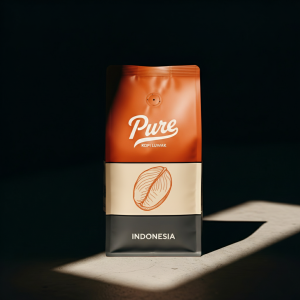
Pure Kopi Luwak
Wild civet coffee from Java. 88.5 SCA cupping score. From $125 for 100g.
Why the Friday Night Table Is the Right Place for This Coffee
Shabbat hospitality has a specific character. It is not the rushed hospitality of a weeknight dinner, or the performance hospitality of a large catered event. It is slow, deliberately so — an occasion designed to make time feel different than it does Monday through Friday. The Havdalah ceremony that closes Shabbat on Saturday night is built around three sensory elements: fire, wine, and spices. The whole twenty-five hours is constructed around sensory intentionality — things that smell, taste, and feel specific in ways that mark a distinction from the ordinary.
Wild kopi luwak fits this frame almost too neatly. The coffee exists because of a process that cannot be rushed: a wild Asian palm civet (Paradoxurus hermaphroditus) foraging at night in the coffee-growing highlands of Java, selecting only peak-ripe cherries by scent, digesting them over 12 to 24 hours, and producing beans that are transformed in ways that direct processing cannot replicate. The result is a coffee that is notably smoother, lower in bitterness, and more complex than the cherry’s origin would predict on its own — because the biological process that produced it had time built into it from the beginning.
There is an argument, and it is not a strained one, that a coffee made slowly by a wild animal in a nocturnal forest belongs at a table explicitly organized around slowness, attention, and the intentional use of time.
What to Know Before You Buy
Kashrut (Jewish dietary law) raises a genuine question about kopi luwak that is worth addressing directly. The relevant concern is whether beans that passed through an animal’s digestive system are permissible. The scholarly consensus, at least in the context of cleanliness and permissibility in Islamic jurisprudence — which addressed the question formally when the Council of Ulama Indonesia (MUI) issued Fatwa No. 4 on July 20, 2010 declaring kopi luwak halal after thorough washing — is that the thorough washing and processing of the beans, which removes all biological material before roasting, resolves the contamination question. The beans themselves are not of animal origin; they are plant material that was transported through an animal’s body and cleaned.
Specific rabbinic guidance varies by denomination and community, and anyone with strict kashrut concerns should consult their rav before purchasing. But for the broad majority of gift-givers looking for a coffee to bring to a Shabbat dinner — or to give a Jewish friend or family member for their own Friday night table — wild kopi luwak presents no obvious kashrut issue and a strong case for cultural and aesthetic appropriateness.
The wildness matters here too. Caged kopi luwak — from civets kept in inhumane conditions and force-fed indiscriminately — is both ethically compromised and qualitatively inferior. Wild-sourced kopi luwak from Java, where civets roam freely and beans are collected from the forest floor, aligns with the Jewish value of tza’ar ba’alei chayyim (preventing animal suffering) in a way that most commercial kopi luwak does not.
How to Give It
The most natural version of this gift is a 100g or 250g bag of whole bean wild kopi luwak, accompanied by a note that tells the story. The story is worth knowing: the Javanese highland farm, the nocturnal civet selecting cherries by smell, the slow biological transformation that produces a flavor profile unlike anything achievable through industrial processing. At a Shabbat table where conversation is the point and lingering is the mandate, that story becomes part of the evening.
Serve it after the meal, brewed simply — pour-over or French press, medium grind, water just off the boil — in cups worth drinking from slowly. The zemirot can wait. So can the next hour. That, more or less, is the point of the whole occasion.
For more on what makes wild kopi luwak worth its unusual origin story, the flavor profile guide covers what to expect in the cup and how the civet digestion process shapes the final taste. It is, by any measure, a conversation starter — which is precisely what the Friday night table was built for.
Pure Kopi Luwak
Wild civet coffee from Java. 88.5 SCA cupping score. From $125 for 100g.

Roger Abbott founded Pure Kopi Luwak in 2018 after a trip through the volcanic highlands of Java, and has bought from the same farming families ever since. He only works with collectors of wild civet coffee, never caged. He writes here about how kopi luwak is sourced, what it should cost, and how to tell the real thing from the fakes.