Walk into any serious craft beer bar in the last five years and you’ll encounter something that was considered impossible twenty years ago: customers debating the mouthfeel of a hazy IPA with the same vocabulary that wine collectors use for Burgundy. They’ll discuss how the Citra hops produce tropical esters, how the oat addition creates a creamy mid-palate, how the 2024 batch from a specific Vermont microbrewery hit the dry-hopping window differently than the 2023. The Brewers Association reported in 2025 that over 80% of craft breweries now regularly introduce new recipes — because their customers demand it, and because those customers have developed the sensory vocabulary to evaluate the results.
This audience is specialty coffee’s most underrated growth segment. They’re already doing the work. They just haven’t been introduced to what wild kopi luwak is yet.
The Shared Vocabulary Problem
Craft beer and specialty coffee share a tasting language that mass-market beverages never developed. Dark chocolate. Stone fruit. Caramel. Tropical esters. Terroir. Mouthfeel. Finish. Bitterness without astringency. Complexity that develops over the length of a sip rather than announcing itself at the first contact. A 2019 study in the Journal of the Science of Food and Agriculture found that craft beer drinkers specifically preferred “innovative beers with complex flavor profiles, including high levels of hoppiness, fruitiness, and even sour tastes” — and they were more involved with flavor evaluation as a process than casual beer drinkers. This is not accidental demographic overlap with specialty coffee buyers. It is the same cognitive and sensory disposition, applied to a different fermented beverage.
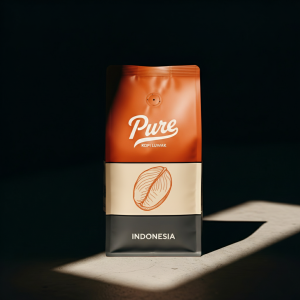
Pure Kopi Luwak
Wild civet coffee from Java. 88.5 SCA cupping score. From $125 for 100g.
The craft beer drinker who gravitates toward coffee stouts — and that’s a significant portion of the market; coffee and chocolate are among the most common adjuncts in American craft brewing — already has a reference point for what coffee tastes like at its most interesting. They’ve tasted Stumptown cold brew integrated into an imperial stout. They’ve smelled the roasty aromatics of a milk porter. They know coffee can be complex, not just stimulating. What they may not know is that the most chemically unusual coffee in the world produces a flavor profile that would read, to their trained palate, as immediately distinctive.
Try the coffee this article is about
Wild-sourced from Java, 88.5 SCA cupping score, free US shipping. From $125 for 100g.
Shop Pure Kopi Luwak →What Wild Kopi Luwak Offers a Beer Palate
Wild kopi luwak’s defining characteristic — the smooth, low-bitterness profile produced by proteolytic enzyme activity during the Asian palm civet’s 12-to-24-hour gut transit — maps onto a quality that craft beer drinkers have been chasing in the hazy IPA revolution: bitterness as texture rather than aggression. The craft beer world spent a decade learning that IBU numbers (International Bitterness Units) don’t tell you how bitter a beer will taste, because bitterness perception is mediated by other compounds — sugars, proteins, specific hop acids. Wild kopi luwak offers the same lesson for coffee: the compounds that produce harshness are structurally reduced before roasting, not masked by milk or sugar or dark roasting.
The result is a cup with measurably lower malic and citric acid concentrations than conventionally processed beans from the same Javanese origin — documented in food chemistry research comparing wild kopi luwak to washed coffee — and a body and finish that would read to a beer drinker as something like a well-conditioned nitro stout: smooth, slightly sweet on the mid-palate, with no sharp finish. The flavor notes that consistently appear in professional evaluations of high-quality wild Javanese kopi luwak — dark chocolate, mild caramel, earthy complexity — are the same notes that dominate the tasting language for barrel-aged stouts and porter variants.
The craft beer drinker is already trained to notice this. They just need the cup.
The Scarcity Analogy They Already Understand
Craft beer culture invented the concept of the “whale” — the rare, limited-production beer that is traded, hunted, and consumed with a seriousness that casual beer drinkers find baffling. A Westvleteren 12 from the Trappist monks of St. Sixtus Abbey in Belgium, produced only a few times a year in the monastery’s own brewery and available only for purchase in person, commands prices on secondary markets that have nothing to do with the beer’s cost to produce. The scarcity is real, the production is genuinely limited, and the people who know about it are willing to go to significant lengths to get it.
Wild kopi luwak’s scarcity operates the same way. The Asian palm civet that forages the Javanese highlands during harvest season produces a finite, non-scalable quantity of processed beans per animal per season. The collection is manual. The supply cannot be increased by adding equipment or labor. A bag of authentic wild kopi luwak is the coffee equivalent of a Westvleteren 12: rare not because someone decided to make it rare, but because it cannot be otherwise.
A craft beer drinker understands this immediately. They’ve been operating in a culture that treats authentic scarcity as a proxy for quality for fifteen years. The logic transfers. The cup is worth having.
How to Bridge the Introduction
The bridge for a craft beer drinker is flavor vocabulary, not health claims or luxury positioning. Lead with the tasting notes: dark chocolate, caramel, full body, smooth finish, no bitterness. Mention the enzymatic transformation — the gut fermentation that restructures the bean’s protein chemistry — in the same terms you’d use for spontaneous fermentation in a wild ale or a lambic. Both processes involve microbial activity the producer didn’t choose, on ingredients that were selected by something other than a human. The results are both irreproducible and interesting.
The chemistry behind kopi luwak’s different flavor profile is the most credible entry point for someone who has spent time learning why a specific yeast strain changes the character of a wheat beer. And the comparison with Jamaican Blue Mountain — another prestige coffee with a completely different flavor argument — gives the craft beer drinker used to comparing breweries and styles a frame for understanding where wild kopi luwak sits in the larger coffee landscape.
This is not a hard sell. It is an introduction to something they were already looking for and didn’t know existed yet.
Pure Kopi Luwak
Wild civet coffee from Java. 88.5 SCA cupping score. From $125 for 100g.

Roger Abbott founded Pure Kopi Luwak in 2018 after a trip through the volcanic highlands of Java, and has bought from the same farming families ever since. He only works with collectors of wild civet coffee, never caged. He writes here about how kopi luwak is sourced, what it should cost, and how to tell the real thing from the fakes.