Finland consumes more coffee per capita than any country on earth — approximately 12 kilograms per person per year, which works out to roughly four to five cups a day for the average adult. Norway comes second globally, at around 9 kilograms. Sweden sits third in Europe, trailing only Finland and Luxembourg. Denmark averages 8.7 kilograms. These are not statistics about casual drinkers — they describe a population that has been thinking seriously about coffee for longer than most specialty roasters in London or New York have been open.
This is the market that produced Tim Wendelboe, whose Oslo roastery (opened 2010) helped pioneer what became the fourth-wave focus on bean quality and traceability. It’s the market that gave rise to The Coffee Collective in Copenhagen (2007) and Drop Coffee in Stockholm — roasters that set transparency standards that most of the world’s specialty coffee industry has spent the past decade trying to match. When you’re buying kopi luwak for a Scandinavian audience, you’re selling to the most demanding and well-informed coffee buyers on the planet.
Why Kopi Luwak Works for This Market — and Why It Has to Be Real
Scandinavian coffee culture is famously oriented toward light roasts, single origins, and documented terroir. The typical Norwegian or Swedish specialty buyer cares where the farm is, what the processing method was, and what the cupping score came in at. This might seem like an odd match for kopi luwak, which is more about process than terroir — but the orientation toward provenance and transparency is exactly what makes the Scandinavian market receptive to genuine wild-sourced kopi luwak and contemptuous of the cage-farmed version.

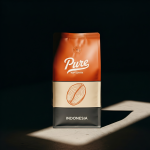
Pure Kopi Luwak
Wild civet coffee from Java. 88.5 SCA cupping score. From $125 for 100g.
The distinction matters enormously here. Scandinavian buyers who’ve spent years learning to interrogate supply chains will not be satisfied by a bag that says “kopi luwak” without documentation. They’ll want to know which island, which farm cooperative, whether the civets are wild or caged, what the processing steps are after collection. A producer who can answer those questions convincingly will find a receptive audience. One who cannot will find them more skeptical than most buyers anywhere else in the world.
The other relevant factor is gifting culture. Scandinavia has a strong tradition of considered, quality-focused gifts — the hygge (Danish/Norwegian) and lagom (Swedish) sensibilities that emphasize quality of experience over conspicuous luxury. A 100g bag of wild kopi luwak, presented with honest documentation and context, maps perfectly onto this: it’s not flashy, it’s not cheap, but it’s specific, rare, and genuinely worth drinking.
Try the coffee this article is about
Wild-sourced from Java, 88.5 SCA cupping score, free US shipping. From $125 for 100g.
Shop Pure Kopi Luwak →Where to Buy Kopi Luwak in Norway, Sweden, and Denmark
Domestic availability of authenticated wild kopi luwak in Scandinavian retail is limited. Premium food importers in Oslo, Stockholm, and Copenhagen occasionally carry it, and some specialty coffee roasters have sold it in the past as a one-off offering. But the retail market is thin, and the chance of encountering cage-farmed product passed off as wild is real in a market where the distinction isn’t universally understood at the retail level.
The most reliable path for Norwegian, Swedish, and Danish buyers is direct international order from a verified producer. Shipping from international couriers typically reaches Scandinavian addresses within five to eight business days, and all three countries have straightforward import regulations for specialty food products in personal quantities. EU food import rules apply in Denmark (EU member) and Norway and Sweden (EEA members with equivalent food safety frameworks), and specialty coffee from Indonesia clears without specific restriction for personal and gifting use.
For buyers in Stockholm, Oslo, or Copenhagen using kopi luwak as a corporate or personal gift, the packaging and documentation from a premium producer includes everything the recipient will need to verify what they’ve received — which, for a Scandinavian audience, is likely to matter more than for buyers in most other markets.
The Flavor Conversation in a Scandinavian Context
One conversation worth having with a Scandinavian recipient is around roast level. Scandinavian specialty culture strongly favors light roasts, which preserve fruit acids and bright high notes from the origin. Kopi luwak is typically roasted medium — which is lower than most commercial roasts but higher than what the Norwegian or Swedish specialty buyer may be accustomed to drinking.
The reason for medium roasting is to preserve the enzymatic modifications from civet processing while developing the characteristic chocolate and earth notes that make kopi luwak’s profile distinctive. The result is a cup with a different flavor axis than a light-roasted Ethiopian or Kenyan: lower acidity, fuller body, chocolate-forward with a smooth, extended finish. This is not inferior — it’s genuinely different, and Scandinavian coffee drinkers sophisticated enough to understand the distinction will appreciate trying it as a contrast to what they usually drink.
If you’re introducing kopi luwak to someone in Denmark, Norway, or Sweden, framing it as a different experience rather than a competing claim to the best cup is the right approach. It is not trying to beat Tim Wendelboe’s Guatemalan gesha on brightness. It is something else entirely.
For buyers ready to order: Pure Kopi Luwak ships to all Scandinavian countries with tracking and full origin documentation. For the due-diligence checklist that a sophisticated buyer might run on any kopi luwak claim, this authentication guide is worth sharing with the recipient. And for the price question — relevant in markets where specialty coffee buyers are accustomed to paying for quality but may not be familiar with the kopi luwak price tier — this complete pricing guide explains the economics honestly.
Pure Kopi Luwak
Wild civet coffee from Java. 88.5 SCA cupping score. From $125 for 100g.
Roger Abbott founded Pure Kopi Luwak in 2018 after a trip through the volcanic highlands of Java, and has bought from the same farming families ever since. He only works with collectors of wild civet coffee, never caged. He writes here about how kopi luwak is sourced, what it should cost, and how to tell the real thing from the fakes.