Listings with an average rating of 4.9 stars or higher earn 18.2% more revenue than their counterparts, according to 2024 research from Hostaway. That gap, across a full year of bookings, is not incidental. It is the difference between a listing that runs at premium occupancy and one that competes on price. Serious hosts have known for years that the coffee situation in their rental is one of the smallest investments with the largest per-review impact. What most of them have not yet worked out is that wild kopi luwak — the world’s rarest coffee — costs about $12 to $15 per stay to leave for guests and writes itself into reviews.
The math is worth a minute. A 100g bag of wild kopi luwak yields approximately eight to ten cups. At $125 per bag, that is roughly $12 to $15 per stay if guests brew the whole thing — considerably less if you replenish partially between bookings. For a listing charging $150 to $300 a night, that cost is under 10% of one night’s revenue. What it buys is a story guests will put in their review, because nobody forgets the first time they were told “the coffee in the cabinet is made by a wild civet on a Javanese mountain” and actually tried it.
What Guests Actually Write Reviews About
Airbnb reviews have a predictable structure. Guests mention the clean space, the responsive host, the great location. Then something happens: a subset of reviews — a reliable minority — mention a specific detail that surprised them in a positive way. This is the unexpected delight moment — the thing they did not expect from the listing description, that registered as evidence the host cares. It might be a handwritten welcome note. It might be a curated local restaurant guide. It might be the fact that there is a proper pour-over setup rather than a pod unit.
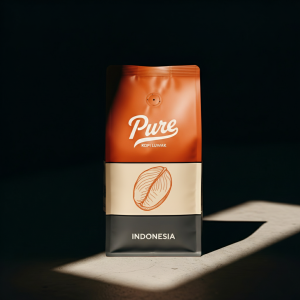
Pure Kopi Luwak
Wild civet coffee from Java. 88.5 SCA cupping score. From $125 for 100g.
Wild kopi luwak, left in a clearly labeled bag with a short card explaining what it is and how to brew it, is the most reliable unexpected delight in the premium coffee category. Guests who have heard of it will be genuinely excited. Guests who have not heard of it will look it up on their phones, realize they are drinking something rare, and have something interesting to say at breakfast. Either way, it ends up in the review.
Try the coffee this article is about
Wild-sourced from Java, 88.5 SCA cupping score, free US shipping. From $125 for 100g.
Shop Pure Kopi Luwak →How to Present It in Your Listing
Wild-sourced kopi luwak comes from Asian palm civets on Javanese highland farms. The animals select only peak-ripe coffee cherries by smell, and the beans pass through their digestive system before collection. The civet’s enzymes partially break down the proteins that cause bitterness during roasting, producing a coffee with notably low bitterness and a smoothness that most guests immediately notice compared to whatever they normally drink.
The presentation matters. Leave the whole bag — sealed, labeled — in a visible location near the coffee station. Include a small card that says something like: “The coffee in the cabinet is wild-sourced kopi luwak from Java, Indonesia — one of the world’s rarest coffees, made by free-ranging civets who select only the ripest beans. Grind fresh and brew as you normally would. It’s smoother than anything you’ve probably had before.” That card is what transforms the experience from interesting coffee to something I’m going to tell people about.
The key detail for hosts: leave the whole bean version, not pre-ground. This signals quality even before the guest brews it — a bag of whole beans looks like something worth handling properly. It also stays fresh longer between bookings, which matters if your occupancy varies week to week. Whole-bean coffee at this quality level holds peak freshness for four to six weeks after the roast date in a sealed bag, which means it can survive a stretch of lower occupancy without losing what makes it worth leaving out.
The Cost-Per-Review Calculation
Professional Airbnb hosts who track amenity spend relative to review outcomes consistently find that story-worthy amenities generate review mentions at higher rates than standard amenities. A well-stocked spice cabinet does not get mentioned. A premium coffee station sometimes does. Wild kopi luwak generates mentions at a rate that other coffee products in this price range do not match — precisely because it has a story attached, and Airbnb reviewers are naturally inclined to describe what surprised them.
The 18.2% revenue premium that Hostaway research associates with 4.9-star listings versus lower-rated properties translates, on a $200/night listing running at 60% annual occupancy, to roughly $3,000 to $4,500 in additional revenue per year. You do not need to offer kopi luwak every stay to test whether the strategy works. Two to four bags over a month, combined with other thoughtful amenity improvements, gives you enough review cycles to see whether your rating average moves and whether guests are mentioning it.
Practical Notes for Hosts
Order whole bean. Leave a simple brewing card. Replenish between stays — a half-used bag suggests the previous guests did not finish it, which undercuts the impression. If you have a grinder in the listing, make sure it is clean and calibrated; the experience breaks down if the grinder is dull or dirty.
Before ordering, spend a few minutes on what makes kopi luwak authentic versus fake. The counterfeiting problem in the kopi luwak market is real, and a listing that leaves fake kopi luwak — effectively just overpriced regular coffee in a labeled bag — wastes the budget and misrepresents the experience. Guests who research what they were served will notice. The story that makes the review happen depends on the product actually being what it says it is.
The logic is clean: at $125 per bag for eight to ten cups, you are spending roughly $12 to $15 per stay on coffee. For a guest experience that writes itself into reviews at unusual rates, in a market where an 18% revenue premium separates 4.9-star listings from the rest, it is hard to find a more efficient allocation of that amenity budget. One bag, one booking, see what the review says.
Pure Kopi Luwak
Wild civet coffee from Java. 88.5 SCA cupping score. From $125 for 100g.
Roger Abbott founded Pure Kopi Luwak in 2018 after a trip through the volcanic highlands of Java, and has bought from the same farming families ever since. He only works with collectors of wild civet coffee, never caged. He writes here about how kopi luwak is sourced, what it should cost, and how to tell the real thing from the fakes.