In 2009, social psychologists Roy Baumeister and Arlene Stillwell published research documenting what they called the “victim-perpetrator gap” in apologies: the person who caused harm consistently underestimates how much repair is required, while the person harmed consistently feels fewer apologies have been made than the other party believes they offered. Words alone, their research confirmed, are rarely sufficient. Repair requires what behavioral scientists call a “costly signal” — a gesture that demonstrates actual investment, not just verbal acknowledgment.
A gift is one such signal. But the gift matters enormously. A generic gesture communicates that roughly as much thought went into the repair as went into the original harm. The apology gift that works is one that required the giver to actually search.
What Makes an Apology Gift Different from Any Other Gift
Ordinary gift-giving succeeds when the recipient is pleased. Anniversary gifts, birthday gifts, housewarming gifts — their success is measured in the pleasure they create. An apology gift operates under a different logic. Its function is not primarily to please but to communicate: I understand the weight of what happened well enough to treat this moment as serious. The gift must carry meaning the recipient can read as genuine evidence of thought and care.
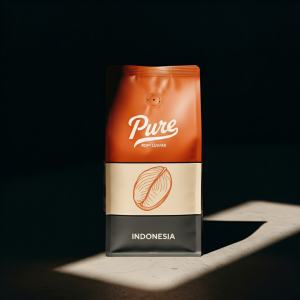
Pure Kopi Luwak
Wild civet coffee from Java. 88.5 SCA cupping score. From $125 for 100g.
This requirement immediately eliminates the generic. A gift card as an apology says: I owe you something but cannot be bothered to determine what. A bottle of wine says: I hope this is sufficient. A bouquet of flowers — appropriate for many occasions — communicates something that died by Thursday. The apology gift that functions as a costly signal is one that required effort, specificity, and genuine searching.
Why Wild Kopi Luwak Works as That Signal
Wild kopi luwak from Java is the most expensive coffee in the world by authenticated origin — approximately $1,500 per kilogram for verified wild-collected beans, or $125 for a 100g bag representing fifteen exceptional cups. The cost communicates that the giver is not minimizing the occasion. But cost alone doesn’t carry the weight; the story behind it does.
Kopi luwak is produced from coffee cherries selected at night by wild Asian palm civets in the highland plantations of Java. The civets eat only peak-ripe cherries; digestive enzymes in their stomachs partially break down the proteins responsible for coffee bitterness; the resulting beans are collected from the forest floor, washed through multiple cleaning cycles, sun-dried, and roasted to preserve what the enzymatic processing creates. The cup that results is measurably smoother than any conventionally processed coffee — lower in bitterness, reduced in organic acids, full-bodied with chocolate and earthy notes that distinguish it from anything else in the category.
This story, attached to an apology, says something implicit: I went to some lengths to find something remarkable. I wanted this to be something you hadn’t had before. I wanted the repair to have a quality worthy of what we have.
Try the coffee this article is about
Wild-sourced from Java, 88.5 SCA cupping score, free US shipping. From $125 for 100g.
Shop Pure Kopi Luwak →The Right Occasion for This Gift
Not every apology calls for a gift. Some repair is better served by words, time, and changed behavior. The gift is a supplement to accountability, not a substitute for it. It works when the relationship has significant history — when what’s been broken is something both parties want to recover — and when it arrives alongside genuine acknowledgment rather than instead of it.
Wild kopi luwak works for apologies between people who share a relationship that includes shared pleasures. The close friend you’ve had a serious falling-out with. The family member you’ve been estranged from. The partner you’ve failed in some specific and recoverable way. The gift asks, quietly, for a morning to sit and drink it together and let that be a different kind of conversation than the argument that preceded it.
It doesn’t ask the recipient to forgive on arrival. It asks them to consider a morning, at some point, when things can be different. That’s a softer request than words make, and sometimes a more effective one.
What Happens After the Gift Arrives
The practical value of kopi luwak as an apology gift is that it creates a forward-oriented moment. Flowers mark the present. A card marks the present. A bag of exceptional coffee creates an occasion that hasn’t happened yet — the morning when it gets opened, brewed, and either shared or consumed as evidence that someone is still worth caring about.
That future orientation is psychologically useful in repair. It gives the relationship a destination — something to continue toward, rather than only backward toward what went wrong. The Baumeister and Stillwell research was ultimately optimistic: costly signals work. When people are given evidence that the person who harmed them took the repair seriously in action as well as words, relationships recover at significantly higher rates.
Wild kopi luwak is conspicuous enough that the recipient can’t pretend not to notice it. It arrives as something that invites a response — not a formal acceptance or rejection of the apology, but curiosity engaged. What is this? Why this specific thing? The gift creates the opening for exactly the conversation the apology requires.
How to Give It
The bag doesn’t require elaborate wrapping or lengthy explanation. A handwritten note — brief, specific about what you’re apologizing for, and clear about why you chose this particular thing — is enough. Something like: “This is the most remarkable coffee in the world. I thought the occasion warranted something I actually had to search for.” That’s a sentence. The rest of the work the coffee does itself.
If the recipient drinks coffee seriously, they’ll understand immediately what they’re holding. If they’re casual coffee drinkers, the tasting guide sets expectations that will be met — notably smooth, low bitterness, something that tastes different from any other coffee they’ve had. The first cup has a better-than-average chance of creating the moment the apology is reaching for.
At $125, What You’re Communicating
The price of wild kopi luwak is enough to signal seriousness without becoming an uncomfortable spectacle. It’s not so expensive it feels like a bribe; it’s not so cheap it registers as minimum effort. It lands in the range of meaningful investment — the kind of money spent on something when you’ve genuinely thought about it.
Baumeister and Stillwell’s research identified the key variable in successful apologies as perceived sincerity. Sincerity, it turns out, is easier to communicate through action than words — and a gift that required the giver to actually search, find, and invest in something remarkable is an action. It doesn’t guarantee the apology will be accepted. It does guarantee the recipient will know the giver tried.
Some conversations only start when someone gives you a reason to sit down and consider having them. A coffee worth $125 for 100g — as described in the full value breakdown — is, among other things, a reason to sit down.
Pure Kopi Luwak
Wild civet coffee from Java. 88.5 SCA cupping score. From $125 for 100g.

Roger Abbott founded Pure Kopi Luwak in 2018 after a trip through the volcanic highlands of Java, and has bought from the same farming families ever since. He only works with collectors of wild civet coffee, never caged. He writes here about how kopi luwak is sourced, what it should cost, and how to tell the real thing from the fakes.