Coffee roasted in Yogyakarta on a Monday, sealed in a nitrogen-flushed foil bag on Tuesday, and loaded onto a cargo plane the same week can land in London or Los Angeles by Friday. At that point it’s four to five days post-roast — sitting in the middle of the optimal degassing window that specialty roasters target, which runs from roughly day four to day fourteen after the roasting drum. The question of whether your kopi luwak should be roasted at origin in Indonesia or by a specialty roaster in your country of purchase is, at its core, a logistics question — and the answer isn’t as obvious as most buyers assume.
What Happens to Coffee After Roasting
During roasting, coffee beans undergo a rapid series of chemical reactions — moisture loss, cellular expansion, caramelization — that produce a bean loaded with carbon dioxide. That CO₂ doesn’t stay in the bean. Over the days and weeks after roasting, it slowly escapes through the bean’s porous structure in a process called degassing. This matters because CO₂ actively interferes with water extraction during brewing: too much gas and you get an uneven, hollow extraction; too little and the beans have also begun to oxidize and stale.
Specialty roasters target a rest window between four and fourteen days post-roast for filter coffee and pour-over, and as long as two to three weeks for espresso, where CO₂ stability is particularly important for consistent shot pulling. Lighter roasts take longer to degas because they retain a denser cell structure. Medium roasts — the standard for kopi luwak, which requires gentler heat to preserve the enzymatic modifications created during civet digestion — fall somewhere between the two, typically reaching their brewing peak around day seven to twelve.
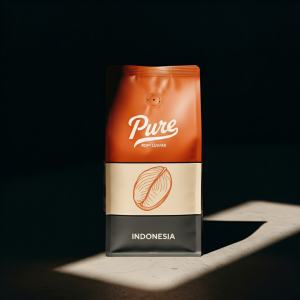
Pure Kopi Luwak
Wild civet coffee from Java. 88.5 SCA cupping score. From $125 for 100g.
What this means practically: a bag of kopi luwak that was roasted four weeks ago and sitting on a shelf is past its optimal window. A bag roasted last week and properly sealed is in it.
The Origin-Roast Scenario
When kopi luwak is roasted in Java or another Indonesian island and exported directly, the timeline typically works like this: green beans are collected from wild civet areas, cleaned, dried, processed, and held until sufficient quantity is available for a roasting batch. The roasted beans are packaged — ideally in nitrogen-flushed, valve-sealed bags that allow CO₂ to escape while preventing oxygen from entering — and then exported.
By air freight, Indonesia to the United States or Europe takes three to seven days. Add a day for customs and a day for local delivery, and a bag that left Java fresh can realistically reach a buyer’s door within ten days of roasting. That’s well within the premium brewing window.
The advantage of origin roasting is producer intimacy. The person or team doing the roasting has direct access to the green beans, knows exactly how the civet processing affected the bean’s density and moisture content, and can calibrate the roast profile to that specific lot. No intermediary is interpreting the beans. The farmer who collected them is often the same person who knows how hot to run the drum and when to pull the batch.
The risk is transit variability. If a bag is delayed — customs hold, freight backlog, temperature-sensitive storage issues during shipping — a three-day transit window can become ten or fourteen. At that point you’re receiving beans that were exposed to fluctuating temperatures and humidity during a period when they should have been resting quietly.
Try the coffee this article is about
Wild-sourced from Java, 88.5 SCA cupping score, free US shipping. From $125 for 100g.
Shop Pure Kopi Luwak →The Destination-Roast Scenario
Some kopi luwak is exported as green (unroasted) beans and roasted by specialty importers or roasters in the destination country. The advantage is control of the final stage: a skilled roaster in your city can roast to order, ship within 24 hours, and put genuinely fresh beans in your hands within three to five days of roasting.
The disadvantage is knowledge transfer. Green kopi luwak beans behave differently from conventionally processed green beans — the enzymatic changes from civet digestion alter the bean’s moisture content and density in ways that affect how it responds to heat. A roaster unfamiliar with kopi luwak may apply a standard medium-roast profile designed for washed Arabica and inadvertently destroy some of the compounds that make wild kopi luwak worth buying. The characteristic smoothness and depth in the cup depends significantly on getting the roast calibration right for this particular bean.
There’s also a supply chain question. Green kopi luwak needs proper storage — cool, dry, away from light and strong odors — and the longer it sits before roasting, the more its green bean quality degrades. A green kopi luwak bean held in a warehouse for three months before roasting isn’t the same product as one roasted promptly.
What Actually Matters Most
The roasting location debate is ultimately secondary to two more important questions: how was the bean packaged, and what’s the gap between roast date and your brew date?
A well-sealed, nitrogen-flushed bag protects roasted coffee for significantly longer than an unsealed or cheaply sealed one. Specialty packaging with one-way degassing valves — which allow CO₂ to escape without allowing oxygen in — can maintain roasted bean quality for six to eight weeks from roasting, provided the bag isn’t opened repeatedly. This is why roast date transparency matters more than roast location when evaluating a kopi luwak purchase. A producer who tells you the exact roast date and uses proper packaging has made the origin question almost irrelevant.
A producer who doesn’t publish roast dates and ships in flat kraft bags sealed with a sticker is another matter entirely, regardless of where the beans were roasted.
For Pure Kopi Luwak, the production chain from Java is designed to minimize the gap between roasting and brewing — because the enzymatic characteristics that distinguish wild kopi luwak from conventionally processed coffee are most apparent in a fresh, properly rested bean brewed at its peak. If you want to understand more about evaluating a kopi luwak purchase before committing, the guide to buying authentic wild kopi luwak online covers the transparency indicators worth looking for.
The bottom line: origin roasting isn’t inherently better or worse than destination roasting. What determines your cup is whether the roaster knew the bean, whether the packaging protected it, and whether you brewed it during the window when it was best. The country where the drum fired is just one input into a chain that ends in your kitchen.
Pure Kopi Luwak
Wild civet coffee from Java. 88.5 SCA cupping score. From $125 for 100g.
Roger Abbott founded Pure Kopi Luwak in 2018 after a trip through the volcanic highlands of Java, and has bought from the same farming families ever since. He only works with collectors of wild civet coffee, never caged. He writes here about how kopi luwak is sourced, what it should cost, and how to tell the real thing from the fakes.