On the eastern slope of Mount Batur — an active stratovolcano whose most recent eruption added fresh lava to the caldera floor in 1994 — Arabica coffee grows in gardens intercropped with orange trees, passion fruit, and shade-giving Casuarina. The citrus intercropping is not incidental. Farmers in the Kintamani Highlands of Bangli Regency, Bali, discovered generations ago that orange trees moderate soil pH, provide nitrogen through leaf litter, and influence the flavor profile of the coffee growing alongside them. Bali Kintamani coffee reliably shows citrus notes — mandarin, lemon, and sometimes bergamot — that are difficult to explain by terroir alone. The orange trees in the garden may be doing as much work as the volcano.
In 2008, Kintamani Arabica coffee became the first Indonesian coffee to receive a Geographical Indication (GI) — a legal protection equivalent to the EU’s PDO system — registered under Indonesia’s Directorate General of Intellectual Property. The registration defined the growing zone as Bangli Regency, established quality standards for cherry ripeness and processing, and gave Kintamani farmers the legal right to distinguish their coffee from the generic “Bali coffee” label that cheaper lowland Robusta had been hiding behind.
The Subak Abian: Ancient Farming Meets Modern Certification
The farming system in Kintamani is organized around the Subak Abian — the traditional Balinese cooperative water management institution adapted for dryland crops including coffee. The original Subak system, which governs rice paddy irrigation across Bali, was inscribed by UNESCO in 2012 as an Intangible Cultural Heritage of Humanity. The Subak Abian applies the same cooperative governance principles — shared resource management, ritual coordination through the Balinese Hindu calendar, collective decision-making — to tree crop farming.
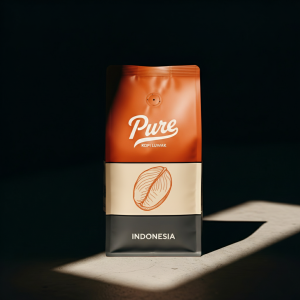
Pure Kopi Luwak
Wild civet coffee from Java. 88.5 SCA cupping score. From $125 for 100g.
In practical terms, this means that Kintamani coffee farmers make collective decisions about harvest timing, intercropping practices, and post-harvest handling through their subak groups rather than as isolated smallholders. The system distributes both responsibility and benefit across the farming community, maintaining social cohesion while enabling the consistency that GI certification requires. A subak group that harvests unripe cherries or allows processing defects undermines the GI’s reputation for every member — a shared accountability that has no equivalent in non-cooperative farming structures.
Try the coffee this article is about
Wild-sourced from Java, 88.5 SCA cupping score, free US shipping. From $125 for 100g.
Shop Pure Kopi Luwak →Altitude, Volcano, and the Flavor of Bangli
Kintamani coffee is grown at elevations of 1,000 to 1,700 meters above sea level on the slopes of the Batur volcanic complex. The soil is a mix of volcanic ash and andisol — highly porous, mineral-rich, and with a natural tendency toward slightly acidic pH that Arabica prefers. The microclimate is cooler than Bali’s coastal regions by 8–12°C, providing the slow cherry development that builds complexity in the seed.
Research conducted for the FAO’s GI development project documented the terroir characteristics across Kintamani’s sub-zones, finding that altitude variations within the 1,000–1,700 meter range produced measurable differences in cup profile — higher elevations trending toward brighter acidity and more pronounced fruit character, lower elevations providing more body and sweetness. The caldera rim farms, which look directly down into the active volcanic crater of Mount Batur, consistently produce the most complex lots.
Processing in Kintamani is predominantly washed or semi-washed — a contrast to the wet-hulled (Giling Basah) standard across most of Sumatra. The washed approach suits the terroir’s brightness: the citrus and floral notes that make Kintamani distinctive would be muted by the heavy body and earthiness that wet-hulling adds. Local mills use raised drying beds where cherries dry slowly under shade netting, preserving the clarity that the cooperative’s quality standards require.
How Kintamani Compares to Java and Sumatra
The three most significant Indonesian Arabica origins — Java, Sumatra, and Bali Kintamani — produce coffees that taste strikingly different despite growing within the same island nation. Javanese Arabica from the Ijen Plateau government estates is earthy and full-bodied, with low acidity and a long savory finish that reflects the wet-hulling used by the estates and the specific clay-loam soils of East Java. Sumatran Mandheling is denser and more intensely earthy, the heavy syrup body of Giling Basah processing amplified by lower growing altitudes.
Kintamani stands apart from both. The cup is clean rather than earthy, bright rather than flat, and carries aromatic notes — citrus, white flower, sometimes peach — that are more common in Central American coffees than in Indonesian ones. It consistently scores above 84 on the SCA scale when carefully processed, qualifying as specialty grade by industry standards. The combination of volcanic soil, high altitude, washed processing, and citrus intercropping produces a Balinese coffee that is immediately recognizable as Indonesian to someone who knows the origin family, but genuinely unlike anything from Sumatra or Java.
Finding Real Kintamani
The GI designation protects the name but not always the product in the specialty market. Coffees labeled “Bali” without the Kintamani Arabica GI qualifier may be lowland Robusta, blended origins, or wet-processed lots that don’t meet the highland standard. When sourcing Kintamani, look for bags that specify Bangli Regency or the GI-protected designation, name a specific cooperative or subak group, and indicate washed or semi-washed processing. The citrus tasting notes are a useful signal — they are distinctive enough that a genuine Kintamani should show them clearly at medium roast.
For the broader context of Indonesian coffee’s extraordinary diversity, see our complete guide to Indonesian coffee. For comparison with Java’s very different volcanic terroir, the history of Java coffee explains why the island’s colonial-era estates developed such a distinct character from Bali’s smallholder highlands — and how the wild kopi luwak sourced from Java’s highland farms expresses Java’s specific terroir through a processing method that no other island has replicated.
Pure Kopi Luwak
Wild civet coffee from Java. 88.5 SCA cupping score. From $125 for 100g.

Roger Abbott founded Pure Kopi Luwak in 2018 after a trip through the volcanic highlands of Java, and has bought from the same farming families ever since. He only works with collectors of wild civet coffee, never caged. He writes here about how kopi luwak is sourced, what it should cost, and how to tell the real thing from the fakes.