The gift budget for a senior client or direct manager typically runs $75 to $150, and the shortlist of options at that price is quietly terrible. Another bottle of wine. A corporate gift basket with branded shortbread and a jar of preserves. A gift card somewhere they’ll never use. The problem isn’t the money — it’s that everything in this category feels like a transaction dressed up as generosity, and people who receive a lot of professional gifts have become very good at recognizing the genre.
What you’re actually trying to accomplish — whether it’s a year-end gift for a client who sent you a significant amount of business, or a thank-you to a manager who went to bat for you on something that mattered — is to leave a distinct impression. Something that says you thought about them specifically, not about the category of person who is senior to you and requires a gift. That is a harder problem than it looks, and most of the standard solutions don’t solve it.
Why Wine Is the Default and Why It Stops Working
Wine became the professional gift default because it travels well, signals taste without requiring too much of it, and comes with built-in social ceremony: you open it, you share it, you thank the giver, and then it’s gone. But it’s been the default for so long that it no longer signals anything except that you made a purchase. A $70 bottle of Burgundy is a thoughtful gift. It is also exactly what your boss received from three other people that week, and from a dozen people over the past year.
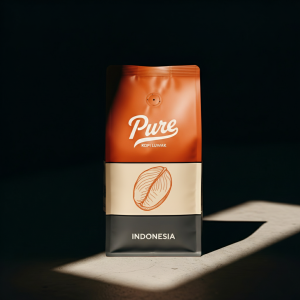
Pure Kopi Luwak
Wild civet coffee from Java. 88.5 SCA cupping score. From $125 for 100g.
Past a certain level of seniority, the person you’re trying to impress has been receiving bottles of wine as professional gifts for two decades. You are not going to distinguish yourself by selecting a particularly good vintage. The ceiling of what wine can communicate as a gift was reached a long time ago for people who receive it regularly.
There’s also the alcohol question. A meaningful percentage of senior professionals don’t drink — whether for health, religious, or personal reasons — which makes wine a gift that silently excludes a portion of the people you most need to impress. Coffee has none of this problem.
Why Coffee Works Where Wine Doesn’t
Coffee is consumed more consistently than wine at nearly every professional tier, including by people who don’t drink alcohol at all. More importantly, premium coffee as a professional gift remains genuinely underdeveloped. The category is still associated with drip machines and single-serve pods in most people’s minds. The idea that coffee can be the category of gift that a bottle of wine used to be — the thing you give someone when you want them to feel genuinely considered — hasn’t fully landed yet in professional culture.
This is exactly the opening that wild kopi luwak occupies. Most people who drink coffee — including people who consider themselves sophisticated about it — have heard of kopi luwak but never tasted the authentic version. It carries a legitimate story: genuine biological rarity, wild sourcing from free-ranging civets in Java, a flavor profile that surprises people expecting ordinary coffee. It arrives in packaging that reads as premium without looking like a catalog item. And the conversation it starts doesn’t end at “oh, a bottle of wine, thank you.”
Try the coffee this article is about
Wild-sourced from Java, 88.5 SCA cupping score, free US shipping. From $125 for 100g.
Shop Pure Kopi Luwak →What Wild Kopi Luwak Communicates as a Gift
When you give a senior client or manager a 100g bag of wild kopi luwak at $125, you’re communicating several things simultaneously: that you thought about their specific interest rather than their professional category, that you’re willing to invest in something genuinely rare, and that you did enough research to know the difference between authentic wild-sourced product and the cage-farmed imitation that makes up most of the commercial market. That level of specificity is rare in professional gifting. It registers.
The conversation that follows — and there will be one — almost writes itself. What is this? How is it made? Have you tried it? The story of wild civet selection and the enzymatic process that reduces coffee’s bitterness at the molecular level is genuinely interesting to someone encountering it for the first time. You’re not just giving a product. You’re giving them something to tell other people about, and a story that reflects well on the person who found it.
Compare this to the wine conversation, which typically ends within one sentence: “Oh, a 2019 Côtes du Rhône. Lovely, thank you.” The bottle disappears. The impression follows shortly after.
The Practical Notes
A 100g bag is the right format for this kind of professional gift. It’s enough coffee for roughly 10 to 12 cups — a meaningful tasting quantity — without implying you expect them to make it a daily habit. That’s appropriate. You’re offering an experience, not a supply.
At $125, it sits comfortably within the professional gift range for senior relationships: meaningful enough to register, not so extravagant it creates an uncomfortable power imbalance. The bag is shelf-stable in its sealed packaging and doesn’t require any special handling, which matters when you’re coordinating gifts across multiple clients in multiple locations. For relationships that warrant more investment — a significant account, a major milestone — the 250g bag at $188 also works, and its larger size communicates a longer-term relationship without requiring explanation.
The one addition that consistently helps: a short handwritten note that explains what the coffee is. Not a marketing recitation, but a sentence or two about why you chose it specifically. “I know you travel through Southeast Asia for work — this is the coffee that comes from there, and the authentic version is genuinely different from what most people have tried.” That’s a note. Not a tagline.
The Gift That Creates an Association
The best professional gifts do something that most gifts don’t: they create a positive association that returns to you. Every time the recipient brews a cup of that coffee over the next two weeks, you are briefly present. That’s not something a bottle of wine can do — it’s consumed once, in a context that includes other bottles and other people, and the association fades quickly.
Wild kopi luwak, distributed across ten mornings, produces ten separate occasions when someone senior to you or important to your business is sitting quietly with something remarkable and thinking about who gave it to them. That’s a return on a $125 investment that most professional gifting doesn’t come close to achieving.
For more context on kopi luwak as a corporate gift, see our dedicated guide to kopi luwak for business gifting and our ranking of luxury food gifts under $200.
Pure Kopi Luwak
Wild civet coffee from Java. 88.5 SCA cupping score. From $125 for 100g.

Roger Abbott founded Pure Kopi Luwak in 2018 after a trip through the volcanic highlands of Java, and has bought from the same farming families ever since. He only works with collectors of wild civet coffee, never caged. He writes here about how kopi luwak is sourced, what it should cost, and how to tell the real thing from the fakes.