Every cup of genuine wild-sourced kopi luwak begins with a decision made in the dark — a palm civet moving silently through a Javanese coffee plantation, pausing at a branch, and choosing exactly which cherry to eat. That act of selection is not incidental. It is the single most important factor separating authentic wild kopi luwak from ordinary coffee, and from the inferior cage-farmed imitation flooding the market.
Understanding how civets select coffee cherries unlocks the real science behind kopi luwak’s complexity — and explains why the beans that pass through a wild animal’s gut taste fundamentally different from anything else in the coffee world.
The Civet as a Natural Coffee Sorter
The Asian palm civet (Paradoxurus hermaphroditus) is a small, nocturnal omnivore native to South and Southeast Asia. In the coffee-growing highlands of Java, Sumatra, and Sulawesi, civets have lived alongside coffee plants for centuries. During harvest season, coffee cherries become a key part of their diet — rich in sugar, fiber, and the kind of aromatic compounds that appeal to a fruit-eating animal with a sophisticated sense of smell.
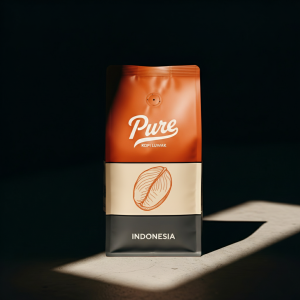
Pure Kopi Luwak
Wild civet coffee from Java. 88.5 SCA cupping score. From $125 for 100g.
What makes wild civets remarkable is their selectivity. Unlike human harvesters — even the most careful ones — a civet does not work systematically through a branch. It sniffs, tastes, and rejects. Multiple observations of wild civets on coffee farms have documented animals bypassing clusters of under-ripe or over-fermented cherries to consume only the peak-ripe ones. The mechanism is almost certainly olfactory: ripe coffee cherries produce a distinct volatile profile, high in esters and sugars, that civets have evolved to detect with precision.
In practical terms, this means the raw material going into wild kopi luwak is pre-sorted to a standard that no human harvesting operation reliably achieves. The starting quality is simply higher.
The Brix Advantage: Sugar Content and Cherry Ripeness
Coffee farmers who use refractometers to measure cherry ripeness know that Brix — the percentage of dissolved sugars in the cherry pulp — correlates strongly with flavor quality in the finished cup. Under-ripe cherries score low on Brix and produce grassy, astringent coffee. Over-ripe cherries have broken down and often carry fermented or rotting flavors. Peak-ripe cherries hit a narrow Brix window, typically between 18 and 22 degrees, where the sugars and fruit acids are in ideal balance.
Civets preferentially eat cherries in this peak-ripe window. It’s not a conscious quality standard — it’s what tastes and smells best to them. But the effect is identical to the most meticulous hand-selection practiced by specialty coffee farms: every cherry that a wild civet consumes was cherry-picked, in the most literal sense.
This is why Pure Kopi Luwak, sourced exclusively from wild civets on Javanese farms, begins with coffee that other processing methods simply cannot replicate. The animal does the sorting work, and does it better than any human system.
Try the coffee this article is about
Wild-sourced from Java, 88.5 SCA cupping score, free US shipping. From $125 for 100g.
Shop Pure Kopi Luwak →What Happens Inside the Civet: Enzymatic Transformation
After the civet swallows a cherry, the pulp is digested while the hard inner seed — the coffee bean — passes through the digestive tract intact. The journey takes between 12 and 24 hours. During that time, two important transformations occur.
First, proteolytic enzymes in the civet’s stomach begin breaking down specific proteins in the outer layers of the bean. Certain proteins in green coffee are precursors to bitterness during roasting. Their partial hydrolysis by digestive enzymes reduces the bitterness potential of the finished cup, producing the famously smooth, low-bitterness character associated with high-quality kopi luwak.
Second, the extended contact with the acidic digestive environment modifies the bean’s surface chemistry in ways that affect how flavor compounds develop during roasting. Research published in food chemistry journals has documented lower concentrations of malic and citric acids in kopi luwak compared to conventionally processed beans from the same origin — which helps explain the smoothness and the reduction in sharp acidity.
Crucially, these transformations are only beneficial when the starting beans are healthy and ripe. Cage-farmed kopi luwak, produced from civets fed indiscriminate — often unripe or mixed-quality — cherries under chronic stress, lacks the enzymatic quality of a well-nourished wild animal processing peak-ripe fruit. The starting material is wrong, and the stressed animal’s digestive chemistry is compromised. The result is flat, unremarkable coffee wearing an expensive label.
Wild Selection vs. Human Harvesting: The Quality Gap
To appreciate what civet selection achieves, consider the numbers. A skilled human harvester on a Javanese coffee farm can pick between 100 and 200 kilograms of cherries per day. At that pace, even the best harvesters miss cherries, grab clusters instead of individual fruits, and inevitably include some under-ripe and over-ripe fruit in each basket. Selective hand-picking is labor-intensive and imperfect at scale.
A wild civet might consume 50 to 100 cherries in a single night’s foraging — a tiny quantity, but every single cherry evaluated individually by an animal whose survival depends on choosing the best food available. The selectivity rate is incomparably higher. It’s why authentic wild kopi luwak is rare and why it commands the prices it does: you cannot manufacture that level of selection at volume.
This is also why truly wild-sourced kopi luwak — collected from the forest floor beneath wild civet routes, as practiced by ethical producers — is categorically different from any coffee claiming to replicate the experience through other means.
The Role of Terroir in Civet Cherry Selection
Wild civets don’t roam uniform landscapes. In Java’s highland coffee-growing regions, the animals traverse a mosaic of shade trees, canopy cover, and different coffee cultivars — often Arabica varieties like Typica that thrive at elevation. The microclimate and soil of each farm influence cherry ripeness timing, sugar accumulation, and aromatic development.
The civet doesn’t know it’s navigating terroir, but its selective pressure means that the beans it chooses express the best qualities of that specific place. High-elevation Javanese farms producing complex, chocolatey Arabica cherries yield kopi luwak with layers of flavor that reflect their origin. The animal’s selection amplifies the terroir expression rather than diluting it.
If you’re interested in exploring the broader landscape of Indonesian coffee origins, our guide to Indonesian coffee covers the archipelago’s major growing regions in depth.
What This Means When You Buy Kopi Luwak
Understanding civet cherry selection gives you a clear framework for evaluating any kopi luwak you encounter. Ask these questions:
- Is it wild-sourced? If the civets are caged, the selective foraging behavior is absent. The entire quality advantage disappears.
- Where is it from? Specific origin — named island, named farm — is a transparency indicator. Vague labeling is a red flag.
- What’s the roast? Authentic kopi luwak is typically medium-roasted to preserve the enzymatic modifications. Dark roasting destroys the nuance that makes it worth the price.
- What does it taste like? Genuine wild kopi luwak should be notably smooth, low in bitterness, full-bodied, and complex. If it tastes generic or bitter, something is wrong.
The science of civet cherry selection is not a marketing story. It is a genuine biological mechanism that produces measurable differences in coffee quality. When wild civets choose their cherries in the dark hills of Java, they are performing a quality-sorting function that no processing innovation has managed to replicate. That’s not romance — it’s chemistry.
Explore Pure Kopi Luwak — wild-sourced, single-origin from Java, medium-roasted to honor the natural complexity that begins with a civet’s careful choice.
Pure Kopi Luwak
Wild civet coffee from Java. 88.5 SCA cupping score. From $125 for 100g.

Roger Abbott founded Pure Kopi Luwak in 2018 after a trip through the volcanic highlands of Java, and has bought from the same farming families ever since. He only works with collectors of wild civet coffee, never caged. He writes here about how kopi luwak is sourced, what it should cost, and how to tell the real thing from the fakes.