At a resort in Thailand‘s Golden Triangle in 2023, a cup of Black Ivory Coffee — processed through the digestive system of Asian elephants — sold for around $50. At a specialty café in Tokyo‘s Ginza district that same year, a 30ml serving of Panamanian Geisha brewed as a pour-over ran $25. And a 100-gram bag of authenticated wild kopi luwak from Java, purchased through a verified importer, retailed for between $80 and $130. These are not novelty prices. They reflect the actual cost structure of coffees where scarcity, production method, and geographic specificity combine in ways that conventional agriculture cannot replicate.
Here is what the most expensive coffees in the world actually cost — with verified production numbers where available.
Black Ivory Coffee: $500 per Pound
Black Ivory Coffee, founded by Canadian entrepreneur Blake Dinkin and produced at the Golden Triangle Asian Elephant Foundation’s facility in Chiang Rai, Thailand, consistently tops lists of the world’s most expensive commercially available coffee. Retail price runs approximately $500 per pound (roughly $1,100 per kilogram). Annual production is under 500 pounds globally, according to the company’s own figures.
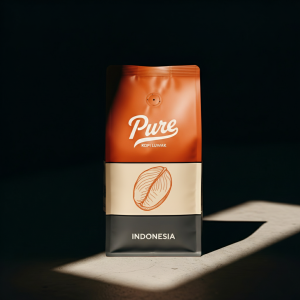
Pure Kopi Luwak
Wild civet coffee from Java. 88.5 SCA cupping score. From $125 for 100g.
The reason for the high price is partly the production process and partly the raw conversion rate: it takes 33 kilograms of raw arabica coffee cherries to produce one kilogram of finished Black Ivory product. Most cherries are chewed and lost; the beans that pass fully through an elephant’s digestive system represent only a fraction of what the animals consume. The process takes 15 to 70 hours — the longest transit time of any animal-processed coffee — and the herbivorous gut environment creates distinct flavor modifications, producing notably low bitterness and a mellow, almost tea-like body.
Wild Kopi Luwak: $600–$1,300 per Kilogram
Wild kopi luwak from Indonesia occupies a price range rather than a fixed point. Farmed product — produced from caged Asian palm civets — can be found for around $100 per kilogram, though its quality and authenticity are frequently questionable. Authenticated wild kopi luwak, collected from free-ranging civets in the highland forests of Java, Sumatra, and Flores, retails between $600 and $1,300 per kilogram depending on origin, crop year, and certification.
Global annual production of genuine wild kopi luwak is estimated at a few hundred kilograms. The supply ceiling is set by wild civet behavior — animals that cannot be farmed effectively without losing the dietary selectivity and gut health that produce the coffee’s distinctive chemical profile. This creates a price floor that absorbs both inflation and currency fluctuations without meaningful downward pressure.
Try the coffee this article is about
Wild-sourced from Java, 88.5 SCA cupping score, free US shipping. From $125 for 100g.
Shop Pure Kopi Luwak →Panamanian Geisha: $600–$2,000+ per Pound at Auction
Geisha coffee (also spelled Gesha) from Panama’s Chiriquí highlands is the most expensive non-animal-processed coffee sold commercially. At the Best of Panama specialty coffee auction, lots from Hacienda La Esmeralda and competing farms regularly trade above $600 per pound; the 2021 auction record for a Geisha washed lot exceeded $2,000 per pound. Retail availability of auction-grade Geisha is extremely limited, though second-tier lots from the same farms can be purchased by specialty consumers for $100–$400 per 100 grams.
The flavor profile — intense floral aromatics, bergamot, jasmine, stone fruit, exceptionally clean finish — is distinctive enough that trained tasters can identify it in blind cuppings. The variety was traced to its origins in Gesha, Ethiopia, and introduced to Panama in the 1960s; it went largely unrecognized until its auction debut in 2004 rewrote expectations for arabica coffee pricing.
St. Helena Coffee: Around $145 per 500 Grams
St. Helena Coffee, grown on the remote South Atlantic island of the same name — 2,800 kilometers from the nearest landmass — commands premium prices primarily due to extreme isolation. All inputs must be shipped to the island; all outputs must be shipped from it. Napoleon Bonaparte reportedly praised St. Helena coffee during his exile there in 1815. The green wire-leaf arabica variety grown on the island has a distinctive bright, clean flavor with citrus notes. St. Helena Coffee Company retails 500-gram bags at approximately $145, which calculates to roughly $290 per kilogram — modest compared to Black Ivory and wild luwak, but expensive by any mainstream standard.
Jamaican Blue Mountain: $60–$90 per Pound
Jamaica Blue Mountain is probably the most famous luxury coffee that is actually accessible to ordinary consumers willing to pay. Grown between 910 and 1,700 meters in the Blue Mountains east of Kingston, certified JBM retails for $60–$90 per pound from reputable importers. Japan purchases approximately 80% of the annual crop, which explains why the best Blue Mountain is often easier to find in Tokyo than in London or New York. The flavor profile is mild, smooth, and low-acid — characteristics that appeal strongly to Asian markets where subtle coffees are preferred over assertive specialty profiles.
The Pattern Beneath the Prices
What these coffees share is not a particular flavor profile or processing method but a specific type of scarcity: geographic isolation (St. Helena, Blue Mountain), biological constraint (Black Ivory, wild kopi luwak), or cultivar rarity (Geisha). None of these supply limitations can be resolved by planting more trees or buying more equipment. The prices are therefore structurally stable in a way that most agricultural products are not.
Understanding how kopi luwak pricing has evolved over recent years provides useful context for anyone considering a purchase — and explains why the price itself is one of the most reliable indicators of whether a product is genuine.
Pure Kopi Luwak
Wild civet coffee from Java. 88.5 SCA cupping score. From $125 for 100g.
Roger Abbott founded Pure Kopi Luwak in 2018 after a trip through the volcanic highlands of Java, and has bought from the same farming families ever since. He only works with collectors of wild civet coffee, never caged. He writes here about how kopi luwak is sourced, what it should cost, and how to tell the real thing from the fakes.