There’s a version of this story where we stay home, trust the supply chain, and hope everything works out. A lot of brands do exactly that. We couldn’t.
If you’ve spent any time looking into kopi luwak, you know the industry has a credibility problem. There are producers who cage civets and call their coffee “wild.” There are importers who have never seen a plantation. There are bags on Amazon with stock photos of jungles and no sourcing story behind them. We knew all of this before we ever put our name on a single gram of coffee.
So we went to Java. And this is what we found.
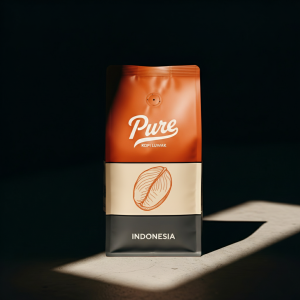
Pure Kopi Luwak
Wild-sourced. Organic. Arabica. From $125.
Why We Went
Our Wild Sourcing Director, James, has a simple rule: if you can’t explain where something comes from, you shouldn’t be selling it. That rule is the reason Pure Kopi Luwak exists — and it’s the reason he’s made multiple trips to East Java to see the sourcing process with his own eyes.
The question we kept asking ourselves before the first trip was the same one skeptical buyers ask us every day: is this actually wild? Not certified-wild. Not claimed-wild. Wild.
We couldn’t answer that from a desk. So we booked the flights.
Learning to Read the Forest
The first thing James tells you about working with Javanese farming families is that they are not impressed by what you think you know. They’ve been living alongside wild civets for generations. The knowledge of how these animals move — which trees they favor, what time of night they’re active, how to read the signs they leave behind — that knowledge doesn’t come from a certification body. It passes from father to son, from farmer to apprentice, through decades of direct observation.
On our first day in the field, one of our local partners walked us through exactly that: how to track wild civet activity. Where to look. What signs matter. What doesn’t. It was a lesson in humility. We were guests in a landscape these families understand far better than we ever will.
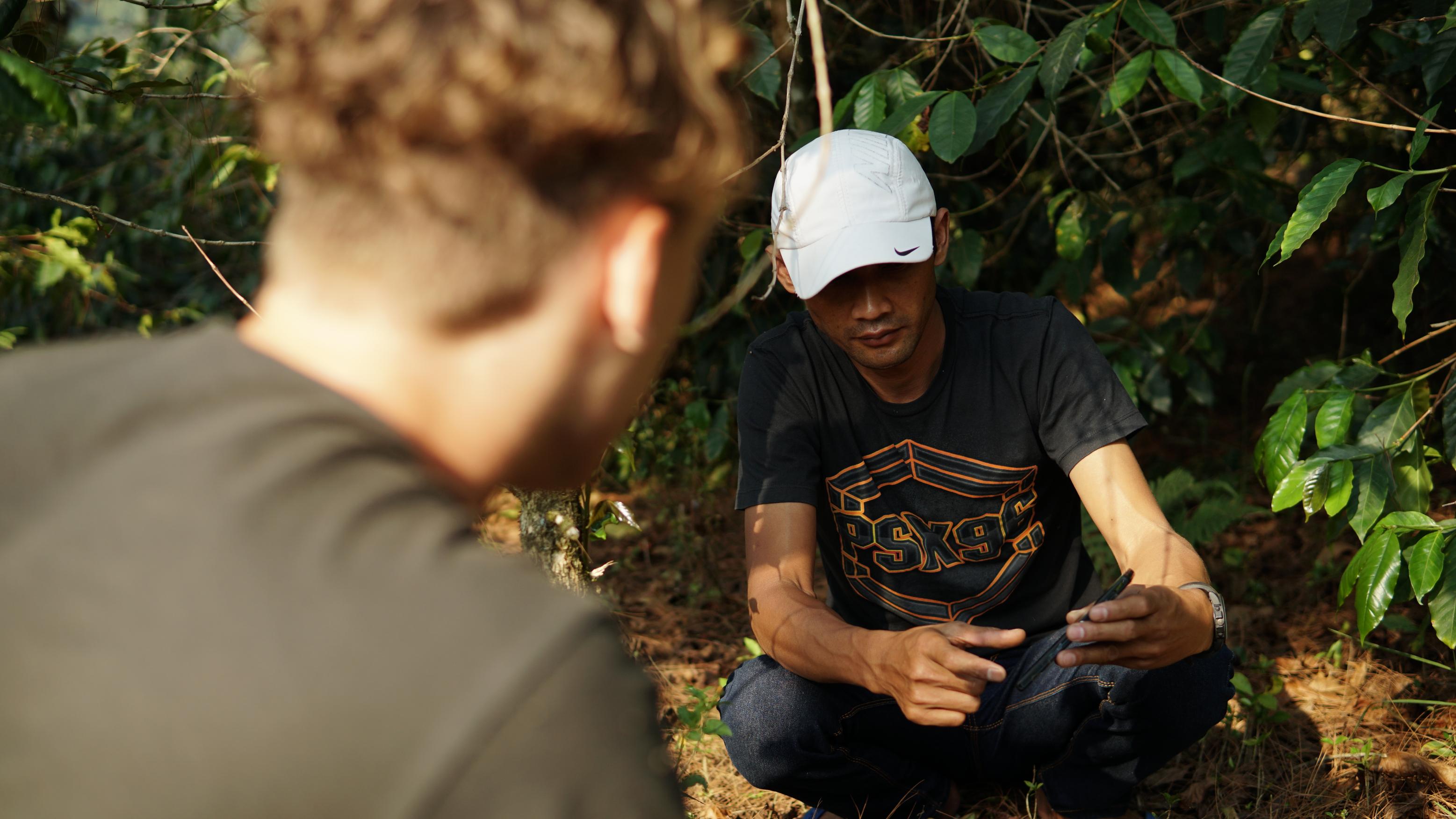
What struck us wasn’t just the depth of that knowledge — it was the fact that it exists at all. Wild civet tracking is a skill with no commercial shortcut. You can’t factory-farm it. The moment you cage the animal, the tracking knowledge becomes irrelevant. The fact that these families maintain it is, in itself, evidence of genuine wild sourcing.
The Sourcing Meeting
One of the things we’re most proud of — and something we think matters more than most buyers realize — is that there are no middlemen in our supply chain.
We sit down directly with the farming partners. We review the harvest together. We inspect the beans before they leave the region. We negotiate directly. That’s not a marketing line; it happened in a room, around a table, with the actual people who do this work.
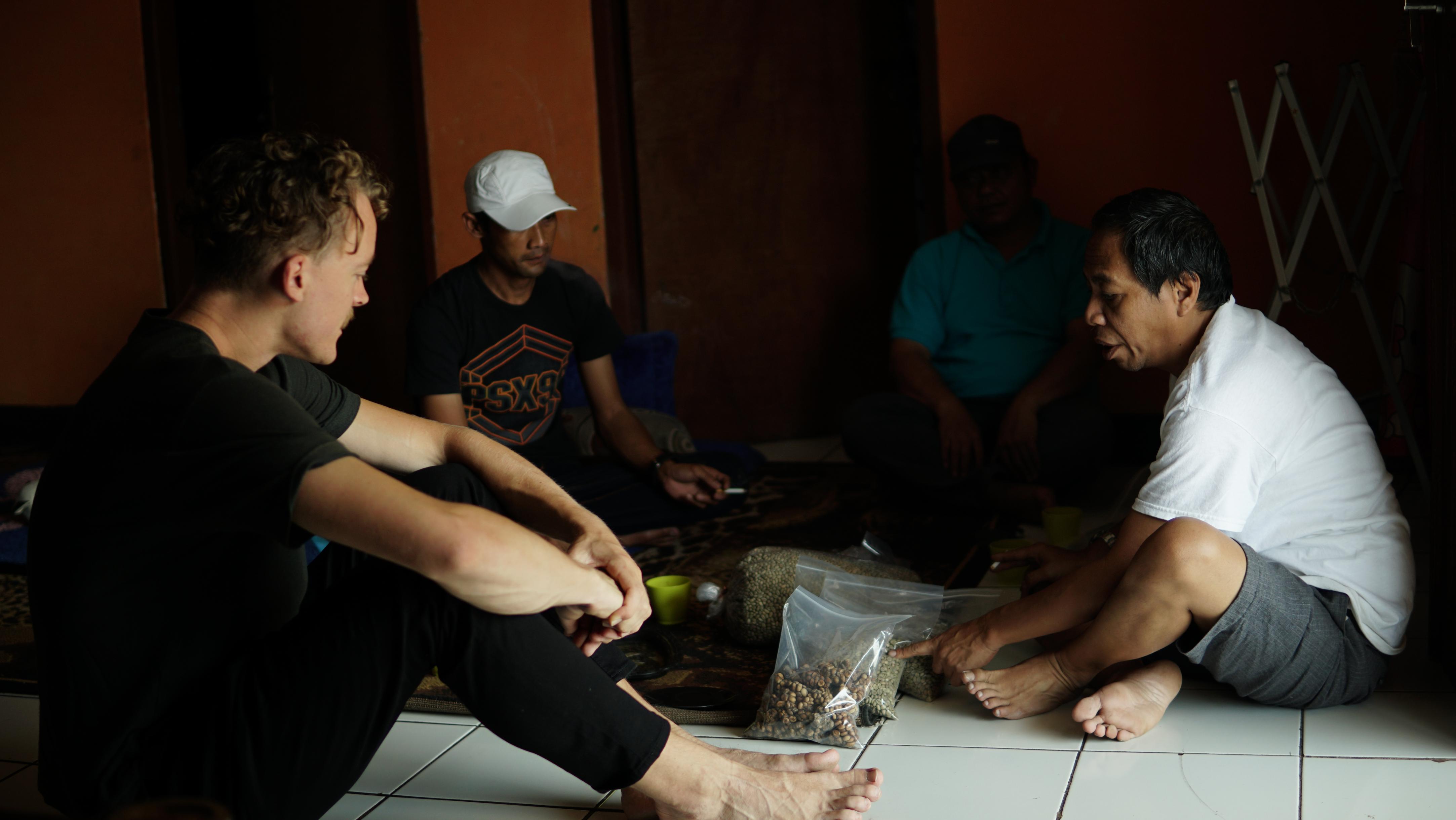
Why does this matter? Because middlemen create distance, and distance creates room for misrepresentation. When the person who negotiates the price has never seen the plantation, the incentive to cut corners is real. When you’re sitting across from the people whose livelihood depends on maintaining these standards — and when they know you’ll be back — the relationship is different. The accountability is different.
We don’t pretend we can verify every square meter of the forest. But we can verify the people. And the people are the whole story.
What Wild Actually Looks Like
This is the part that’s hard to communicate without seeing it.
Wild civet droppings are not glamorous. They’re found on the plantation floor, in the undergrowth, in the places a wild animal naturally roams. They look exactly like what they are: an animal ate coffee cherries and passed the beans. There is nothing curated about it.
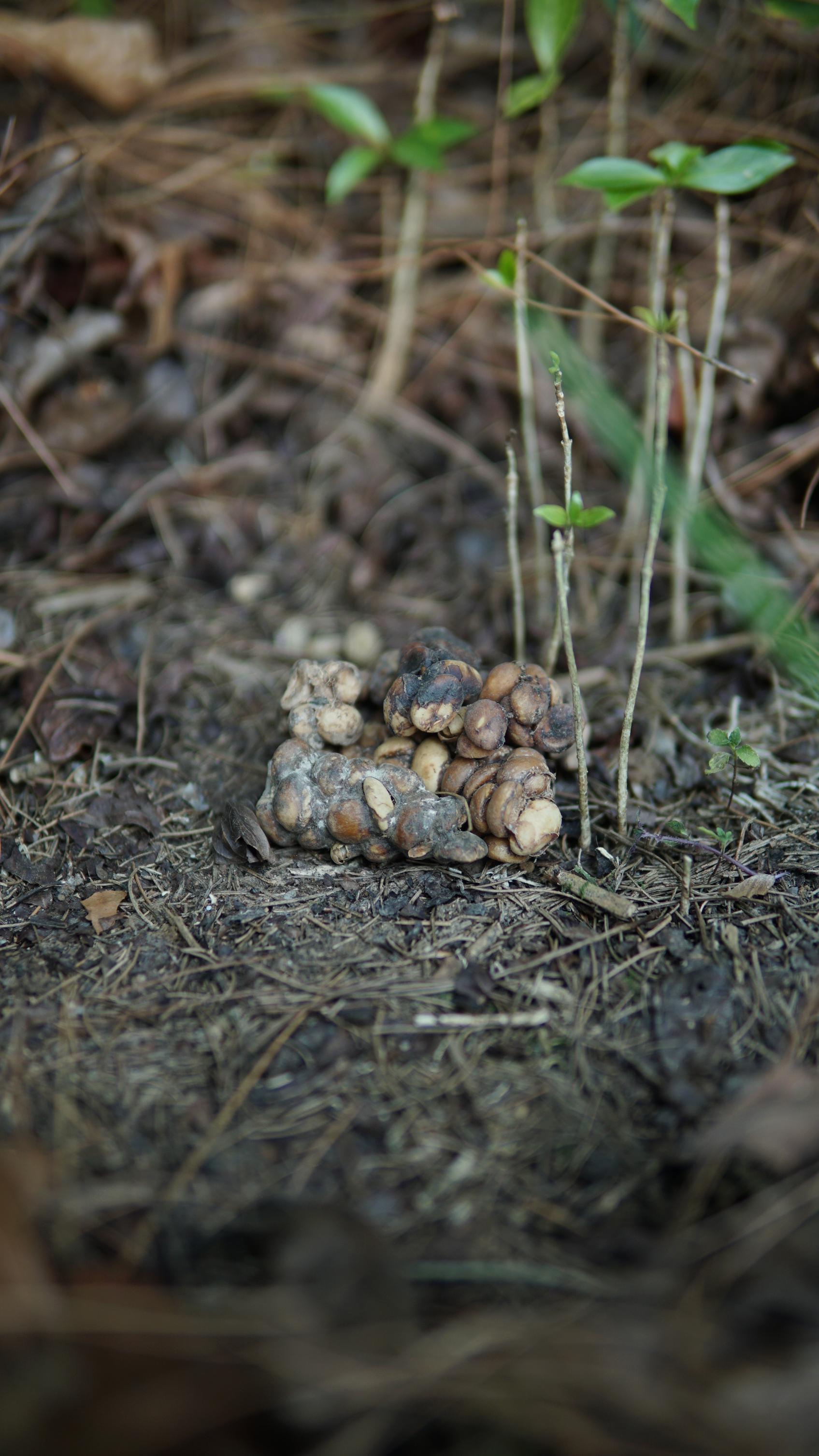
Compare this to what fake kopi luwak operations look like: rows of cages, civets fed measured portions of cherries, droppings collected on wire floors. It’s efficient. It’s scalable. And it produces a fundamentally different product — one where the animal’s natural selectivity has been eliminated entirely, along with the thing that makes wild kopi luwak worth drinking in the first place.
The wild civet eats what it chooses. It selects ripe cherries by instinct. It moves through the forest on its own terms. That selectivity is the point. You can’t manufacture it.
One Bean at a Time
If you’ve ever wondered why genuine wild kopi luwak costs what it costs, this is the answer.
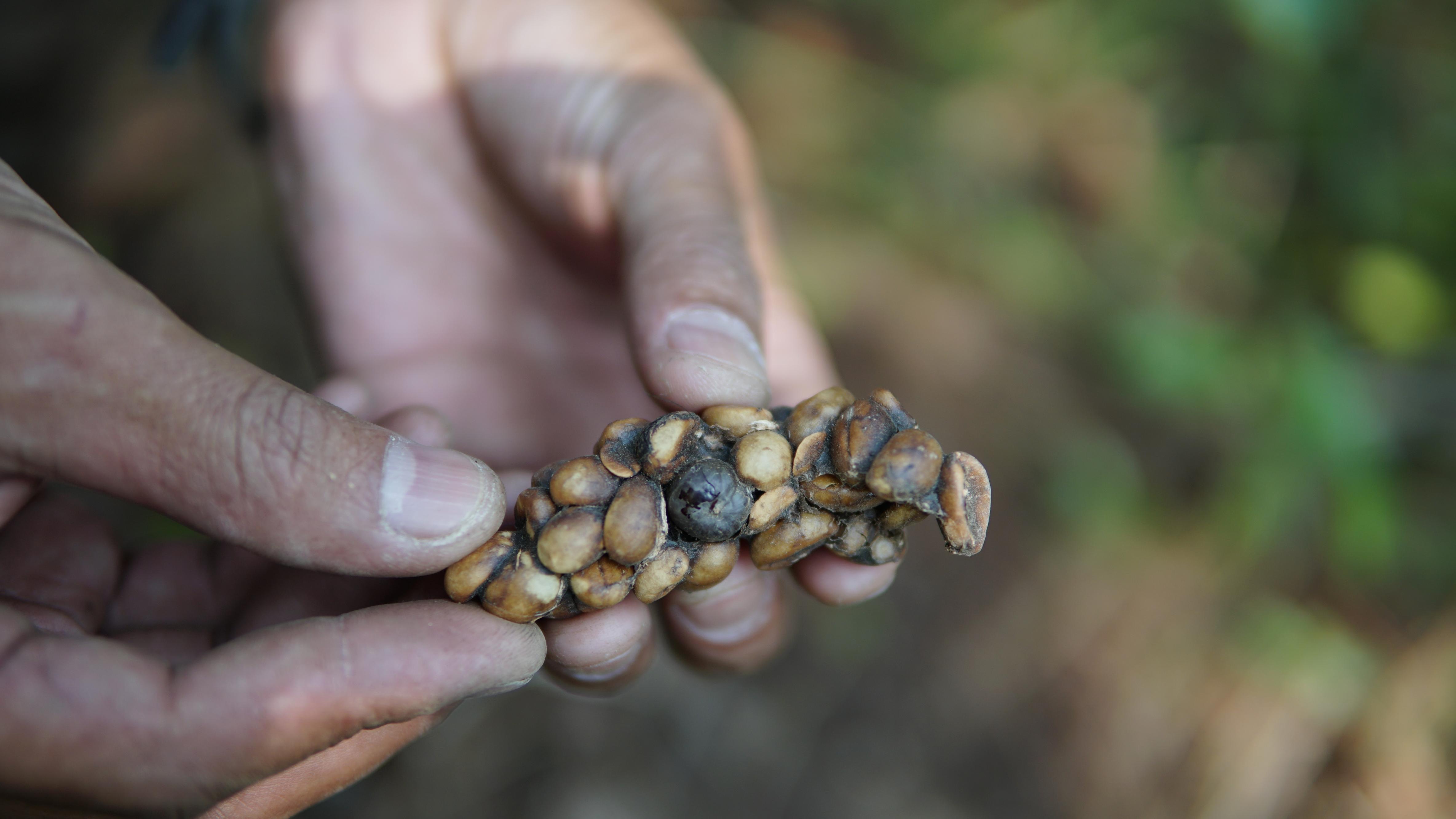
There is no machine for this. There is no process optimization that changes the fundamental math. A wild civet moves through a plantation at night. It eats what it wants. It leaves what it leaves. A person walks through that same plantation in the morning and collects what they find.
The supply is small because it cannot be otherwise. Any seller offering cheap kopi luwak in large quantities is not selling what we’re selling. That’s not snobbery — it’s arithmetic. The moment the price drops to commodity levels, the sourcing story stops being true.
The Drying Process
After collection, the beans are hand-cleaned and then dried. Slowly. In the sun. On raised beds under the Javanese sky.
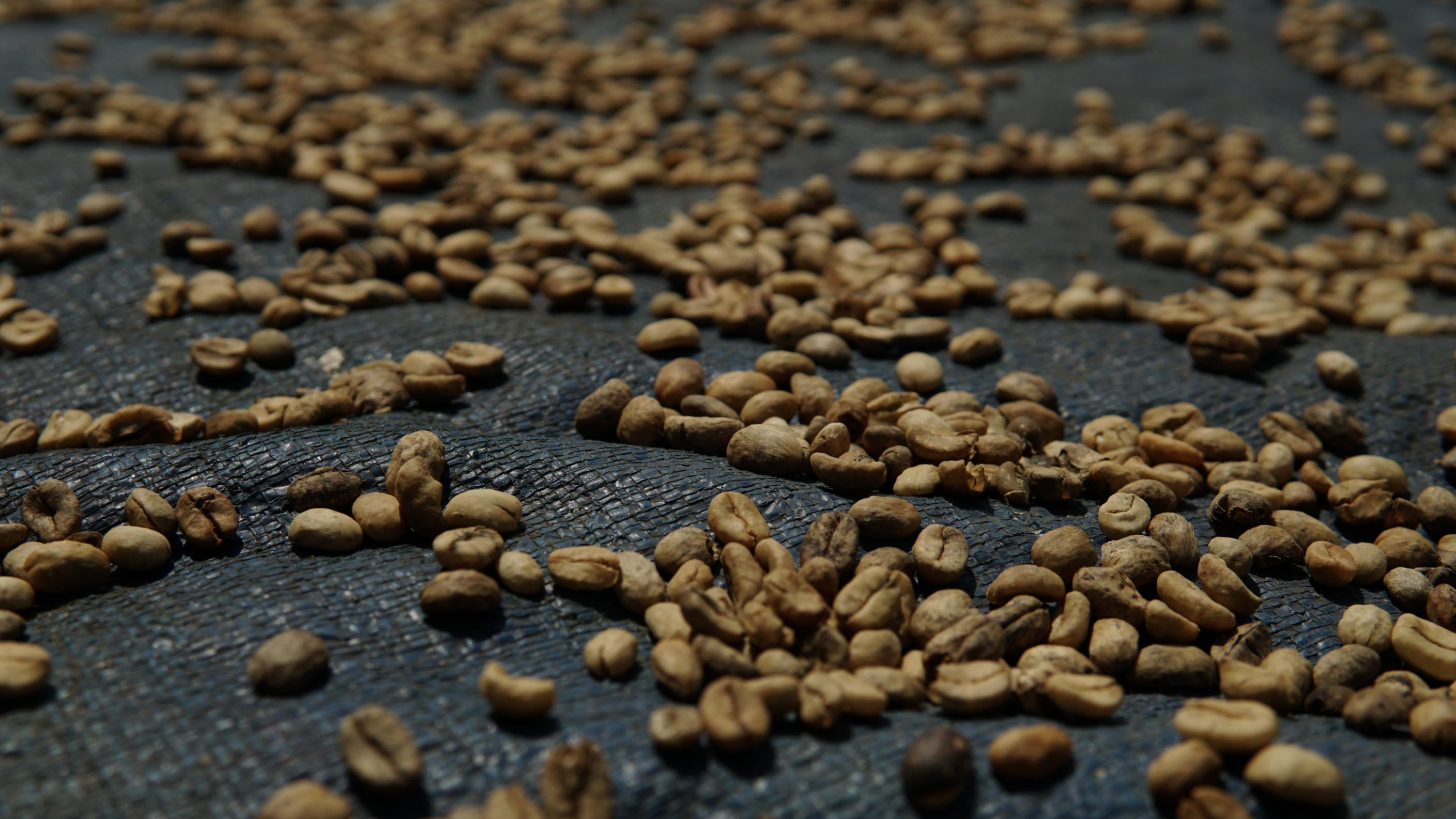
We keep coming back to that phrase: the process takes the time it takes. It’s almost a philosophy. The drying can’t be rushed without affecting the cup. The sourcing can’t be scaled without undermining it. There’s a version of this product that could be produced faster and cheaper, but it would be a different product entirely.
We chose not to make that version.
It Starts at the Cherry
Most conversations about kopi luwak focus on the civet. Fewer people ask about the coffee plant itself — but the quality of the cherry is what determines everything downstream.
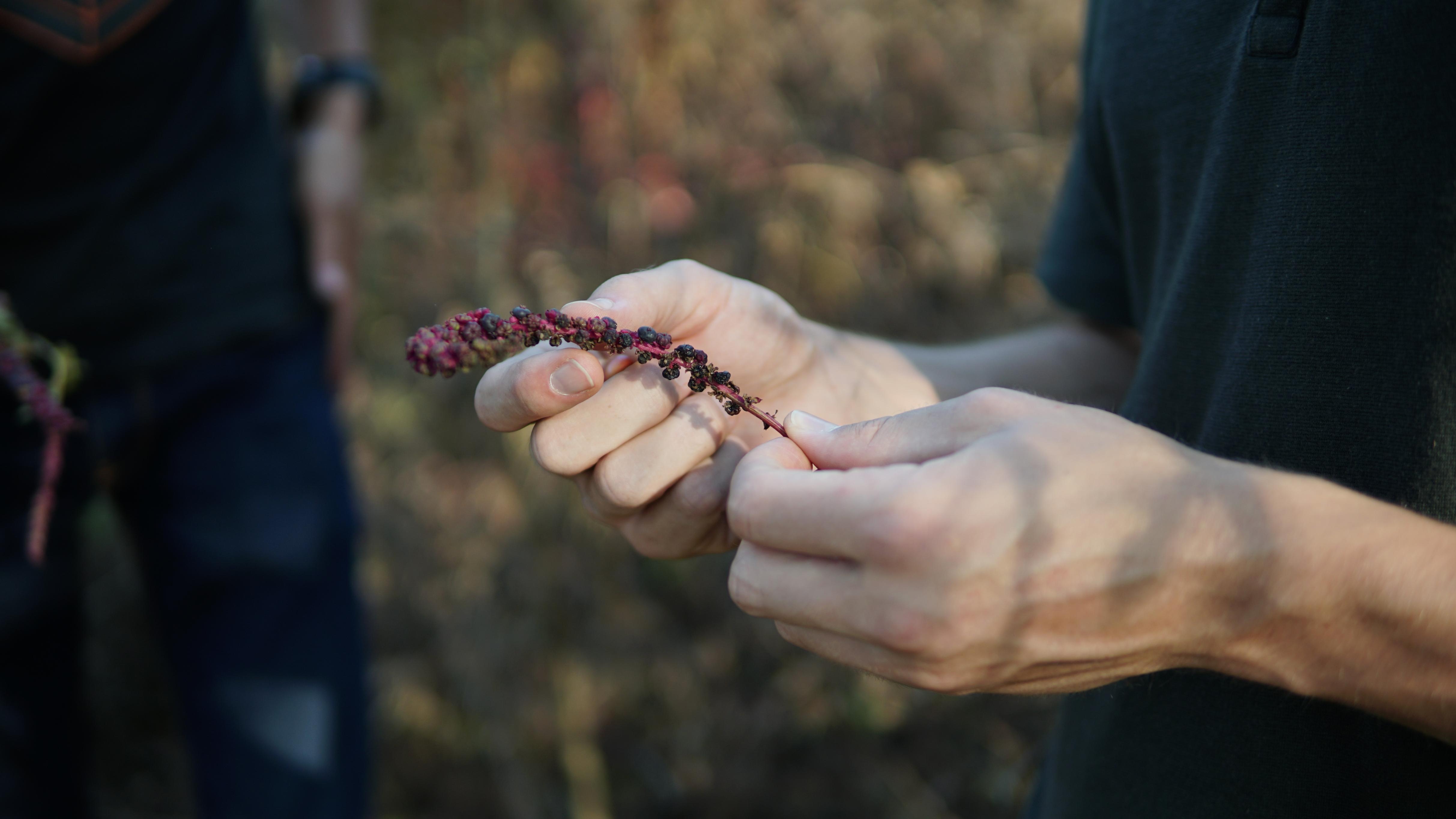
A civet eating low-quality, under-ripe cherries will produce low-quality beans. The fermentation that happens in the civet’s digestive system doesn’t fix bad fruit — it transforms good fruit. So we pay attention to the plant. We walk the rows. We look at the cherries. We ask questions about how the crop was managed that season.
This is what sourcing actually looks like when it’s done seriously.
Building Trust Takes Time
The last thing James always says about these trips is that the coffee is almost secondary.
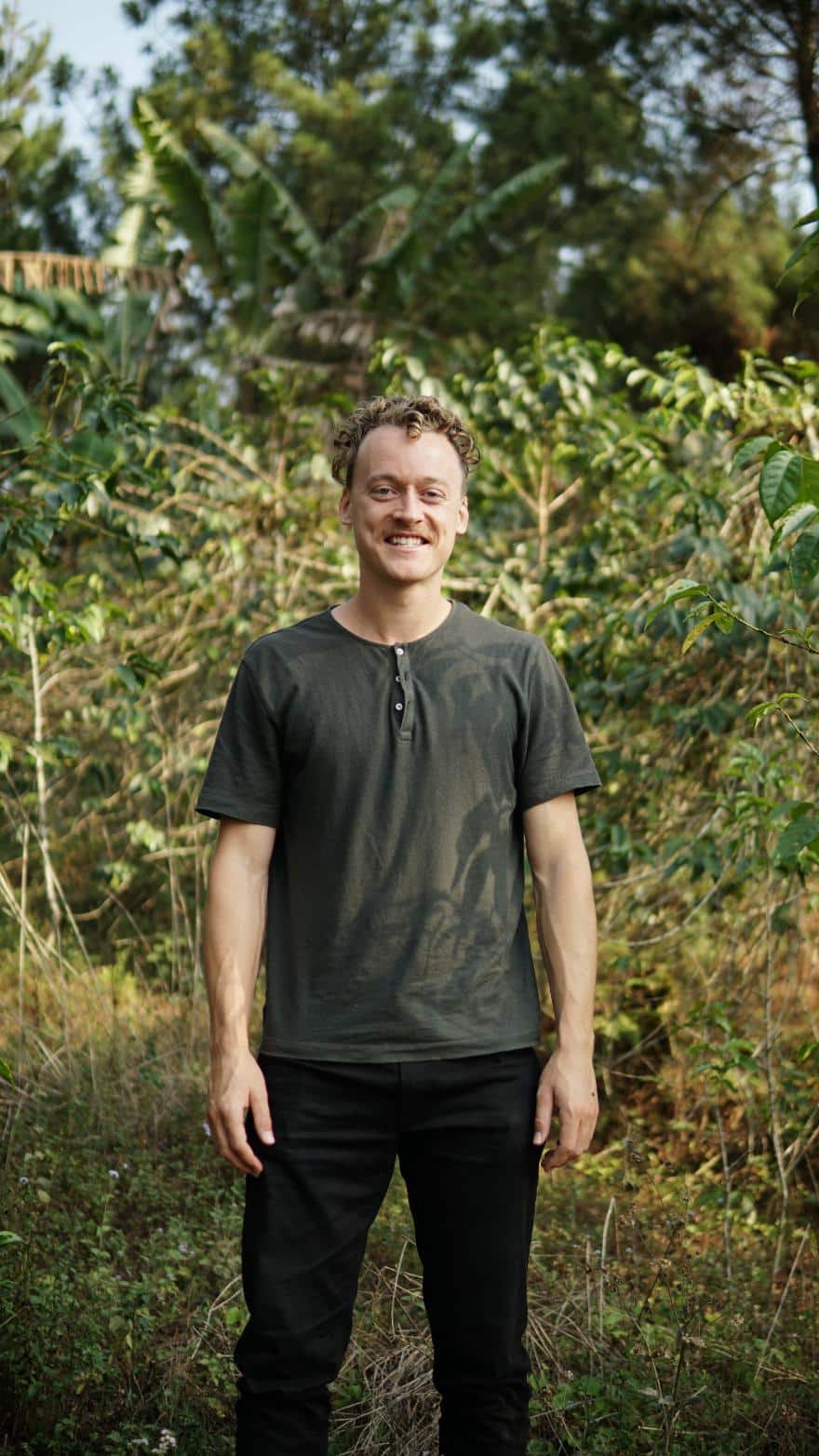
You don’t walk into a farming community in East Java and leave with a sourcing agreement. You show up. You come back. You learn names. You ask questions and actually listen to the answers. You demonstrate over time that you’re not just extracting product — you’re invested in how it’s done.
That’s the work behind every bag of Pure Kopi Luwak. Not a marketing story. Not a stock photo of a civet in a forest. The actual work.
What This Means for Your Cup
Every bag of Pure Kopi Luwak starts with those trips. With James in East Java. With the farmers who track the civets. With the collectors who walk the plantation floors at dawn. With the drying beds, the hand-sorting, the roast that happens after your order is placed.
We went to Java because you deserve to know where your coffee comes from. And because we weren’t willing to sell something we couldn’t explain.
That’s still true.
Frequently Asked Questions
How do you know the civets are actually wild?
We know because James has seen it — the tracking knowledge the farming families use, the plantation floor collection, the variation in yield that comes from wild rather than managed production. We’re also not the right price point for a caged operation. Caged kopi luwak can be produced at a fraction of our cost. If we were cutting that corner, we could sell for a fraction of our price. We don’t, because we’re not.
Why East Java specifically?
East Java’s volcanic highlands produce high-quality Arabica at elevation, with the mineral complexity that good soil and altitude create. The wild civet population there remains intact. And the farming families we work with have been part of this ecosystem for generations. It’s not a random choice — it’s where the right conditions exist.
Do you have batch traceability?
We track by harvest and by the farming partner who supplied the batch. We don’t publish specific farmer names publicly — that’s their information to share or not — but we know where each lot came from. The roast date on your bag is the end of that chain.
Could I visit the source myself?
In principle, yes — we’re not hiding anything. In practice, these are working farms in a part of East Java that isn’t on a standard tourist route. If you’re seriously interested, reach out directly. We’re not opposed to transparency; we just can’t organize individual farm tours.
Pure Kopi Luwak
Wild-sourced. Organic. Arabica. From $125.
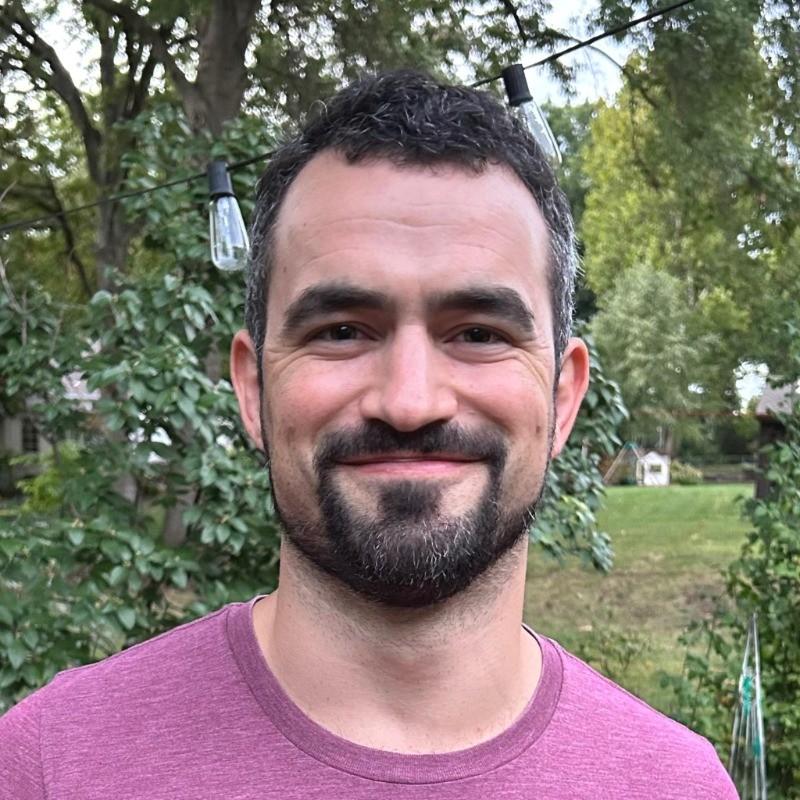
Roger Abbott is the founder of Pure Kopi Luwak. He has spent over a decade sourcing wild kopi luwak directly from farmers and collectors in the highlands of Java, Indonesia — working exclusively with wild civets, never caged. He writes about specialty coffee, Indonesian origins, and the science behind what makes kopi luwak taste the way it does.
