China consumed 4.76 million 60-kilogram bags of coffee in 2023, more than ten times its consumption a decade earlier — and the buyers at the premium end of that market are not shopping for Starbucks. They want the rarest things available, and nothing in the global coffee canon is rarer or more discussed than kopi luwak. If you are in Shanghai, Beijing, Chengdu, or any of China’s first-tier cities and want to order genuine wild-sourced kopi luwak shipped directly from Java, here is every logistical and customs detail you actually need to know.
What China’s Customs System Does With Your Coffee
The first thing to understand is that roasted and unroasted coffee are treated very differently at Chinese customs. Under China’s General Administration of Customs (GACC) Decree 248, implemented in 2022, unroasted (green) coffee beans fall into the 19 high-risk food categories that require overseas manufacturers to be officially registered with GACC before their products can enter China. Roasted coffee beans — which is what you receive when you order from a premium supplier like Pure Kopi Luwak — do not fall under this registration requirement. That distinction matters enormously: it means a small personal shipment of roasted whole-bean kopi luwak arriving in a vacuum-sealed 100g or 250g package will not be stopped at the border waiting for a supplier registration number. It clears as a standard food import.
The HS code your package will be classified under at Chinese customs is 0901210000 — “Coffee, roasted, not decaffeinated.” Import duty on this code is 15% of the customs value (CIF — cost, insurance, and freight). On top of that, China applies a 9% VAT to food imports. So for a 250g package with a declared value of $60 USD, the total additional tax burden would be roughly $15 USD — meaningful, but not prohibitive for someone purchasing specialty coffee at this price point. Packages below approximately ¥50 (around $7 USD) are generally exempt from duty, but legitimate kopi luwak will clear that threshold immediately.
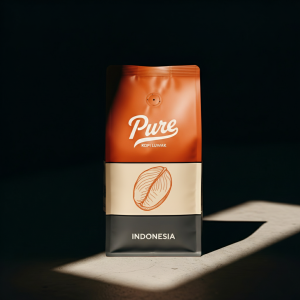
Pure Kopi Luwak
Wild civet coffee from Java. 88.5 SCA cupping score. From $125 for 100g.
Courier Options and Realistic Transit Times
From Java, Indonesia, the most practical routing is DHL Express or FedEx International Priority. Both carriers fly into Shanghai Pudong (PVG) and Beijing Capital (PEK) from Jakarta’s Soekarno-Hatta hub, with typical transit times of 3–5 business days to first-tier cities. DHL’s door-to-door service handles customs clearance on your behalf, which is the primary reason to pay the premium rate — their customs brokerage experience in China’s port cities eliminates the delays that hobble cheaper courier options. FedEx International Priority offers comparable speed on the Jakarta–Shanghai corridor.
For second and third-tier cities — Chengdu, Wuhan, Xi’an, Harbin — add 1–2 business days to account for domestic transfer after customs clearance in Shanghai or Guangzhou. The actual customs clearance step, when documentation is complete, typically takes 24–48 hours. Shipments that stall do so because of paperwork issues, not because customs has a problem with coffee per se.
Try the coffee this article is about
Wild-sourced from Java, 88.5 SCA cupping score, free US shipping. From $125 for 100g.
Shop Pure Kopi Luwak →What Documentation You Need
A properly prepared shipment of roasted kopi luwak to China should arrive with: a commercial invoice showing the declared value in USD, a packing list, and the sender’s contact information clearly listed. Some carriers will also request a certificate of origin for Indonesian goods, which reputable suppliers can provide. China does not currently require a phytosanitary certificate for roasted coffee beans (unlike unroasted green beans, which require one because they are considered agricultural material that could carry pests).
The key thing to get right is the declared value. Accurate declaration is both legally required and strategically sensible: if a package is under-declared and flagged, it will be delayed and subject to additional scrutiny. For personal-use quantities of premium coffee, the customs process is straightforward when the paperwork accurately reflects what’s inside.
Personal Use vs. Commercial Import
Chinese customs regulations allow individuals to import food products for personal consumption without a commercial import license, provided the quantity is reasonable for personal use. For coffee, a 250g or 500g shipment is clearly personal consumption. A 5kg order is where questions may arise, though coffee is not a restricted substance and such quantities are generally allowed with proper documentation. If you are buying for a café or reselling, that is a commercial import requiring proper business licensing — a separate process entirely from the personal purchase described here.
One practical note for buyers using international credit cards or PayPal: Chinese customs does not scrutinize payment method, but your card-issuing bank may flag an international transaction to Indonesia as unusual. Clear that with your bank before ordering to avoid a payment block mid-checkout.
Why the Counterfeit Problem Makes Sourcing Critical
China’s domestic kopi luwak market is extensively counterfeited. Platforms like Taobao and JD.com list products labeled as “猫屎咖啡” (máo shǐ kāfēi — civet coffee) at prices of ¥200–400 for 250 grams. Genuine wild-sourced kopi luwak from ethical Javanese producers costs significantly more — a 100g package from a legitimate supplier starts around $125 USD. The price gap is not a market inefficiency; it is the signal that what you are looking at is not authentic wild kopi luwak.
Cage-farmed imitations aside, the more insidious fraud is conventional Arabica coffee packaged and marketed as kopi luwak with no civet involvement at all. Laboratory testing using mass spectrometry can distinguish genuine civet-processed coffee by its specific protein hydrolysis markers — legitimate premium suppliers can provide test documentation. For a full breakdown of how to evaluate authenticity claims, see our guide to spotting authentic vs. fake kopi luwak.
Packaging and What Arrives at Your Door
Premium kopi luwak destined for international shipping should arrive in vacuum-sealed, nitrogen-flushed packaging with a one-way CO₂ valve. This packaging handles the 3–5 day transit without any degradation — green coffee ages over months, but roasted whole beans are stable in proper packaging for 8–12 weeks post-roast. The transit duration is not a quality risk with good packaging.
What does represent a risk is over-roasting. Some kopi luwak suppliers dark-roast their beans to mask age or low quality. Authentic, well-sourced kopi luwak should arrive medium-roasted, displaying the bean’s natural light brown and retaining the enzymatic complexity that makes the coffee worth the price. If it arrives looking like French Roast, be suspicious.
For context on what the full experience looks like — from the civet farms of Java to how kopi luwak became a fixture of Chinese luxury culture — read our piece on how Javanese kopi luwak became China’s most coveted coffee. The appetite for genuine wild-sourced product is real, and the logistics to satisfy it from Indonesia to China are, at this point, entirely manageable for anyone who knows what to look for.
Pure Kopi Luwak
Wild civet coffee from Java. 88.5 SCA cupping score. From $125 for 100g.

Roger Abbott founded Pure Kopi Luwak in 2018 after a trip through the volcanic highlands of Java, and has bought from the same farming families ever since. He only works with collectors of wild civet coffee, never caged. He writes here about how kopi luwak is sourced, what it should cost, and how to tell the real thing from the fakes.