Somewhere in your city, a person who owns a $2,000 espresso machine and a $700 burr grinder is pulling shots this morning with a bag of beans they paid $17 for. The setup is extraordinary. The coffee is not. The gap between the equipment and the raw material is the most common form of underinvestment in specialty coffee, and almost no one talks about it.
Home espresso culture has grown substantially over the past decade. The average prosumer setup — an entry-level La Marzocco or a Breville Barista Express on the machine side, a Niche Zero or Baratza Sette on the grinding side — costs somewhere between $2,500 and $4,000 by the time it’s fully assembled. Clive Coffee, one of the country’s leading home espresso equipment retailers, puts the average at approximately $3,000 for machine and grinder combined. People buying this equipment are serious. They’ve calibrated their extraction. They’ve dialed in their grind. They’ve learned to pull a 30-second shot with a 1:2 ratio.
And most of them have never brewed wild kopi luwak.
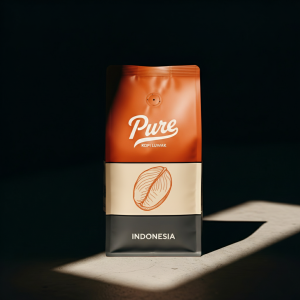
Pure Kopi Luwak
Wild civet coffee from Java. 88.5 SCA cupping score. From $125 for 100g.
What Your Setup Actually Reveals
High-end coffee equipment doesn’t make mediocre beans good. What it does is make excellent beans exceptional — it strips away the inconsistency, the under-extraction, the temperature variance that blurs a complex bean’s flavor into something generic. A precision grinder and a well-calibrated espresso machine are amplifiers. The question is always: what are you amplifying?
Wild kopi luwak from Java is among the most complex raw materials you can put through a precision setup. The beans are harvested from free-foraging palm civets (Paradoxurus hermaphroditus) on highland Javanese coffee farms, primarily from Arabica Typica cherries grown at 900 to 1,600 meters on volcanic soil. During the 12 to 24 hours the beans spend in the civet’s digestive system, proteolytic enzymes break down specific storage proteins — a transformation documented in peer-reviewed food chemistry research — that reduces bitterness potential and softens the acid profile. The result, once roasted, is a coffee with a specific quietness: no harshness, no edge, just layers of dark chocolate, mild earth, and a finish that lingers.
Through a precision espresso setup, that smoothness becomes something extraordinary. The reduced bitterness means the shot doesn’t require the compensatory sweetness that high-extraction shots of conventional coffee often need. The full body produces a crema that holds longer than most single origins. The complexity — layers that register differently on the palate over the course of a sip — reveals itself more completely than it does in an immersion brew, because espresso’s concentration amplifies everything.
The Cost Math of Using Rare Beans in Your Setup
Wild kopi luwak retails at $125 for 100 grams from Pure Kopi Luwak. For espresso, a standard double shot uses approximately 18 grams of ground coffee, yielding roughly 5 or 6 double shots per 100-gram bag. That’s $20 to $25 per shot — which sounds expensive until you compare it to the $18 to $30 that specialty coffee bars charge for a single cup of rare-bean espresso when they bother to stock it at all.
More to the point: the person who spent $3,000 on home espresso equipment to save money on café visits is not primarily making a financial argument. They’re making a quality argument. They want better coffee than they can get at most cafés. Wild kopi luwak is the logical endpoint of that argument — the material that matches the intention behind the equipment investment.
Five shots of kopi luwak espresso across a weekend morning is also not a commitment to replace your daily driver. It’s a single session with something genuinely exceptional — the kind of tasting experience that recalibrates your palate and makes everything that comes after feel more deliberate.
Pour-Over vs. Espresso: Which Setup Does It More Justice
Both work, with different results. Pour-over — a Hario V60 or a Kalita Wave — produces a lighter, more transparent cup that lets kopi luwak’s full flavor complexity show itself without the concentration of espresso. You’ll get more of the chocolate and earth notes, cleaner, and the finish will be notably longer than with conventional single origins. Water temperature 93 to 95°C, medium-fine grind, a 3-minute total brew time.
Espresso concentrates everything: the body becomes almost viscous, the chocolate intensifies, and the smoothness becomes a texture you can actually feel across the palate. The lack of bitterness that defines kopi luwak means the shot reads differently from a standard espresso — no need for the milk or sweetness you’d otherwise add to balance harshness. Grind slightly coarser than your normal espresso setting; the reduced protein content means it extracts slightly faster than typical Arabica.
You can read more about the espresso approach and about the full range of brewing methods on the blog. But the short version is: whatever your setup can do, wild kopi luwak gives it more to work with than anything else you’re likely to try.
The Bean Your Equipment Has Been Waiting For
Home espresso enthusiasts spend years optimizing their setup. They read forums, upgrade components, adjust grind settings by fractions of a click. All of that is in service of one thing: a better cup. Wild kopi luwak is the logical next step in that pursuit — not a replacement for the single origin you’ve dialed in and love, but the occasional material that reminds you why you bought the machine in the first place.
Three thousand dollars of equipment deserves, at least once, the most interesting bean you can find. Wild kopi luwak is that bean.
Pure Kopi Luwak
Wild civet coffee from Java. 88.5 SCA cupping score. From $125 for 100g.
Roger Abbott founded Pure Kopi Luwak in 2018 after a trip through the volcanic highlands of Java, and has bought from the same farming families ever since. He only works with collectors of wild civet coffee, never caged. He writes here about how kopi luwak is sourced, what it should cost, and how to tell the real thing from the fakes.