Teacher Appreciation Week runs every May in the United States, and for the past two decades the gift most commonly received by American teachers has been a mug. Gift-giving to teachers during appreciation events generates over $1.6 billion annually in the US alone — the bulk of which goes toward items the recipient already owns in multiples. The average teacher in a 30-year career receives, by modest estimate, somewhere around 60 to 100 mugs. They don’t need another one.
This is not a criticism of the impulse — it’s a critique of the execution. A coffee mug says “thank you, we know you drink coffee.” Wild kopi luwak says “we know you drink coffee, and we think you deserve the best cup you’ve ever had.” The difference in what that communicates is worth more than the price difference between the two.
Why Coffee Works Here
Teaching is one of the early-alarm professions. Most schools in the United States begin between 7:30 and 8:00 AM, which means teachers are awake by 5:30 or 6:00 — well before most of the professionals who gift them during appreciation weeks. The relationship between teachers and coffee is less a cultural trope and more a structural reality: the job requires early rising and sustained attention, and good coffee supports that better than most substitutes.
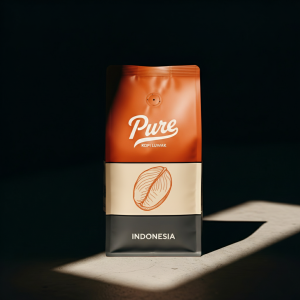
Pure Kopi Luwak
Wild civet coffee from Java. 88.5 SCA cupping score. From $125 for 100g.
The National Center for Education Statistics counts 3.2 million public school teachers in the United States. Every year, the vast majority of them receive the same set of gifts. A 30-year veteran who has received 90 mugs and 60 gift cards has never received wild kopi luwak — because virtually no one defaults to it as a gift, despite it being one of the most immediately impressive coffee experiences available. That novelty is part of the gift’s value.
What Wild Kopi Luwak Is
Kopi luwak is produced when wild Asian palm civets (Paradoxurus hermaphroditus) forage through Javanese coffee plantations at night, selecting peak-ripe cherries through olfactory precision that human harvesters cannot replicate at scale. The beans pass through the civet’s digestive system over 12 to 24 hours, transformed by proteolytic enzymes that reduce bitterness precursors — the proteins that become sharp, bitter compounds during roasting. What emerges, after careful collection and thorough cleaning, is a green coffee with a measurably different chemical profile: lower malic and citric acid concentrations, modified protein structures, a smoothness that registers in the first sip without needing explanation.
The result is a coffee with no parallel in a grocery store or a standard café. Medium-roasted, brewed in a pour-over or a French press, wild kopi luwak from Java delivers full body, earthy depth, hints of dark chocolate, and an absence of bitterness that feels like a removed obstacle rather than a reduced flavor. For someone who drinks coffee every morning as fuel, it will be a revelation. For someone who considers themselves a coffee enthusiast, it’s the comparison point they’ve almost certainly been curious about for years.
Why This Gift Travels Further
The best gifts generate conversation. When a teacher opens wild kopi luwak and asks what it is — and they will ask — the explanation becomes part of the gift: the nocturnal civets, the Javanese volcanic farms, the enzymatic transformation that produces the smoothness, the careful wild sourcing that distinguishes it from caged alternatives. That story gets told to the next colleague who asks, to the family at the dinner table, to the class when the teacher mentions it in passing. A mug generates no story. Kopi luwak generates several.
A 100-gram bag produces approximately 6 to 8 cups, which means the teacher receives a week of exceptional mornings — each one a direct and lasting result of the appreciation being expressed. Unlike a bouquet that wilts in five days, kopi luwak’s pleasure distributes itself across time in a way that extends the recognition.
Practical Notes for Gifting
The coffee ships whole-bean, which is ideal for a recipient with a grinder. If you’re uncertain, pairing the bag with a simple hand grinder (the Hario Mini Mill runs around $35) and a note explaining what it is creates a complete first-cup experience. Even without a dedicated grinder, most grocery store grinder stations can handle it — though a burr grinder produces noticeably better results than a blade unit at this price point per gram.
A brief card explaining what kopi luwak is and where it comes from elevates the gift from “expensive coffee” to “something worth understanding.” Teachers, of all recipients, appreciate gifts that teach them something. The story of authentic wild kopi luwak — how to identify it, why it costs what it costs, what makes wild sourcing different from cage farming — is a few paragraphs that turn a luxury item into an informed experience.
What It Communicates
Spending $125 on a bag of wild kopi luwak for a teacher who has invested a year — or a decade — in your child’s education is not an extravagance. It is an appropriate accounting of what they’ve contributed, expressed in a form they will actually experience and remember. For the teacher who has received every mug imaginable and every combination of gift cards to every chain, this is the gift that lands differently because it is, genuinely, different from anything they’ve received before.
Pure Kopi Luwak
Wild civet coffee from Java. 88.5 SCA cupping score. From $125 for 100g.

Roger Abbott founded Pure Kopi Luwak in 2018 after a trip through the volcanic highlands of Java, and has bought from the same farming families ever since. He only works with collectors of wild civet coffee, never caged. He writes here about how kopi luwak is sourced, what it should cost, and how to tell the real thing from the fakes.