Onyx Coffee Lab’s 2025 advent calendar sold out weeks before December 1st. The Brew Company in Copenhagen shipped its 24-door calendar — 24 specialty coffees, each paired with origin notes from Nordic roasters — to customers across Europe and North America. At price points ranging from $60 to over $120 depending on the edition, the premium coffee advent calendar has become something distinctly different from the chocolate-filled cardboard boxes that originated the format. It’s a curated tour of the world’s coffee growing regions, delivered one morning at a time.
The format works because specialty coffee is genuinely worth discovering slowly. Opening a small packet of a washed Kenyan AA on December 3rd, then an anaerobic natural from Yirgacheffe on December 7th, then a honey-processed Costa Rican on December 12th — you’re building a vocabulary, not just drinking caffeine. The calendar structure imposes the kind of deliberate attention that makes premium coffee worth what it costs.
But there’s a structural ceiling in almost every calendar currently on the market. The coffees are excellent. They’re not rare.
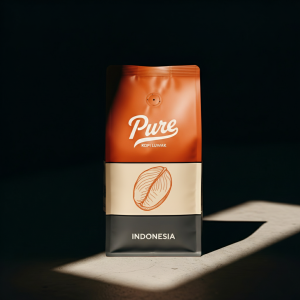
Pure Kopi Luwak
Wild civet coffee from Java. 88.5 SCA cupping score. From $125 for 100g.
What the Existing Calendars Do Well
The best coffee advent calendars — Onyx, Brew Company, several European specialty roasters — do something genuinely valuable: they introduce buyers to the full range of what specialty coffee tastes like at its best. Cup of Excellence-adjacent coffees, regional variety showcases, processing method comparisons. If you’ve only ever drunk supermarket beans, working through 24 single-origin specialty coffees in December will permanently recalibrate your expectations. That’s not a small thing.
What they don’t deliver is a moment that stops you mid-cup. Something you’d describe as a genuine luxury experience rather than a very good coffee experience. The specialty coffee world excels at quality; it is structurally less equipped to offer rarity. The same Ethiopian Yirgacheffe that appears in an advent calendar is available year-round from a dozen roasters. The discovery is real. The exclusivity isn’t.
The Case for a Different Door 24
Gift-giving operates on peaks. A well-structured advent calendar builds anticipation: each day is good, but the expectation is that something at the end justifies the whole. Chocolate calendars figured this out decades ago — the final door is always larger, always the point the recipient was building toward.
In a coffee calendar built for someone who already knows specialty coffee, the final door needs to be something they genuinely couldn’t have gotten anywhere else. Wild-sourced kopi luwak from Java is the obvious candidate. It’s produced in quantities so small that even dedicated coffee retailers struggle to carry it reliably. Its production depends on wild civets — Paradoxurus hermaphroditus, moving through Javanese coffee plantations at night, selecting only peak-ripe Arabica cherries — meaning each year’s supply is both finite and impossible to scale. The enzymatic transformation that happens during the civet’s 12-to-24-hour digestive process produces a cup that is measurably different from any other Arabica: lower in specific bitter-precursor proteins, modified in its acid profile, smoother on the palate in ways that straightforward processing cannot replicate.
That’s a door-24 coffee. Not better in a scoring-system sense — it doesn’t need a higher Q-grade to justify its place — but genuinely unlike anything else in the calendar.
Try the coffee this article is about
Wild-sourced from Java, 88.5 SCA cupping score, free US shipping. From $125 for 100g.
Shop Pure Kopi Luwak →Building Your Own Two-Part Gift
If you’re buying for a coffee lover who has a strong opinion about Ethiopian naturals and talks about grind size at dinner parties, consider the two-part structure: a premium specialty calendar for the 24 days, and a separate 100g bag of wild Java kopi luwak to open on December 25th or give alongside it. The calendar does the educational work. The kopi luwak is the exclamation point.
This approach also solves a real problem with advent calendars: the individual servings are deliberately small — typically 10 to 20 grams per door, enough for one or two cups. The format is about variety, not depth. Kopi luwak, by contrast, rewards slower exploration. A 100g bag gives you eight to ten measured cups, enough to try it pour-over, then with slightly different water temperature, then extracted a touch shorter. You actually learn what it tastes like across conditions rather than drawing conclusions from a single sample.
Who This Is For
The coffee advent calendar buyer is, almost by definition, already past the entry level. They’re buying for someone who has opinions about coffee, possibly already owns a burr grinder and a gooseneck kettle, and doesn’t need to be introduced to the concept of specialty coffee. That’s the same profile as the ideal first-time kopi luwak buyer: curious, discerning, willing to spend on a single premium experience, and likely to appreciate the provenance story as much as the cup itself.
The story matters here. Wild civet processing from Java isn’t a marketing line — it’s a genuinely unusual production chain. Wild Asian palm civets do the selection work that human harvesters can’t replicate at the same precision. They eat only peak-ripe cherries, their digestive chemistry modifies the bean’s protein structure in ways that reduce bitterness, and the resulting coffee is collected by hand from the forest floor beneath civet routes. If you’re buying for someone who gets excited about where their coffee comes from, you’re giving them a story, not just a bag of beans.
A Note on Quality in Both Formats
The advent calendar market has the same authenticity problem that specialty coffee has in general: not everything marketed as premium is worth the price. The same is true — more acutely — in kopi luwak. The majority of commercially available kopi luwak is produced from caged civets fed indiscriminate, mixed-quality cherries. The resulting coffee lacks the enzymatic quality of genuinely wild-sourced beans and, critically, lacks the selective advantage that makes authentic kopi luwak worth its price. Wild-sourced, Javanese-origin, medium-roasted whole bean: these are the three criteria that separate kopi luwak worth giving from kopi luwak that merely carries the name.
The right advent calendar and the right kopi luwak have something in common: both require a buyer who cares enough to check the sourcing. That’s also a description of your recipient. The gift matches the person.
Pure Kopi Luwak
Wild civet coffee from Java. 88.5 SCA cupping score. From $125 for 100g.

Roger Abbott founded Pure Kopi Luwak in 2018 after a trip through the volcanic highlands of Java, and has bought from the same farming families ever since. He only works with collectors of wild civet coffee, never caged. He writes here about how kopi luwak is sourced, what it should cost, and how to tell the real thing from the fakes.