Sometime before the end of Q4, the question arrives for account managers and business development professionals across every industry: what do you send the client who already has everything? The North American corporate gifting market was valued at approximately $281.92 billion in 2023, according to a ResearchAndMarkets analysis published by BusinessWire in February 2025 — which means this problem is being solved, or not solved, at significant scale. Most of those solutions look the same: a wine bottle, a gift card, a branded leather notebook, a cheese board shipped in a cooler.
There's nothing wrong with any of these gifts. They're safe. They're also unmemorable in precisely the way that matters — the recipient will not mention them to anyone six weeks later. The goal of a client gift, when done deliberately, is not to check a box but to deepen a relationship through the act of giving something the recipient wouldn't have discovered on their own. That requires more than a correct price point.
The Problem With Safe Corporate Gifts
The IRS has set the deductible limit for business gifts at $25 per recipient per year since 1962 — a number never inflation-adjusted, now representing roughly $270 in 2026 purchasing power. Most companies exceed this in practice and treat the expense as relationship maintenance rather than tax optimization. The meaningful question is not how much to spend; it's what the gift communicates about your attention to the person receiving it.
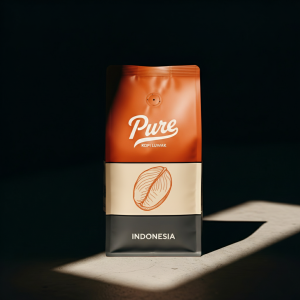
Pure Kopi Luwak
Wild civet coffee from Java. 88.5 SCA cupping score. From $125 for 100g.
A bottle of wine communicates that you know they're an adult who drinks alcohol. A gift card communicates you didn't have time to think. A specialty food item from a well-known brand communicates awareness of food culture but nothing specific about them. What a genuinely memorable gift communicates is: I found something you wouldn't have found yourself, and I made a decision.
Why Rare Coffee Works for Executive Clients
Wild kopi luwak occupies a position in premium food culture that makes it especially effective as a client gift. It's the kind of thing that serious coffee drinkers have heard of but rarely encountered in person — which means it arrives with existing cultural credibility. It's also the kind of thing that generates conversation: the recipient explains it to their assistant, their spouse, their next dinner guest. The gift travels beyond the moment it's received.
The specific facts are useful as conversation material. Wild-sourced kopi luwak from Java — the variety that Pure Kopi Luwak produces — comes from Asian palm civets (Paradoxurus hermaphroditus) foraging through highland Arabica plantations at night. The animals select only peak-ripe cherries by scent; the beans pass through their digestive system over 12-24 hours; proteolytic enzymes modify specific bitter-precursor proteins, producing a cup measurably smoother than conventionally processed coffee from the same origin. This is not a gimmick — it's a genuine process distinction with documented chemistry. Your client who drinks two cups before their 8 AM call will find it genuinely interesting.
The Price Point That Works
A 100-gram bag of wild kopi luwak retails at $125 — mid-range client gift spend, well within what most companies budget for key accounts, arriving in packaging that reads as considered rather than extravagant. The story is built in; you don't need a card explaining how much thought went into the choice, because the choice explains itself.
For clients who are serious coffee drinkers, include a note with brewing recommendations: medium grind, 93°C water, 4 minutes in a French press or pour-over. For clients whose coffee habits you're less certain about, the gift still works — it gets given to someone in the household who appreciates it, or opened on a weekend morning when there's time to pay attention. Either way, it generates a story that gets told.
The Coffee Angle in Professional Contexts
Coffee occupies specific cultural territory in professional life that most other food gifts don't. It's the first thing offered in every meeting, the ritual that starts every working day, the substance that everyone in a professional context consumes and has opinions about. A wine gift can land awkwardly — dietary restrictions, sobriety, pregnancy — but a high-quality coffee gift rarely does, because the worst case is it gets given to someone in the household who appreciates it.
More practically: premium coffee is one of the few food gifts not governed by the compliance rules that make certain gift categories complicated in regulated industries. A $125 bag of rare coffee is clearly a thoughtful food gift — rarely confused with an attempt to influence a purchasing decision. In financial services, healthcare, and other regulated sectors where gift compliance is actively managed, that's a practical consideration worth factoring in.
The Benchmark Question
The client gift conversation usually centers on price: how much is appropriate. The better framing is memorability: six months from now, will this recipient mention that gift to anyone? A cheese board eaten in December won't come up in April. A bag of coffee sourced from wild civets on a Javanese highland farm, brewed on a Tuesday morning in January and described to a colleague who asked about it, probably will. That's what a good client gift does — not proof of generosity, proof of attention.
Pure Kopi Luwak
Wild civet coffee from Java. 88.5 SCA cupping score. From $125 for 100g.

Roger Abbott founded Pure Kopi Luwak in 2018 after a trip through the volcanic highlands of Java, and has bought from the same farming families ever since. He only works with collectors of wild civet coffee, never caged. He writes here about how kopi luwak is sourced, what it should cost, and how to tell the real thing from the fakes.