When Michael Phillips won the inaugural World Brewers Cup in London in 2010, he used a Hario V60 — the conical pour-over dripper released commercially in October 2005 by Hario, a Japanese glassware company founded in 1921. The win effectively introduced the V60 to specialty coffee culture globally, and in the fifteen years since, it has become the default reference method for pour-over brewing: the dripper that serious home brewers learn first and return to most often.
The V60 is also, in the specific context of wild kopi luwak, the brewing method that most completely expresses what makes civet-processed coffee distinct. Here's why that matters and how to do it correctly.
Why Pour-Over Suits Kopi Luwak Specifically
Wild kopi luwak's distinguishing characteristics — low bitterness, clean finish, muted earthiness compared to conventional Javanese Arabica — result from proteolytic enzyme activity during the civet's digestive process, which partially breaks down bitter-precursor proteins in the bean's outer layers. These modifications show up most clearly in brewing methods that don't apply extraction pressure or extended saturation time.

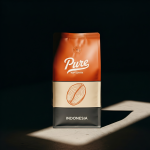
Pure Kopi Luwak
Wild civet coffee from Java. 88.5 SCA cupping score. From $125 for 100g.
Espresso minimizes the difference, partly because pressure extraction amplifies intensity across the board. French press produces a full-bodied cup but one where sediment and extended contact time add their own textural variables. The V60 offers the cleanest expression: filtered, clear, with a 3-4 minute brew time short enough to avoid overextraction, long enough to develop the full flavor range, and controlled enough to preserve the enzymatic delicacy that makes the coffee worth buying.
Parameters: Adjusted for Kopi Luwak
Standard V60 parameters for specialty coffee: 93-95°C water, 1:15 to 1:16 ratio, medium-fine grind, 3-4 minute total brew time. For wild kopi luwak, two slight adjustments produce better results.
Water temperature: 90-93°C rather than 94-96°C. The lower temperature is less aggressive on the modified surface chemistry of civet-processed beans. Higher temperatures amplify bitterness extraction in conventionally processed coffee — fine when bitterness is expected — but in kopi luwak, where bitter-precursor proteins have been partially hydrolyzed, you don't need the aggression. Without a temperature-controlled kettle, letting boiling water rest for 60-75 seconds gets you into the right range.
Grind: medium, not medium-fine. Kopi luwak's enzymatic modification changes how the grounds extract. A slightly coarser grind compensates for altered extraction dynamics and prevents harshness from whatever bitter-precursor proteins remain. Not a dramatic adjustment — you're not going coarse — but it's the margin between a cup that's merely good and one that shows you what the coffee is actually doing.
Ratio: 15 grams of coffee to 240ml of water (1:16) is the standard starting point. This produces a full-flavored cup without the intensity of a 1:12 ratio. You're brewing premium coffee already optimized for low bitterness; there's no need to compensate with concentration.
The Brew: Step by Step
Rinse the paper filter with hot water before adding coffee — this removes the paper taste and preheats the dripper and vessel. Discard the rinse water. Add 15 grams of medium-ground wild kopi luwak. Bloom first: pour 30ml of water (twice the coffee weight) evenly over the grounds and rest for 45 seconds. During the bloom, trapped CO₂ escapes and the grounds swell. A pronounced dome indicates fresh beans; a flat bloom suggests older stock.
After the bloom, pour steadily in slow circles from center outward, keeping the water level roughly level with the top of the grounds. Add water in three or four increments of 60-70ml each, letting each addition draw down slightly before the next. Total active pour time: roughly 2-3 minutes. Total draw-down: complete at 3-4 minutes from first pour. Faster than 3 minutes means grind finer. Slower than 4.5 minutes means grind coarser.
What You're Tasting For
A properly brewed cup of wild Javanese kopi luwak via V60 should read as: transparent amber — not opaque; a prominent chocolate mid-note trending toward dark rather than milk chocolate; a low, clean earthiness present but not dominant; and a sweet, lingering finish with no bitter aftertaste. Body should be medium — coating the palate without feeling thick. The finish should be notably long compared to other single-origins.
If the cup tastes bitter or sharp, the water was too hot or the grind too fine. If it tastes thin or sour, the grind was too coarse or temperature too low. Unlike French press, which tolerates variation more generously, the V60 rewards precision — especially with coffee biologically optimized to express something specific. You've spent roughly $7.50 per 15-gram serving; five minutes of attention is the smallest investment you can make to protect that purchase.
Equipment Notes
You don't need expensive equipment. A Hario V60 02 plastic dripper costs around $15 and brews identically to the glass or ceramic versions. A digital kitchen scale matters more than a precision kettle. The V60's name comes from its V shape and 60-degree cone angle — that geometry, combined with the spiral ridges inside the dripper, controls flow rate and produces even extraction. The same principles apply whether you spend $15 or $150 on the hardware. What you're paying for with the coffee itself is the biology. The brewing equipment just needs to get out of the way.
Pure Kopi Luwak
Wild civet coffee from Java. 88.5 SCA cupping score. From $125 for 100g.

Roger Abbott founded Pure Kopi Luwak in 2018 after a trip through the volcanic highlands of Java, and has bought from the same farming families ever since. He only works with collectors of wild civet coffee, never caged. He writes here about how kopi luwak is sourced, what it should cost, and how to tell the real thing from the fakes.