At a cupping event held at Blue Bottle Coffee's Oakland roastery in 2012, a blind tasting of seven coffees included a sample of wild kopi luwak sourced from Java. The kopi luwak landed in the top three for some tasters and dead last for others. The disagreement was the interesting part — the discussion that followed lasted longer than the tasting itself, because everyone had to account for where their reaction came from.
You can replicate that experience at home, with considerably less equipment than a professional cupping requires, and the result is the kind of conversation that distinguishes a memorable evening from a routine one. Here's how to do it, and why wild kopi luwak makes the ideal finale.
The Basic Setup
The Specialty Coffee Association's cupping protocol — the professional standard used at origin evaluations and international competitions worldwide — specifies 8.25 grams of coffee per 150ml of water at 93°C, with a 4-minute steep before breaking the crust that forms on top. You don't need this precision at home. What you do need: identical vessels for each sample (small glasses, ceramic cups, or wide-brimmed bowls), a digital scale accurate to 1 gram, water at consistent temperature just off the boil, and a way to keep samples from getting mixed up.

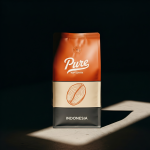
Pure Kopi Luwak
Wild civet coffee from Java. 88.5 SCA cupping score. From $125 for 100g.
For a home tasting with four to six people, 12-15 grams of each coffee per sample is sufficient. Three coffees is the right number — enough variation for meaningful comparison, few enough that flavor fatigue doesn't blur the distinctions. Four is manageable. Five starts to lose the thread.
Choosing the Flight
The tasting works best when the coffees contrast meaningfully. A sound structure: one baseline coffee that represents what most people think specialty coffee tastes like (a well-sourced Colombian or Brazilian, accessible and familiar), one single-origin that demonstrates the range of the category (an Ethiopian Yirgacheffe or Kenyan AA, which will read as more acidic and floral), and one main event that occupies a category of its own.
Wild kopi luwak earns the main event position because it demonstrates something the other coffees don't — not superior terroir, not a more complex roast, but the effect of biological modification on the flavor profile. It's the only coffee in the world where a nocturnal wild animal in the highlands of Java is the critical variable in production. That's not marketing; it's a genuine process distinction that shows clearly in the cup when tasted alongside conventionally processed coffees.
Running the Tasting
Pour all samples simultaneously so they cool at the same rate. Taste in the same order each time, and ask specific questions rather than open-ended “what do you think?” Useful questions: What do you notice first — smell or taste? Does it feel thicker or thinner than the others? Is the finish short, or does it linger? Where on your tongue do you taste it most? These questions direct attention toward specific sensory features rather than inviting general judgments.
The SCA and World Coffee Research published a revised Coffee Taster's Flavor Wheel in 2016 — an update to the original 1995 version — identifying over 110 distinct flavor descriptors organized by family. You don't need to use these explicitly, but having a general vocabulary available — “does this taste more like fruit, or more like chocolate?” — helps people find language for what they're experiencing.
When you get to the kopi luwak — serve it last — ask your guests to pay attention specifically to the bitterness, or lack of it. The contrast against two conventionally processed coffees makes the effect of civet processing perceptible in a way it wouldn't be tasted in isolation. Wild kopi luwak by itself is notably smooth. Against two reference points, the difference is significant enough that most tasters comment before you explain what they're drinking.
The Economics Are Better Than You'd Expect
A 100-gram bag of wild kopi luwak at $125 yields 6-7 servings of 15 grams each — enough for a flight of six to seven people. Shared across a dinner party, the kopi luwak component costs $20-$30 per person. The other two coffees in the flight add minimal cost — a quality single-origin at $20-$30 for 250 grams means 15 grams per person is negligible per head.
Total per-person cost for a three-coffee flight with six guests: roughly $25-$35 each, including the main event. Less than a single glass of wine at a restaurant, with considerably more conversation-generating value.
What to Tell Them Afterward
Reveal the identities after the tasting, not before. Pre-disclosure anchors expectations; post-disclosure creates the more interesting moment of “oh, that's the one I thought was…” Tell them what kopi luwak actually is — the Asian palm civet, the highland Java farm, the proteolytic enzyme process that modifies the bitter-precursor proteins — after they've tasted it and formed an opinion. The story lands differently when it's attached to a specific sensory memory. That's the version they repeat.
The tasting notes to frame the reveal: dark chocolate mid-register, mild clean earthiness in the background, sweet long finish, notably lower bitterness than both comparison coffees. If their experience aligned with that description, the chemistry worked. Fresh, wild-sourced, correctly brewed kopi luwak is distinctive enough that tasters who've never had it typically pause on the first sip. That pause is what you're creating the conditions for.
Pure Kopi Luwak
Wild civet coffee from Java. 88.5 SCA cupping score. From $125 for 100g.
Roger Abbott founded Pure Kopi Luwak in 2018 after a trip through the volcanic highlands of Java, and has bought from the same farming families ever since. He only works with collectors of wild civet coffee, never caged. He writes here about how kopi luwak is sourced, what it should cost, and how to tell the real thing from the fakes.