The Asian palm civet (Paradoxurus hermaphroditus) ranges across South and Southeast Asia — from the Cordillera highlands of Luzon in the Philippines to the volcanic plateaus of Java in Indonesia. In both places, it moves through coffee farms at night, eats ripe cherries, passes the beans through its digestive tract, and produces what local markets call by different names: kopi luwak in Indonesia, kape alamid in the Philippines (or motit coffee in the Cordillera region’s local dialect). Both names describe the same biological mechanism. But they produce distinctly different coffees — and understanding why matters when you’re deciding which is worth $100 or more per 100 grams.
The Base Bean Difference
This is where kopi luwak and kape alamid part ways immediately. Authentic wild-sourced kopi luwak from Java is produced from Arabica beans — specifically the Typica variety introduced to Java under Dutch colonial plantation management in the 17th century. It is a single-varietal product. The terroir of Java’s highland farms shapes one specific bean, and the civet’s digestive enzymes work on that bean’s protein structure with predictable, well-documented results.
Philippine kape alamid operates differently. The Philippines is one of the only countries in the world that commercially produces all four commercial coffee species: Arabica (from the Cordillera highlands, with Sagada among the best-known producing areas), Liberica (called “barako,” historically grown in Batangas province), Excelsa (from Kalinga and highland regions), and Robusta. Prominent kape alamid producers — including Alamid ng Mount Apo, one of the most visible Philippine civet coffee brands internationally — produce from a blend of Arabica, Liberica, and Excelsa. Three species that taste fundamentally different from each other, producing unpredictably different results when processed through a civet’s digestive system.
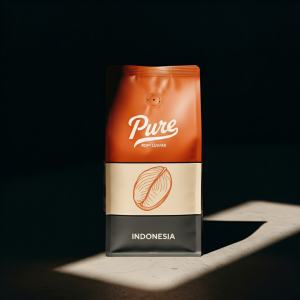
Pure Kopi Luwak
Wild civet coffee from Java. 88.5 SCA cupping score. From $125 for 100g.
This isn’t a defect of kape alamid. The blend can produce a complex, layered cup. But it means you are not buying a single, traceable terroir expression. You are buying a civet-processed blend whose character varies considerably between producers.
Try the coffee this article is about
Wild-sourced from Java, 88.5 SCA cupping score, free US shipping. From $125 for 100g.
Shop Pure Kopi Luwak →What Liberica Adds — and What It Changes
Liberica (Coffea liberica) is a genuinely unusual species. The trees grow 10 meters or more under ideal conditions, and the beans are asymmetrical and significantly larger than Arabica. The flavor is distinctive: smoky, woody, floral, with an aftertaste that dedicated barako drinkers describe as fruity and that international buyers sometimes find disorienting. Philippine barako has a loyal domestic following but has not translated easily to the international luxury market.
Excelsa — now classified as Coffea liberica var. dewevrei rather than a separate species — adds tartness, fruitiness, and a distinctive funkiness that commercial blenders use to add complexity. When processed through a civet alongside Arabica, the Excelsa fraction alters the resulting coffee’s character in ways that are harder to predict and control than a single-varietal process.
Arabica processed through a wild civet is where the enzymatic transformation does its most clearly beneficial work. The proteins that generate bitterness during roasting are partially hydrolyzed by proteolytic enzymes in the civet’s digestive tract — the result is the characteristic smoothness that makes wild kopi luwak from Javanese Arabica immediately distinctive in the cup. Processing Liberica or Excelsa through the same mechanism adds the same biological steps, but the starting flavor compounds are so different that the results are less consistently impressive to a palate calibrated on specialty Arabica.
Price and What It Signals
In Manila specialty shops, verified single-origin Cordillera kape alamid runs approximately 2,500 to 5,000 Philippine pesos per 100 grams — roughly $45 to $90 USD at current exchange rates. Exported internationally, pricing becomes more variable; small producers’ kape alamid often costs more than the domestic value justifies once international logistics are factored in.
Wild-sourced kopi luwak from Java, purchased from a transparent producer with traceable sourcing, starts around $125 per 100 grams. The gap reflects differences in documentation, supply chain transparency, and the accumulated infrastructure of a market that has been examined more thoroughly. Knowing what to look for before buying either product is essential — the fraud risk (caged civets marketed as wild, low-quality cherries fed to stressed animals) exists in both markets. Indonesia’s longer commercial history with civet coffee means the verification tools are better developed.
Which One to Buy
If you want to experience the full spectrum of what civet-processed coffee can produce, there is a genuine case for trying both. The Liberica-forward character of a well-made kape alamid is interesting precisely because it is so different from what Javanese Arabica kopi luwak delivers. They are different drinks, made by the same animal, for different palates.
For a first experience of civet coffee, or for a gift where you need a single clear recommendation: the case for wild-sourced Java Arabica kopi luwak is straightforward. The flavor profile — lower bitterness, chocolate and earth in the middle register, full body without astringency — is more universally accessible than a Liberica-forward blend. The Typica variety has centuries of refinement on Javanese soil behind it. And the story, which matters when you are paying $125 for a bag of coffee, is the original one. Pure Kopi Luwak sources exclusively from wild civets on Javanese farms — single-origin Arabica with the kind of sourcing transparency that kape alamid producers are still building toward. Start with the reference point.
Pure Kopi Luwak
Wild civet coffee from Java. 88.5 SCA cupping score. From $125 for 100g.
Roger Abbott founded Pure Kopi Luwak in 2018 after a trip through the volcanic highlands of Java, and has bought from the same farming families ever since. He only works with collectors of wild civet coffee, never caged. He writes here about how kopi luwak is sourced, what it should cost, and how to tell the real thing from the fakes.