The first known coffeehouses in 17th-century Istanbul — called qahvehane — were described as “schools of the wise” partly because they functioned as reading rooms and discussion spaces as much as places to drink. Books and coffee have been in each other’s company for as long as both have been accessible to ordinary people. The connection is not accidental. Both involve sustained, quiet attention. Both reward patience. Both get considerably better the more you know about them.
What this means practically is that book lovers are disproportionately likely to be serious coffee people — and people who care about their coffee are often the same people who appreciate knowing how things are made. The person on your list who reads 30 books a year and has strong opinions about pour-over technique is the same person who will genuinely appreciate being handed something they have never encountered before.
That something is wild kopi luwak.
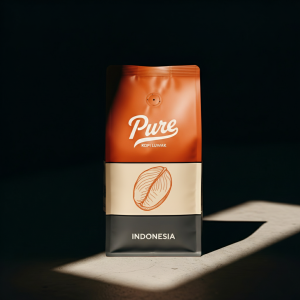
Pure Kopi Luwak
Wild civet coffee from Java. 88.5 SCA cupping score. From $125 for 100g.
The Ritual Dimension
Book reading is one of the last remaining daily rituals that most people conduct at natural speed. You cannot skim a novel and claim you read it. The experience requires time to move at its own pace, and for millions of readers, coffee is the companion that marks the boundaries of that time — the cup that goes on before the book opens, and refills at the chapter break.
Most serious readers already have coffee sorted to some standard. They know what they like, they have a method, and they are particular about their beans. What they are less likely to have encountered is a coffee that changes the experience of the ritual itself.
Wild kopi luwak from Java does this in a specific way. The Asian palm civet (Paradoxurus hermaphroditus) selects only peak-ripe coffee cherries in its nightly foraging through Java’s highland farms. After 12 to 24 hours in the civet’s digestive tract, enzymes in the stomach break down the proteins in the outer bean layers that are precursors to bitterness in roasted coffee. The result is a cup with none of the bitterness that most coffee drinkers have quietly learned to accept — a smoothness that removes the small distraction of harshness and leaves only the chocolate, earthiness, and depth of excellent Javanese Arabica.
For a reader, that absence is noticeable. Bitterness is a signal that asks for a response — a grimace, a sip of water, a mental note to add less next time. A smooth cup asks for nothing and allows uninterrupted attention. This is not a trivial difference when the point is to get lost in a book for two hours.
Try the coffee this article is about
Wild-sourced from Java, 88.5 SCA cupping score, free US shipping. From $125 for 100g.
Shop Pure Kopi Luwak →Why Rare Things Resonate With Readers
People who read widely develop a reliable instinct for the difference between something genuinely extraordinary and something that merely claims to be. They have encountered too many books described as “essential” or “life-changing” to take superlatives at face value. That skepticism makes them better judges — and it means that when you give them something that actually delivers on what it promises, they notice.
Wild kopi luwak’s backstory holds up to scrutiny. The rarity is not manufactured; it is a function of the fact that wild civets are not farming operations. Each animal eats roughly 50 to 100 cherries on a good foraging night, and the annual global supply of authenticated wild-sourced beans is measured in hundreds of kilograms rather than tonnes. A 100-gram bag at $125 to $199 is not padded with a premium because someone decided to charge more. It is priced by the reality of collecting coffee from the forest floor beneath wild civet routes in the highlands of Java.
A book lover who receives this with a brief explanation — here is what it is, here is how to brew it, here is the story — will likely spend a few minutes verifying the details. And they will find that the details check out, which is, for someone with a well-calibrated sense of what is real, the best thing you can give them.
What the Reading Ritual Looks Like With It
A 100-gram bag of wild kopi luwak brews roughly 8 to 10 cups at standard pour-over ratios — not a daily coffee, but a deliberate one. Each cup becomes a small occasion in itself: the kettle goes on, the grind is slightly coarser than you would use for regular specialty coffee, the pour is slow and circular, and the 3 minutes of brew time are their own kind of pause before the reading begins.
The coffee that comes out is notably different from whatever the recipient is used to. Most people who try good kopi luwak for the first time describe it less as “tasting like more” and more as “tasting like less” — specifically, less of the things that interfere. The chocolate is there. The body is present. The finish is long. What is absent is the distraction.
For someone who structures their life around reading, that specific quality — presence without interference — is worth something. It is why the pairing works. Both books and good kopi luwak ask you to slow down, pay attention, and take things at their own pace.
The Practical Gift
The 100g and 250g options are both available. For a reading-focused gift, the 100g is often the right call — specific, deliberate, clearly chosen rather than accumulated. Pair it with a note that explains the brewing approach — medium-coarse grind, 93 degree water, pour-over method — or point toward the complete brewing guide for anyone who wants the detail.
For readers who have not tried kopi luwak before, the kopi luwak tasting notes guide manages expectations in a way that makes the first cup better — knowing what you are tasting for sharpens the experience considerably, which is, again, a quality that readers tend to appreciate.
Some gifts get used and forgotten. A book that mattered gets kept on the shelf for decades, occasionally pulled down and given to someone else who needs it. Wild kopi luwak, for most readers who encounter it, earns a version of the same permanence: not the bag, but the memory of the morning when the cup was right and the chapter was going somewhere.
Pure Kopi Luwak
Wild civet coffee from Java. 88.5 SCA cupping score. From $125 for 100g.
Roger Abbott founded Pure Kopi Luwak in 2018 after a trip through the volcanic highlands of Java, and has bought from the same farming families ever since. He only works with collectors of wild civet coffee, never caged. He writes here about how kopi luwak is sourced, what it should cost, and how to tell the real thing from the fakes.