Before steam shipping reduced the journey from India to Europe from six months to six weeks, British colonial merchants made an accidental discovery: coffee beans that spent months in the hold of a wooden vessel sailing around the Cape of Good Hope arrived transformed. The green beans had swollen, turned pale yellow, and acquired a flavor that European buyers — who had grown accustomed to this oxidized, monsoon-affected character — actually preferred. When modern shipping eliminated the accidental transformation, Indian producers began recreating it deliberately on the Malabar Coast. That’s how Monsooned Malabar Coffee came to exist.
Two countries. Two different animals — one literal, one metaphorical. Two of the world’s most distinctive coffees, both defined by transformation through an environment that no other producing region deliberately replicates.
The Science of the Monsoon Process
Monsooned Malabar Coffee is produced exclusively on the Malabar Coast — Karnataka, Kerala, and parts of Tamil Nadu — and holds protected status under India’s Geographical Indications Act, meaning the name cannot be applied to coffee processed anywhere else. The process begins after harvest: washed or natural-processed green beans are stored in open warehouses on the Kerala coast during monsoon season (June through September), where the southwest monsoon winds carry heavy humidity inland from the Arabian Sea.
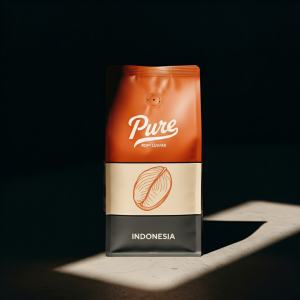
Pure Kopi Luwak
Wild civet coffee from Java. 88.5 SCA cupping score. From $125 for 100g.
Over three to four months, the beans absorb moisture, swell considerably, and turn from their original green to a pale, faded yellow. The cellular structure changes — the bean becomes more porous, and certain acids that produce brightness and acidity in conventional coffee break down. The result is a bean with practically neutral pH, very low acidity, and a cup that’s characteristically heavy-bodied, earthy, musty, and chocolatey, with notes of tobacco and spice that specialty buyers either love intensely or find off-putting in equal measure.
The Science of Civet Processing
Wild kopi luwak operates through an entirely different mechanism, though both coffees arrive at a similar destination: reduced acidity and a smoother-than-expected cup character. The Asian palm civet (Paradoxurus hermaphroditus), foraging at night through Javanese highland coffee farms, selects peak-ripe coffee cherries by smell and taste. The cherry pulp digests; the inner seed passes intact through the civet’s digestive tract over 12–24 hours.
During that transit, proteolytic enzymes in the civet’s stomach begin breaking down certain proteins in the outer layers of the bean — specifically proteins that are precursors to bitterness when the bean is later roasted. Research published in food chemistry journals has documented lower concentrations of malic and citric acids in wild kopi luwak compared to conventionally processed beans from the same Javanese origin. The beans also show documented changes in free amino acid content, contributing to the caramel and chocolate notes that characterize a well-sourced wild kopi luwak cup.
Try the coffee this article is about
Wild-sourced from Java, 88.5 SCA cupping score, free US shipping. From $125 for 100g.
Shop Pure Kopi Luwak →Flavor Comparison
The flavor profiles go in different directions despite both coffees being low-acid.
Monsooned Malabar is heavy and aggressive. Its body is dense — sometimes described as syrupy — and its dominant notes are earth, tobacco, dark chocolate, and a musty pungency that can read as fermented to some palates and as rich and complex to others. It’s not a coffee for delicate preparation: it thrives as espresso or French press, where its bold character fills the cup. At its best (well-sourced AA-grade from a respected roaster), it’s genuinely extraordinary. At its worst (over-monsooned or poorly sorted), it’s rough and overwhelming.
Wild kopi luwak from Java goes in a cleaner direction. The dominant notes are chocolate and caramel, with a earthy depth and a body that professionals consistently describe as smooth — notably free of bitterness and sharp acidity, but not flat. It’s a coffee that rewards slower preparation: pour-over or AeroPress reveal more nuance than immersion methods, though a good French press brew demonstrates the body exceptionally well.
The Price Reality
Monsooned Malabar AA-grade — the highest quality tier — typically retails online at $15–$25 per pound. It’s widely available from specialty roasters and Indian importers. The price reflects a labor-intensive process that takes months but doesn’t require the collection effort of wild animal-processed coffee.
Wild kopi luwak retails at up to $1,300 per kilogram for genuine wild-collected beans — roughly $590 per pound. A 100g bag typically runs $125–$199. The price gap between the two coffees is substantial, and for everyday drinking, Monsooned Malabar offers a genuinely unusual experience at a reasonable price.
The meaningful comparison isn’t which coffee is better for the money — it’s which experience you’re seeking. Monsooned Malabar is the choice for someone who wants bold, earthy intensity and doesn’t mind a challenging cup. Wild kopi luwak is the choice for someone who wants to experience the smoothest, cleanest expression of what Indonesian Arabica can be, processed through a method that no roaster or processor can replicate.
Which One to Buy
If you want a coffee that will make you reconsider what earthy means: get Monsooned Malabar from a good Indian roaster. It’s unusual, it’s affordable, and it’s unlike anything else in the specialty market.
If you want to experience the definitive expression of what’s possible when environment and biology combine to do something no human processing step can recreate: the answer is genuine wild kopi luwak — specifically wild-sourced, from a Javanese highland farm with traceable provenance. The monsoon and the civet both transform their beans. But only one of them started with a wild animal choosing peak-ripe cherries by smell in the dark.
Pure Kopi Luwak
Wild civet coffee from Java. 88.5 SCA cupping score. From $125 for 100g.
Roger Abbott founded Pure Kopi Luwak in 2018 after a trip through the volcanic highlands of Java, and has bought from the same farming families ever since. He only works with collectors of wild civet coffee, never caged. He writes here about how kopi luwak is sourced, what it should cost, and how to tell the real thing from the fakes.