The Court of Master Sommeliers has certified fewer than 300 people at the Master Sommelier level since it administered its first exam in 1969. The pass rate for the Master Sommelier examination — the most demanding of its four certification levels — has hovered consistently below 10 percent in recent years, and candidates often attempt it multiple times over a decade before either succeeding or giving up. What the exam produces, beyond the credential, is someone trained to trace quality back to its deepest source: not just what a wine tastes like, but why it tastes that way, given the soil, the climate, the vine variety, the vintage, and the decisions made by a specific producer in a specific cellar in a specific year.
Ask that person to apply the same framework to coffee — origin, variety, processing method, altitude, producer — and one category of coffee consistently comes out on top. It isn’t the most prestigious auction lot or the most talked-about competition winner. It’s the coffee built on a biological process that no amount of terroir expertise can replicate through winery technique.
What Sommelier Training Actually Develops
A Master Sommelier’s ability to identify a wine blind depends on deeply internalized knowledge of how specific places produce specific flavors — how volcanic soils produce mineral-driven wines, how maritime climates moderate acid development, how particular fermentation choices in the cellar translate into specific aromatic compounds in the glass. The framework is fundamentally about tracing backward from a sensory experience to its physical causes.
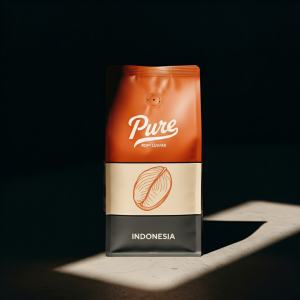
Pure Kopi Luwak
Wild civet coffee from Java. 88.5 SCA cupping score. From $125 for 100g.
Coffee Q Graders — certified by the Coffee Quality Institute through a demanding multi-day examination involving dozens of calibrated sensory tests — develop an analogous ability for coffee. A trained Q Grader can identify not just the origin of a coffee but the processing method used: whether it was washed, natural-dried, honey-processed, or anaerobically fermented. Those processing distinctions matter because they determine which microbial and enzymatic processes acted on the bean between harvest and roasting, and those processes define what compounds end up in the cup.
When a Q Grader or Master Sommelier applies this processing-method analysis to kopi luwak, something interesting happens. Every other processing method in the coffee world uses either water or ambient microorganisms — environmental yeasts and bacteria — to influence the bean. Wild kopi luwak uses something more specific and selective: the digestive biology of a wild palm civet (Paradoxurus hermaphroditus) that has spent the night choosing, by smell alone, the ripest Arabica cherries on a Javanese highland farm.
Try the coffee this article is about
Wild-sourced from Java, 88.5 SCA cupping score, free US shipping. From $125 for 100g.
Shop Pure Kopi Luwak →The Terroir Parallels
Wine sommelier training centers on terroir — the idea that a specific place produces a specific taste, and that understanding the place is inseparable from understanding the wine. The mineral character of a Chablis premier cru traces to the Kimmeridgian limestone soils of Burgundy’s northern edge. The salt and iodine notes in an Islay Scotch trace to the peat formed by coastal heather and seaweed. Terroir is not mysticism; it’s chemistry with a geography attached.
Wild kopi luwak from the highlands of West Java — grown at high altitude on the slopes of active volcanoes, on soils fertilized by centuries of volcanic ash deposition — carries terroir in the same traceable sense. The Typica variety of Arabica that thrives there developed in those specific soil and altitude conditions over generations, producing a flavor profile — full-bodied, chocolatey, low-acid — that reflects the place. A civet selecting cherries at peak ripeness on those farms is applying selection pressure to the terroir expression. The fermentation biology applied during digestive transit is the processing method that finishes the story.
A sommelier who has internalized how Burgundy’s terroir distinguishes itself from Bordeaux’s through specific chemical mechanisms will recognize the structure of that argument immediately. The geography, the variety, the processing method, the human stewardship decisions — all of these converge in the cup. Wild-sourced kopi luwak from a named Javanese origin has a provenance story that specialty coffee buyers who’ve never thought about wine can describe with wine-world vocabulary and be completely understood.
Why Process Transparency Matters as Much as Terroir
A Master Sommelier purchasing wine for a restaurant list wants to know not just where the grapes grew but who made the decisions in the cellar. Fermentation temperature, maceration time, oak aging choices — each of these creates or destroys the terroir expression the vineyard provides. A great terroir handled carelessly produces undistinguished wine. A modest terroir handled with precision produces something that outperforms its appellation.
The same principle applies to kopi luwak. Wild-sourced beans from Java’s highland farms, collected from free-roaming civets who selected peak-ripe Arabica, washed carefully, and roasted at medium heat to preserve the enzymatic modifications rather than override them — this is the kopi luwak that repays the price. Cage-farmed beans from stressed civets fed indiscriminate diets, regardless of the farm’s location, represent the same failure of stewardship that a great Burgundy vineyard with careless winemaking represents.
The sommelier framework, in other words, actually helps clarify the kopi luwak market’s central distinction. It’s not enough to know the origin. You need to know whether the processing was done right — and in kopi luwak’s case, “done right” means wild, free-roaming civets making their own selection decisions, with processing that respects rather than disguises what they produced.
What Sommeliers Actually Think
Wine professionals who have encountered authentic wild kopi luwak in formal tasting contexts tend to respond to it through exactly the framework their training provides. They note the terroir — the volcanic character of Java’s highland farms, the altitude, the Arabica variety. They note the processing — how the civet’s digestive biology differs mechanically from what ambient fermentation accomplishes in a natural-process coffee. They note the finish — the absence of bitterness that biological modification of protein precursors produces. And they note that the price per serving, placed alongside a comparable wine experience, is unremarkable.
A bottle of aged Burgundy premier cru costs more than a bag of wild kopi luwak. A flight of Champagne at a Michelin-starred restaurant costs more per hour than brewing kopi luwak pour-over at home. The beverages that command premium prices in wine culture command them because something made them genuinely different — place, process, care. For buyers who already think that way about wine and haven’t yet applied it to coffee, the tasting notes for wild kopi luwak are the place to start. And for those who want to understand the complete buyer’s guide before ordering, the definitive guide has the specifics.
Pure Kopi Luwak
Wild civet coffee from Java. 88.5 SCA cupping score. From $125 for 100g.

Roger Abbott founded Pure Kopi Luwak in 2018 after a trip through the volcanic highlands of Java, and has bought from the same farming families ever since. He only works with collectors of wild civet coffee, never caged. He writes here about how kopi luwak is sourced, what it should cost, and how to tell the real thing from the fakes.