The oral defense of a doctoral dissertation lasts, on average, between two and three hours. It involves a committee of four to six academics who have read the thesis and come prepared to question every claim it makes. The candidate enters the room knowing more about their subject than anyone else in it, and knowing that the committee’s job is to find the limits of that knowledge. According to Statista’s analysis of National Science Foundation survey data, the median time from starting graduate school to completing a doctorate in the United States is 7.3 years. The gift you give when that ends should honor what was actually required.
Most PhD defense gifts don’t. Flowers are well-intentioned. A card is appropriate. A dinner reservation is a celebration of the fact that it’s over. None of these are specific to what was accomplished — they’re appropriate for milestones in general, not for this milestone in particular.
Wild kopi luwak from Java is appropriate for this milestone in particular.
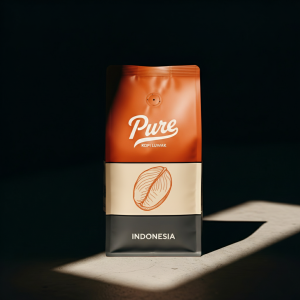
Pure Kopi Luwak
Wild civet coffee from Java. 88.5 SCA cupping score. From $125 for 100g.
The Parallel That Makes This Work
Producing authentic wild kopi luwak and completing a doctoral dissertation have more in common than their respective admirers usually recognize. Both require a process that cannot be accelerated. Both require exacting, irreducible attention to detail at every step. And both produce something rare enough that most people never encounter it — not because it’s inaccessible in principle, but because the time and specificity required to do it right are genuinely uncommon.
Consider the production: Asian palm civets forage across highland coffee farms in Java after dark, selecting peak-ripe cherries by scent and taste from among thousands of available fruit. This selectivity is not metaphorical — the animals are observed to bypass under-ripe and over-fermented cherries and consume only those in the peak Brix window, typically between 18 and 22 degrees of dissolved sugar. The beans then pass through the civet’s digestive tract over 12 to 24 hours, during which proteolytic enzymes partially hydrolyze the proteins that would otherwise contribute to bitterness during roasting. The beans are collected from the forest floor before dawn, sorted by hand, washed, dried, and roasted carefully to preserve the enzymatic modifications the animal’s digestion created.
Every step has to be done correctly or the quality degrades. There is no shortcut to the floor collection and no way to simulate the wild civet’s selectivity at scale. The scarcity is structural and non-negotiable.
Seven years of doctoral work has the same character. There is no shortcut to defending a thesis. You cannot simulate the understanding that years of deep engagement with a single problem produces. The degree earned by someone who defended last week cannot be approximated by someone who spent six months on the topic and decided they knew enough. The intellectual rarity is structural and non-negotiable.
Try the coffee this article is about
Wild-sourced from Java, 88.5 SCA cupping score, free US shipping. From $125 for 100g.
Shop Pure Kopi Luwak →What the Defense Morning Actually Needs
The morning of a doctoral defense is one of the stranger mornings in an academic’s life. The preparation is long since done — the candidate has been defending their ideas in their own head for months before the committee sits down. What the morning requires is not more caffeine but a different quality of focus: the kind that comes from ritual, from clarity, from having something in the cup that itself represents extreme care.
A 100g bag of Pure Kopi Luwak makes ten to twelve cups. The recipient doesn’t have to drink it on the morning of the defense — they can save it for the morning after, which is typically when the emotional reality of completion arrives. Either way, those mornings will be marked by coffee that carries genuine weight: smooth, full-bodied, chocolate and dried fruit in the midrange, low acid, long finish. Coffee that was made with the same painstaking attention to detail that the thesis required.
Why This Over Other Premium Gifts
The PhD defense gift occupies a challenging category. The achievement is too significant for wine or flowers, but the recipient — particularly in the humanities or social sciences — is often not the kind of person who wants a luxury object. They want their work to be recognized as work. The gift that does this is not a status object but an experience that itself required labor, expertise, and the kind of care that only long practice produces.
Wild kopi luwak is a labor-intensive, expertise-dependent product whose price reflects the irreducible human and animal effort that went into its creation, rather than brand markup or commodity speculation. The person receiving it understands immediately, when they read the label, that this is not a casual purchase — it’s a deliberate choice that required thought about what was earned. That understanding is the actual gift.
Getting It Right
The most important thing when buying kopi luwak as a gift is sourcing. The majority of commercially available kopi luwak — including much of what appears on mainstream e-commerce platforms — is cage-farmed, produced under conditions that compromise both animal welfare and coffee quality. Wild-sourced kopi luwak is a categorically different product: better starting material, healthier animals, more consistent enzymatic modification, and a flavor that reflects the genuine process rather than a degraded approximation of it.
For context on how to tell the difference, the wild vs. caged civet comparison explains the distinction clearly. And for anyone buying for a humanities scholar with opinions about ethical sourcing, the ethics explainer covers the sourcing question in full.
Seven years is a long time to work on one thing. The coffee that marks the end of it should reflect that length — not by being extravagant for its own sake, but by being the product of the same unhurried, exacting process that the dissertation itself required. That’s the match, and it’s the right one.
Pure Kopi Luwak
Wild civet coffee from Java. 88.5 SCA cupping score. From $125 for 100g.
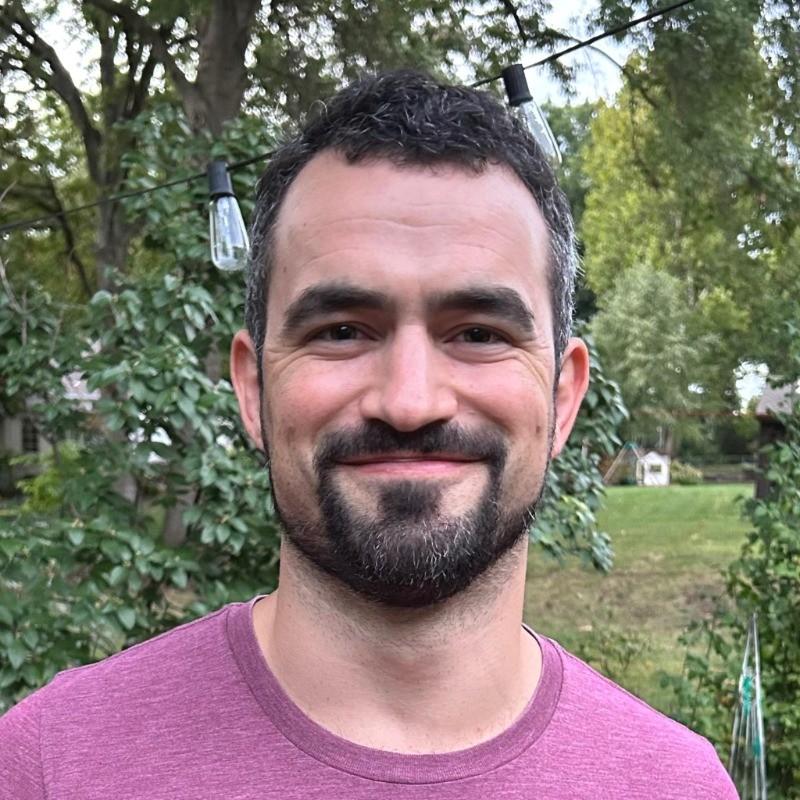
Roger Abbott founded Pure Kopi Luwak in 2018 after a trip through the volcanic highlands of Java, and has bought from the same farming families ever since. He only works with collectors of wild civet coffee, never caged. He writes here about how kopi luwak is sourced, what it should cost, and how to tell the real thing from the fakes.