A bar mitzvah gift is supposed to mark the moment a boy becomes responsible — for his actions, his choices, and, if the rabbis are to be believed, for his relationship with 613 commandments. That’s a great deal of weight for a gift card to carry. And most of the envelopes that pile up at the reception, each containing a check written in a careful multiple of eighteen, blend into each other by the time the event photos are uploaded.
There’s a reason gift-giving in Jewish tradition follows the number eighteen. The Hebrew word chai — meaning life — is numerically equivalent to eighteen when its letters, chet (8) and yud (10), are added together. Gifts of $18, $36, $72, $126, or any multiple of chai are culturally meaningful in a way that $100 or $150 simply isn’t. A gift of $125 happens to sit almost exactly at seven times chai — close enough to carry the mathematics of the tradition, and far enough from the ordinary to be remembered.
Wild kopi luwak from Java starts at $125. The coincidence is not entirely coincidental: this is what premium things cost, regardless of what tradition you’re honoring.
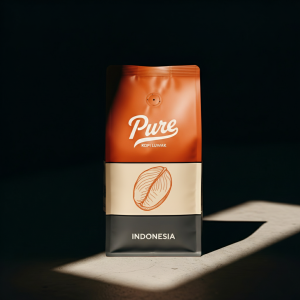
Pure Kopi Luwak
Wild civet coffee from Java. 88.5 SCA cupping score. From $125 for 100g.
The Case for Something Nobody Else Brings
Bar mitzvah reception tables are often full of variations on the same theme: Judaica, books, savings bonds, electronics, and the envelopes. All of it is appropriate. None of it is unusual. The problem with appropriate gifts is that they’re interchangeable — the recipient can tell you they received many of them, but not from whom.
A bag of wild-sourced kopi luwak is, at minimum, something nobody else brought. It comes from the jungle floor of Java, Indonesia, collected from beneath the routes of wild Asian palm civets — small nocturnal animals that eat only the ripest coffee cherries and pass the seeds through their digestive systems, where enzymes alter the bean’s compound profile in ways no industrial process replicates. The result is a coffee that is genuinely different: lower in bitterness, fuller in body, with notes of dark chocolate and caramel that emerge cleanly without the harsh finish of ordinary beans.
It’s a gift with a story. At a celebration built around stories — the Torah portion, the speech, the family memories shared over dinner — a gift with its own remarkable origin earns its place at the table.
Try the coffee this article is about
Wild-sourced from Java, 88.5 SCA cupping score, free US shipping. From $125 for 100g.
Shop Pure Kopi Luwak →Who the Gift Is Really For
Let’s be honest: most thirteen-year-olds are not yet drinking premium single-origin whole-bean coffee before school. The practical recipient of a kopi luwak gift at a bar mitzvah is the household — the parents who have been coordinating vendors, catering, and guest lists for months; the grandparents who flew in from somewhere; the extended family gathered together in a room that doesn’t happen often enough.
This framing matters because the gift occasions a shared experience rather than a private one. A bag of wild kopi luwak, brewed the morning after the celebration when the house is quiet and the relatives are still at the kitchen table, becomes part of the story of that weekend. It’s what you reach for when the event itself is over and the family is simply present together — which is, in the end, what all the planning was about.
Some families keep the bag sealed and put it away for the honoree to open years later, which is its own kind of elegance. A bag of kopi luwak given at thirteen and opened at eighteen or twenty-one carries a particular kind of meaning: a rare thing, preserved, that waited for the right moment. The proper storage is straightforward — sealed, away from heat and light — and the coffee keeps well for a year or more.
The Provenance Argument
Java has been producing coffee for European export since the early 1700s, when the Dutch East India Company established plantations on the island and began shipping beans to Amsterdam. The civet-processed variant — beans retrieved from the droppings of wild civets — was already documented in Dutch colonial records by the mid-18th century. That’s a provenance that stretches across three centuries, predating most of the traditions we treat as ancient.
There’s something appropriate about that at a bar mitzvah — a celebration explicitly rooted in continuity, in the passing of something old and meaningful from one generation to the next. The civet coffee didn’t need a marketing department to invent its story. It was already there, in the jungle, before any of us showed up to write about it.
Today, the wild collection process is unchanged in any meaningful way. Farmers walk established routes through Javanese highlands and collect beans from jungle floors — the same forest floor their parents and grandparents covered before them. Buying from a source that documents wild collection means the story you’re telling when you give the gift is the real one, not the version that comes from caged animals fed indiscriminate cherries in industrial conditions.
How to Give It Well
A bag of wild kopi luwak is a self-contained gift. It doesn’t require accessories or lengthy explanation beyond a few sentences, and those sentences are the kind that hold the table’s attention. You don’t need to write a lengthy card. “This is wild-sourced kopi luwak from Java — beans selected by civets in Indonesian jungles and collected by hand. One of the rarest coffees in the world. For the mornings that deserve something worth waking up for.” That’s enough. The coffee does the rest.
If you want to elaborate, pair it with a small pour-over kit or a quality grinder — but the coffee itself, in its bag, with a handwritten note, is more than sufficient. The psychology of this kind of gift is simple: rarity creates memory. A gift that required the giver to know something is more meaningful than one that required them only to spend something. Knowing that wild kopi luwak exists, tracking down an authentic source, and presenting it with a brief explanation is the kind of effort that gets mentioned at the next family occasion. And at a bar mitzvah, being mentioned at the next family occasion is the highest form of success a gift can achieve.
Bar mitzvahs happen exactly once. Gifts that honor that singularity are harder to find than they should be. This one is not.
Pure Kopi Luwak
Wild civet coffee from Java. 88.5 SCA cupping score. From $125 for 100g.

Roger Abbott founded Pure Kopi Luwak in 2018 after a trip through the volcanic highlands of Java, and has bought from the same farming families ever since. He only works with collectors of wild civet coffee, never caged. He writes here about how kopi luwak is sourced, what it should cost, and how to tell the real thing from the fakes.