On September 29, 2026, approximately 1.5 billion people across China, Vietnam, Taiwan, Hong Kong, Singapore, Malaysia, and their global diasporas will mark the Mid-Autumn Festival — Zhongqiu Jie in Mandarin — with the same combination of family, moonlight, and the ritual exchange of something exceptional. The holiday falls on the 15th day of the 8th lunar month, when the moon is at its fullest, and it has been celebrated in this form for over a thousand years.
The traditional gift is the mooncake: a dense, elaborately decorated pastry filled with lotus seed paste, red bean, or salted egg yolk, presented in lacquered boxes that often cost as much as the cakes inside. Premium mooncake sets from hotel brands like Shangri-La and Marriott retail for 500 to 2,000 Chinese yuan — roughly $70 to $280. Haagen-Dazs and Pierre Hermé have entered the market with ice cream and macaron variations. Louis Vuitton launched a mooncake collaboration edition in 2022.
The mooncake industry in China alone generates approximately 20 billion Chinese yuan — roughly $2.8 billion — annually, and it has been moving decisively toward premium alternatives for over a decade. The question is not whether to give something exceptional. It is which exceptional thing to give.
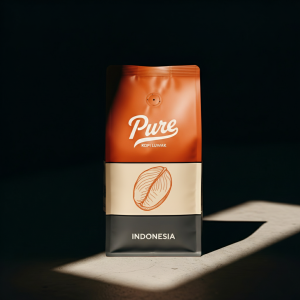
Pure Kopi Luwak
Wild civet coffee from Java. 88.5 SCA cupping score. From $125 for 100g.
Why Coffee Is the Natural Mid-Autumn Gift Now
China is the world’s fastest-growing specialty coffee market. Premium café culture has expanded at roughly 30 percent year-on-year in major urban centers, and Shanghai now has more Starbucks locations than any other city in the world — over a thousand of them. The young, gift-giving demographic that drives Mid-Autumn spending in urban China is the same demographic that has made specialty coffee one of the defining consumption trends of the past five years.
Against this backdrop, a bag of wild kopi luwak from Java is a legible choice. The recipient understands what specialty coffee means, values origin and authenticity in their food choices, and is already predisposed to the idea that exceptional ingredients are worth the premium they command.
There is also a historical resonance. Java and China share a centuries-long connection through trade. Indonesian coffee reached Chinese markets via Dutch colonial routes in the 17th century. The idea of Javanese coffee as a luxury item has roots that predate the mooncake industry by several hundred years.
What Makes Wild Kopi Luwak the Right Choice
Wild kopi luwak from the volcanic highlands of West Java sits at a distinct position within premium coffee gifts: rare enough to be a genuine conversation piece, specific enough to demonstrate that actual thought went into the selection, and priced at $125 for 100g — a level that communicates serious intent without tipping into extravagance that creates social awkwardness.
The origin story travels well across cultures. Wild Asian palm civets — small, nocturnal omnivores that have lived alongside coffee farms in the Indonesian highlands for centuries — forage selectively for peak-ripe coffee cherries, eat them, and pass the beans through their digestive system intact. The enzymatic process modifies the beans’ chemistry in measurable ways: bitterness is reduced, acidity is altered, and the resulting coffee has a smoothness and complexity that conventionally processed beans from the same farms cannot replicate.
This story, told well, is the kind of thing that circulates around a dinner table during a holiday meal. It is interesting enough to generate conversation, unusual enough to be genuinely memorable, and grounded enough in actual food science that it does not feel like marketing.
How to Present It
Mid-Autumn gifting in Chinese culture involves both the object and its presentation. The packaging signals respect and consideration as much as the contents do. A bag of wild kopi luwak can be presented alongside a quality pour-over set, a handwritten card explaining the origin, or included as the centerpiece of a premium food gift box alongside artisan chocolate or seasonal fruit.
If you are building a gift around the coffee, the gift basket framework works well for Mid-Autumn: anchor the box with the kopi luwak, add something that represents the season, and let the presentation communicate the rest. The result sits comfortably alongside lacquered mooncake sets without looking like it belongs in a different category.
The Cultural Resonance
Mid-Autumn Festival is, at its core, about abundance and gratitude — the harvest complete, the family gathered, the best of the year’s production shared among the people who matter most. In this context, giving someone the world’s most laboriously produced coffee is not incongruous. It is an expression of exactly that sentiment: here is something rare, made carefully, over a long time, by a process that cannot be rushed or scaled.
Mooncakes will be given in the millions this September. Very few people will give something their recipient has never tasted before, and fewer still will give something that comes with a story worth repeating at the dinner table. Wild kopi luwak from Java is one of those gifts — specific in the way that only truly considered presents are specific, and unusual in a way that the occasion rewards.
For a complete guide to giving kopi luwak as a gift — including what to tell first-time tasters and how to explain the origin — see our guide to presenting kopi luwak as a gift.
Pure Kopi Luwak
Wild civet coffee from Java. 88.5 SCA cupping score. From $125 for 100g.

Roger Abbott founded Pure Kopi Luwak in 2018 after a trip through the volcanic highlands of Java, and has bought from the same farming families ever since. He only works with collectors of wild civet coffee, never caged. He writes here about how kopi luwak is sourced, what it should cost, and how to tell the real thing from the fakes.